Humidifier hygiene is the bit that decides whether your machine helps the room or quietly turns into a stale water tank. The aim is simple: empty it daily, descale it before limescale gets crusty, and never let yesterday’s water become today’s mist.
In This Article
- Humidifier Hygiene to Prevent Bacteria and Scale
- The Daily Routine That Stops Stale Tank Water
- Weekly Cleaning for Bacteria and Biofilm
- How to Remove Scale in Hard-Water Areas
- Water Choice, Filters and Cartridges
- What Not to Put in a Humidifier
- A Practical Schedule for UK Homes
- When to Replace Parts or Stop Using It
- Frequently Asked Questions
Humidifier Hygiene to Prevent Bacteria and Scale
Humidifier hygiene to prevent bacteria and scale is less about fancy cleaning products and more about habits. A £45 cool-mist humidifier from Amazon UK can be perfectly usable if it is emptied and dried. A £500 purifier-humidifier from John Lewis can still smell grim if the tank is ignored.
The two problems are different. Bacteria and biofilm come from warm, standing water and neglected surfaces. Scale comes from minerals in tap water, especially in hard-water areas across London, the South East, East Anglia and parts of the Midlands. Both can happen in the same tank, which is why a quick rinse is not always enough.
If you are still deciding whether the machine belongs in your home at all, start with our guide to whether you need a humidifier in the UK. From here, the job is ownership: keeping the tank clean enough that the machine earns its place through winter.
Why dirty tanks matter
A humidifier turns water into vapour or mist. That makes hygiene more important than it would be with a kettle or jug, because the water path is part of what enters the room. The US Environmental Protection Agency’s humidifier care advice warns that dirty units can release minerals and microorganisms if they are not cleaned properly.
That does not mean every humidifier is dangerous. It means the cleaning routine is part of ownership, like changing an air purifier filter or washing a dehumidifier tank. The person who gets on best with a humidifier is usually the person who treats cleaning as a two-minute routine, not a monthly rescue job.
What scale does to performance
Scale is not just ugly white crust. It can clog ultrasonic plates, coat warm-mist heating elements, block small outlet channels and make tanks harder to clean. In ultrasonic models, mineral-heavy water can also leave white dust around nearby furniture. If you have already read our best humidifiers UK guide, you will know that different humidifier types handle water minerals differently.
A separate digital hygrometer costs about £6-£12 from Amazon UK or B&Q and is worth having beside the unit. If the room is not rising towards your target humidity, the problem might be sizing, placement or airflow rather than cleaning. Our guide to measuring humidity at home covers that side in more detail.
The Daily Routine That Stops Stale Tank Water
The daily routine is boring. That is a compliment. If humidifier hygiene feels dramatic, you have probably left it too long.
Empty the tank every morning
Do not top up old water. Empty the tank, tip away any water in the base, and give both parts a quick rinse. On a bedside humidifier, I would rather refill from scratch each evening than keep a half tank sitting there through the day with the heating on.
This matters more in winter because UK central heating keeps rooms warm enough for stale water to smell sooner. It also matters in nurseries and bedrooms, where the unit may be running for six to eight hours near soft furnishings.
Let parts air-dry
After rinsing, leave the tank open so it can dry. If your model has a removable cap, do not screw it back on while the inside is wet. A closed damp tank is exactly where musty smells start.
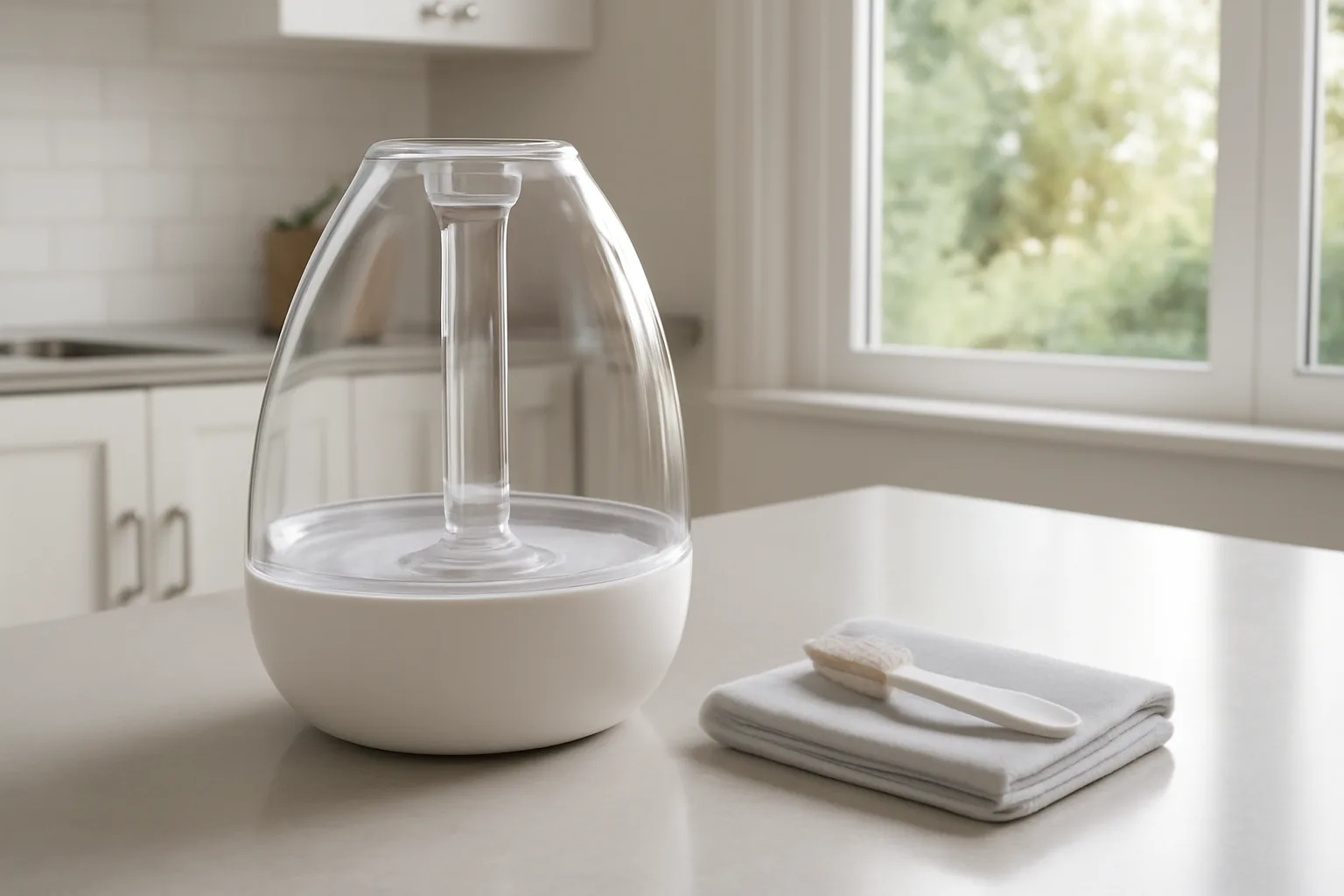
Keep a clean microfibre cloth nearby. A pack of three costs about £3-£6 from supermarkets, Screwfix or Amazon UK. Use one cloth for the humidifier only, then wash it regularly. Kitchen sponge leftovers are not the upgrade people think they are.
Check the base channel
Most people clean the main tank and forget the shallow base where water sits before misting. That base is often the first place to show slime, pinkish film or crust around the ultrasonic plate.
The daily check is quick:
- Look: check the tank, cap, base and mist outlet for cloudy film or white edges.
- Smell: if the empty tank smells stale, clean it before the next run.
- Wipe: dry the outside and the base lip so water does not pool under the unit.
This is also a good time to check room humidity. Most homes feel best somewhere around 40-60% relative humidity, but the right range depends on the room and condensation risk. Our relative humidity guide explains the trade-off between dry air and damp.
Weekly Cleaning for Bacteria and Biofilm
Weekly cleaning is where humidifier hygiene earns its keep. Daily rinsing slows problems down. A weekly clean removes the film that rinsing misses.
Unplug first and strip the removable parts
Always unplug the unit before cleaning. Remove the tank, cap, mist nozzle, filter cartridge and any tray or float that the manual says can come out. If the manual says a part is not washable, believe it. Replacement filters are annoying enough at £8-£25 without ruining one early.
For a basic cleaning kit, you need:
- White vinegar: about £1-£2 for a supermarket bottle, useful for mild scale and odour.
- Citric acid powder: about £3-£8 from Amazon UK, Lakeland or hardware shops, better for tougher limescale.
- Soft bottle brush: about £2-£5 from supermarkets or Wilko-style household aisles.
- Microfibre cloths: about £3-£6 for a small pack.
Do not use abrasive pads on plastic tanks. Scratches make future cleaning harder because film clings to rough surfaces.
Clean the tank with mild acid
For routine cleaning, fill the tank part-way with warm water and add either a small splash of white vinegar or a teaspoon of citric acid. Swirl it around, leave it for 15-20 minutes, then brush corners, seams and the cap thread. Rinse until the smell has gone.
Citric acid is my preference for scale because it smells cleaner and works well on mineral deposits. Vinegar is cheap and easy to find, but some plastic tanks hold the smell for a while. If your humidifier manual bans vinegar, follow the manual instead. Some manufacturers sell branded descaling sachets at about £8-£15 per pack, which is costly but useful for warranty-sensitive machines.
Clean the base without flooding the electronics
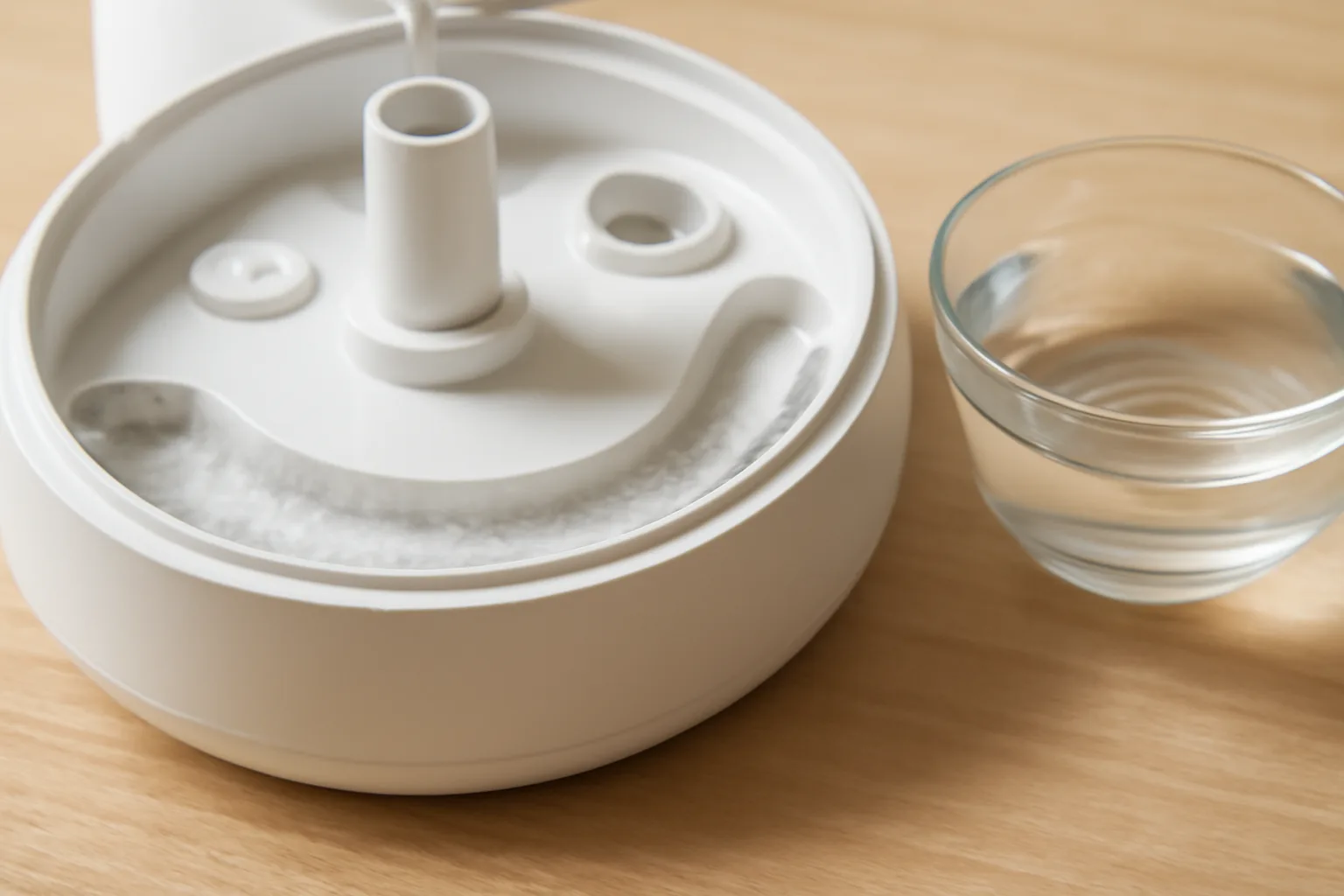
The base needs more care because electronics sit underneath it. Never pour water over the control panel, air intake or cable entry. Dip the cloth or brush, clean the water channel, then wipe with a damp cloth and dry.
On ultrasonic models, the little metal or ceramic disc is the part to treat gently. If it has scale on it, soak the surrounding well with a small amount of descaling solution rather than scraping it. Philips also tells owners to descale humidification filters, clean the water softener and dry the water tank in its humidifier storage support guidance, which is the sensible baseline across brands.
How to Remove Scale in Hard-Water Areas
Scale build-up is the most common UK humidifier complaint after noise. If you live in a hard-water area, a weekly descale may be normal, not a sign that the machine is faulty.
Use citric acid before scale hardens
Citric acid powder is cheap, compact and less harsh-smelling than vinegar. Dissolve a teaspoon in warm water, apply it to the scaled area, leave it for 15-30 minutes, then wipe and rinse. For a tank with visible white crust, repeat rather than using a knife or metal scraper.
If scale is forming every few days, your water choice is the issue. A £30 budget ultrasonic humidifier may still work, but you will pay for it in cleaning time. Evaporative humidifiers tend to leave minerals in the wick or filter instead, which is cleaner for the room but means buying replacement filters.
Watch for white dust
White dust around the humidifier usually means minerals from tap water are being carried into the room by an ultrasonic model. It is more visible on black bedside tables, TV units and monitor stands. It can also make people blame an air purifier for dust that the humidifier is actually creating.
Three fixes work:
- Use deionised water: around £2-£4 for 5 litres from Halfords, B&Q or supermarkets.
- Fit the demineralisation cartridge: usually £8-£20 depending on brand.
- Switch type: choose evaporative or warm-mist if hard-water dust drives you mad.
Deionised water is useful for small bedroom units but gets expensive in a large 5-6 litre machine. For daily use, a cartridge or a different humidifier type may make more sense.
Do not confuse scale with mould
White crust is usually scale. Pink, orange, grey or slippery film is more likely to be biological growth or residue from dirty water. Treat them differently: acid helps mineral scale; thorough washing and drying helps biofilm.
If the room itself is showing black mould, a humidifier is probably the wrong tool. Read our guide to reducing damp and mould in UK homes before adding more moisture to the air.
Water Choice, Filters and Cartridges
Water choice is where people either save themselves work or create it. Tap water is convenient, but it is not always the best choice for ultrasonic humidifiers.
Tap water is fine in some machines
Many evaporative humidifiers are designed for tap water because the wick holds minerals back. Some warm-mist units boil or heat the water path, though they still build scale on the heating plate. Always check the manual before assuming bottled or filtered water is better.
For a standard cool-mist ultrasonic humidifier, tap water is the highest-maintenance choice in hard-water areas. It is not wrong, but you need to descale more often and watch for white dust.
Filter jugs help less than people expect
A £20-£35 filter jug from Argos, Amazon UK or supermarkets can reduce some mineral taste in drinking water, but it is not the same as using deionised or distilled water. If your humidifier still leaves white dust after jug-filtered water, that is not surprising.
Demineralisation cartridges are more targeted. Budget cartridges can cost about £8-£12, while branded packs for larger models may be £15-£25. Check the cost before buying the humidifier, because a cheap machine that needs monthly cartridges can stop feeling cheap by March.
Replacement parts have a real annual cost
For occasional winter use, maintenance costs may be tiny: a bottle of vinegar, a bag of citric acid and the odd cloth. For daily use, budget more realistically:
- Cleaning supplies: about £8-£15 per winter for citric acid, cloths and brushes.
- Deionised water: about £2-£4 per 5 litres if you use it selectively.
- Filters or cartridges: about £8-£25 per replacement.
- Separate hygrometer: about £6-£12 once.
That is still modest beside a good humidifier, but it belongs in the buying decision. Our guide to choosing the right humidifier size is useful if you are replacing a small unit that has been working too hard.
What Not to Put in a Humidifier
Most humidifiers want clean water and nothing else. The trouble starts when people treat them like diffusers, steam bowls or room-fragrance gadgets.
Do not add essential oils unless the manual allows it
Essential oils can damage plastics, clog mist outlets and leave residue in the water path. They also change the indoor-air question completely. If fragrance is the point, read our separate article on essential oil diffusers and indoor air safety rather than turning a humidifier into a diffuser.
Some humidifiers have a separate aroma pad or tray. That is different from dropping oil into the tank. If the manual says water only, use water only.
Avoid bleach unless the manufacturer tells you to use it
Bleach sounds decisive, but it is easy to overuse and hard to rinse from awkward plastic tanks. Mixing bleach with acidic descalers is also dangerous. For ordinary home use, mild acid for scale plus washing and drying for biofilm is the safer routine.
If a manufacturer gives a specific disinfecting method, follow the exact dilution, contact time and rinse instructions. Do not improvise a stronger version because the tank smells. Stronger is not better when the next job is misting near a bed.
Do not use hot water in a cool-mist tank
Hot water can warp some tanks and damage seals. Use warm water for cleaning if the manual permits it, then rinse and refill with cold fresh water before running the machine.
The same goes for washing-up liquid. A tiny amount can help clean greasy residue, but it must be rinsed fully. If bubbles appear in the tank while the machine runs, you have used too much.
A Practical Schedule for UK Homes
The right schedule depends on how hard your water is, how often the humidifier runs and whether the room has condensation risk. A machine used twice a month does not need the same routine as a nursery humidifier running every night from November to March.
Light use
If you run the unit only during short dry spells, empty and dry it after each use. Clean it before storage, then leave the tank open for a day before packing it away. A cupboard full of closed damp appliances is a very British little tragedy.
Regular winter use
For most bedrooms and home offices, use this rhythm:
- Daily: empty, rinse and air-dry the tank and base.
- Weekly: clean the tank, cap, base channel and mist outlet.
- Every 1-4 weeks: descale, depending on visible build-up.
- Monthly: check filters, cartridges, seals and the plug/cable.
This is also a sensible moment to check room humidity. If you regularly hit 60% and see condensation on windows, reduce runtime. A humidifier that solves dry skin but creates damp corners is not a win.
Daily baby-room use
For a nursery, I would be stricter: fresh water every night, empty every morning, weekly cleaning without fail, and no oils or additives. Keep the humidifier well away from the cot, cables out of reach, and mist directed into open room air rather than at bedding.
If the child has asthma, eczema or recurring respiratory symptoms, use the humidifier as part of a wider conversation with a health professional, not as a home cure. The machine can improve comfort in dry air; it cannot diagnose the cause.
When to Replace Parts or Stop Using It
Some humidifier problems are not worth heroic cleaning. If the unit keeps smelling stale after a proper clean, or if scale has damaged the mist plate, it may be time to replace parts or retire it.
Replace filters on schedule
Filter and wick life varies by model and water hardness. Some last a month in daily winter use; others go longer. If the filter is brown, slimy, stiff with scale or smells musty after drying, replace it.
This is where branded machines can be easier to live with. A £90-£130 humidifier from a known brand may have filters available from John Lewis, Amazon UK or the manufacturer. A no-name £22 marketplace humidifier may be cheap until you cannot find the right cartridge six months later.
Retire cracked tanks and damaged seals
Cracks, warped caps and failing rubber seals are not hygiene problems you can clean away. A leaking tank can damage furniture, flooring and electrics. If a replacement cap costs £8-£15 and is easy to source, repair it. If the part costs half the price of a new unit, move on.
Check the cable too. A humidifier sits around water, so damaged plugs, crushed cables and unreliable switches are hard stops.
Trust smell and behaviour
A clean humidifier should smell neutral. If it smells musty as soon as it starts, stop using it and clean it properly. If the mist output drops sharply after descaling, the plate, wick or fan may be failing.
The best test is simple: would you be happy placing this unit beside your own bed tonight? If not, do not run it beside anyone else’s.
Frequently Asked Questions
How often should I clean a humidifier? Empty and rinse it daily if it is in use, then do a proper clean at least weekly. In hard-water areas, descale whenever white build-up appears rather than waiting for a fixed date.
Can bacteria grow in a humidifier tank? Yes. Standing water, warmth and neglected surfaces can allow biofilm and bacteria to develop. That is why fresh water, drying time and weekly cleaning matter.
Is vinegar safe for cleaning a humidifier? Often, but check the manual first. White vinegar costs about £1-£2 and works for mild scale, though citric acid is usually nicer to use on heavy limescale.
Should I use distilled or deionised water? It helps most with ultrasonic humidifiers in hard-water areas. Deionised water costs about £2-£4 for 5 litres, so many UK households use it selectively rather than for every refill.
Can I put essential oils in my humidifier? Not unless the manufacturer explicitly allows it. Oils can damage plastics, clog outlets and leave residue in the water path. Use a proper diffuser if fragrance is the goal.
When should I replace a humidifier? Replace it if the tank is cracked, seals fail, parts are unavailable, or a musty smell remains after proper cleaning. A dirty unit is not worth running near a bed.