You wake up on a January morning, peel yourself out of bed, and the bedroom window is dripping. Not a little mist — actual rivers of water running down the glass, pooling on the sill. The wallpaper in the corner is starting to lift. And somewhere in the back of your mind, you’re wondering whether that faint musty smell is something you should worry about. The government guidance on damp and mould confirms that persistent musty odours indicate a humidity problem.
It probably is. And the culprit, almost definitely, is relative humidity that’s crept too high inside your home.
Understanding what relative humidity actually means — and knowing what level is healthy — isn’t complicated. But it’s one of those things most people only think about once there’s already a problem: mould patches, peeling paint, or a persistent cough that won’t shift. So let’s break it down properly, with actual numbers and practical advice you can use in a UK home.
What Is Relative Humidity, and Why Does “Relative” Matter?
Relative humidity (RH) is the amount of moisture in the air expressed as a percentage of the maximum moisture that air could hold at that temperature. That last bit is the key part that trips people up.
Warm air holds more moisture than cold air. A lot more. Air at 25°C can hold roughly twice the water vapour of air at 15°C. So if your bedroom air contains a certain amount of moisture and the temperature drops overnight — say the heating switches off at 11pm — the relative humidity climbs even though no extra moisture has entered the room. The air’s capacity shrinks, so the percentage goes up.
This is exactly why you get condensation on windows in winter. The glass surface is cold, the air next to it cools down, and the relative humidity at that boundary hits 100%. The air literally can’t hold its moisture any more, so it dumps it on your window. That’s called the dew point, and it’s the reason your bathroom mirror steams up and your single-glazed sash windows weep every morning from October to March.
Here’s a practical way to think about it: absolute humidity is how much water is actually floating around in your air (measured in grams per cubic metre). Relative humidity is how full that air is compared to its capacity. A sponge analogy works well — a small sponge holding 50ml of water might be completely saturated, while a large sponge holding the same 50ml is barely damp. Temperature is the size of the sponge.
What Level of Relative Humidity Is Healthy?
The short answer: between 40% and 60% RH for most people, most of the time.
That range comes from decades of research into respiratory health, allergen activity, and building science. The most cited source is the Sterling chart (published in 1985 and still referenced by HVAC engineers worldwide), which maps how bacteria, viruses, fungi, dust mites, and respiratory infections all respond to humidity levels. The sweet spot where the fewest problems overlap sits right in that 40–60% band.
Here’s what happens outside that range:
Below 30% RH — too dry:
- Dry skin, cracked lips, irritated eyes — your body’s mucous membranes need moisture to function as a barrier against pathogens
- Increased static electricity — annoying, but also a sign your air is parched
- Sore throats and nosebleeds — particularly common in homes with older gas central heating that runs constantly
- Viruses thrive — influenza and other airborne viruses survive longer and travel further in dry air, which is partly why flu season coincides with winter (when indoor RH plummets)
- Wooden furniture and flooring can crack — if you’ve got solid oak floorboards, prolonged low humidity is their enemy
Above 70% RH — too damp:
- Mould growth — most mould species need sustained RH above 70% to colonise surfaces. Once established, they’re remarkably hard to shift
- Dust mites flourish — these microscopic creatures love humidity above 65%, and their droppings are one of the most common triggers for asthma and allergic rhinitis in the UK
- Musty odours — that damp smell is volatile organic compounds released by mould and bacteria
- Structural damage — prolonged dampness rots timber, degrades plaster, and causes paint to bubble and peel
- Respiratory problems — the NHS links damp and mouldy homes to a range of health conditions including asthma attacks, allergic reactions, and weakened immune response
The 40–60% range isn’t a magic number that suits every person or every room. Ideally, bedrooms sit at the lower end (40–50%) for comfortable sleep, while living areas can sit slightly higher. Bathrooms and kitchens will spike during use — that’s normal, as long as the moisture clears within an hour or two.
Why UK Homes Are Particularly Prone to Humidity Problems
British homes have a unique cocktail of factors that make humidity harder to manage than in many other countries.
Old housing stock. Around 38% of UK homes were built before 1946, according to the English Housing Survey. Many have solid walls (no cavity), single-glazed or original timber windows, and were designed for coal fires that created enormous natural ventilation through the chimney. Block up that fireplace, install central heating, and you’ve sealed in moisture with no escape route.
Weather patterns. The UK sits in a temperate maritime climate with outdoor humidity regularly sitting at 80–95% RH during autumn and winter. You can’t just “open a window” on a drizzly November day in Manchester and expect your indoor humidity to drop — the outside air is already saturated.
Modern retrofits that trap moisture. Double glazing, cavity wall insulation, loft insulation, draught-proofing — all brilliant for reducing energy bills, all terrible for moisture management if you don’t simultaneously improve ventilation. A well-insulated Victorian terrace that’s been “sealed up” without mechanical ventilation is a mould factory waiting to happen.
Daily moisture production. A family of four generates roughly 10–15 litres of moisture per day through breathing, cooking, showering, and drying laundry indoors. If you’re drying washing on a clothes airer in the living room (and let’s be honest, most of us do for at least half the year), a single load releases about 2 litres of water into your home’s air. That has to go somewhere.
If you’re already dealing with humidity-related issues, our guide on how to improve indoor air quality covers broader strategies for making your home healthier.
How to Measure Relative Humidity at Home
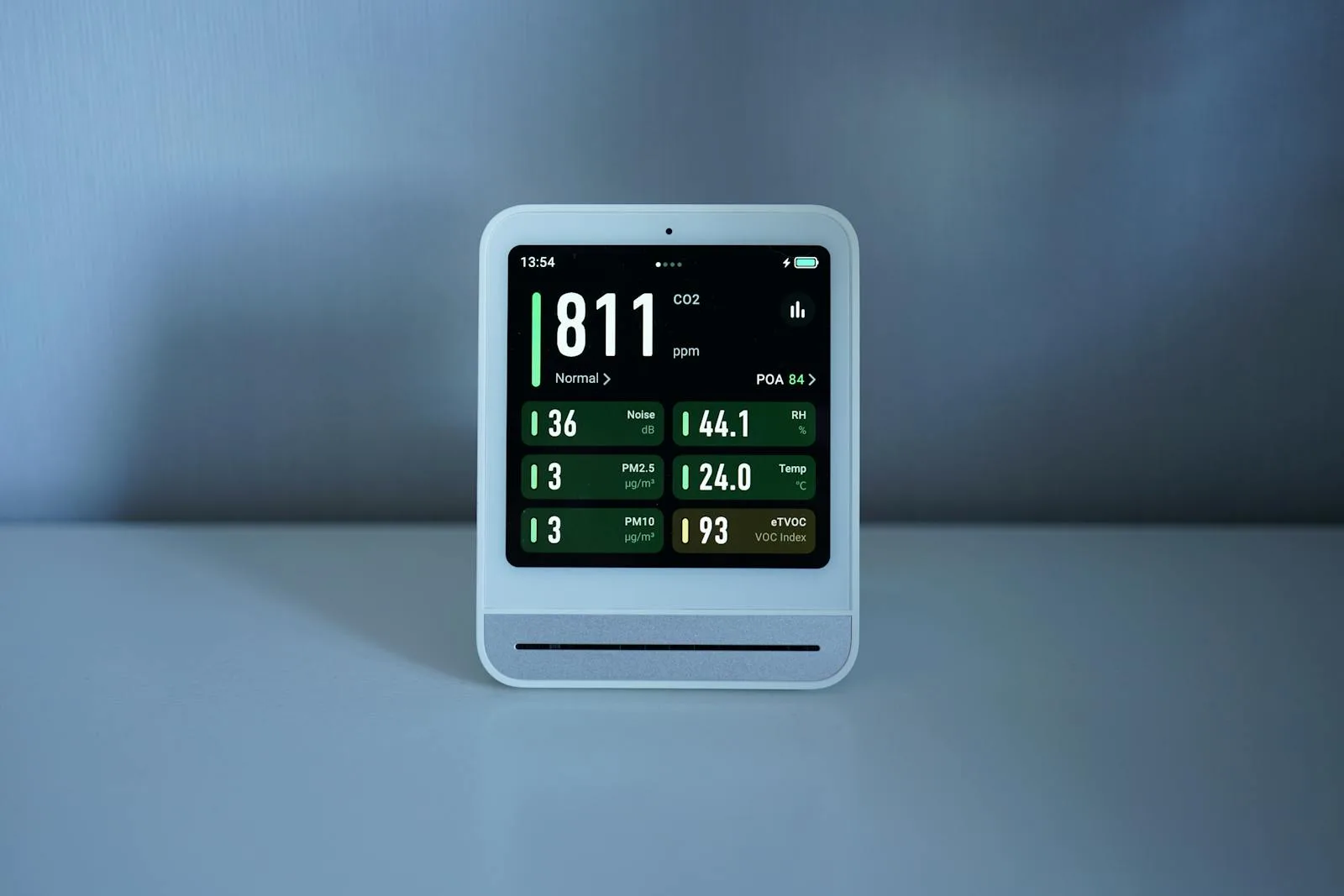
You can’t manage what you can’t measure, and guessing at humidity is notoriously unreliable. A room can feel perfectly comfortable at 65% RH — which is already in the danger zone for dust mites.
Digital hygrometers are the answer, and they’re cheap. A decent one costs £8–15 from Amazon UK. The ThermoPro TP50 is probably the most popular budget option — it displays temperature and humidity with reasonable accuracy (±2-3% RH). For something smarter, the Govee H5075 connects to your phone via Bluetooth and logs data over time, which is genuinely useful for spotting patterns. It’s about £12.
Place your hygrometer:
- In the room you’re most concerned about — usually the bedroom or a north-facing room
- Away from windows, radiators, and exterior walls — you want the reading for the general room air, not a cold spot
- At roughly head height — humidity varies vertically, and head height is where it matters for breathing
Take readings at different times of day. Morning readings after a night of closed windows and breathing will typically be the highest. If you’re consistently seeing above 60% in bedrooms or above 65% in living areas, it’s time to act.
For a whole-house picture, buy two or three and scatter them around. At £10 each, it’s one of the cheapest things you can do for your home’s health.
How to Lower Humidity That’s Too High
This is the more common problem in UK homes, especially from October through to April.
Ventilation — The Single Most Important Thing
Open windows for 10–15 minutes, twice a day, even in winter. Yes, you’ll lose some heat. No, your energy bill won’t noticeably change — it takes far less energy to reheat air than to dry out a damp wall. Create cross-ventilation where possible by opening windows on opposite sides.
Extractor fans in bathrooms and kitchens are non-negotiable. If yours is weedy and barely moves air, replace it. A decent humidity-sensing extractor fan (like the Xpelair DX100HTS, about £35–45 from Screwfix) switches on automatically when humidity rises and keeps running until it drops back down. This alone can transform a bathroom that stays steamy for hours.
Trickle vents on windows — those small slots at the top of double-glazed frames — should be open. Always. I know, people close them “because of draughts.” But they exist specifically to provide background ventilation that prevents moisture build-up. Closing them defeats the purpose of having them.
Heating — Keep It Consistent
Cold air holds less moisture, so cold rooms end up with higher relative humidity even with the same absolute moisture content. Keeping rooms at a minimum of 15–16°C, even when unoccupied, prevents humidity from spiking and walls from getting cold enough for condensation to form.
This is particularly important in spare bedrooms that people leave unheated — they often become the dampest rooms in the house. A small amount of consistent heating costs less than redecorating after mould damage.
Dehumidifiers — When Ventilation Isn’t Enough
If you’re doing all the ventilation basics and humidity is still above 60%, a dehumidifier is the next step. They’re not a substitute for ventilation — they’re an addition to it.
For most UK rooms, a compressor dehumidifier with a 10–20 litre/day capacity is the right choice. Expect to pay £150–250 for a good one from Argos, Currys, or John Lewis. The Meaco 20L Low Energy and EcoAir DD1 Classic are both solid performers with a loyal following among UK buyers.
If you’re trying to figure out the right capacity for your space, our guide on how to choose the right size humidifier walks through the room-size calculations — the same principles apply in reverse when sizing a dehumidifier.
Lifestyle Changes That Make a Real Difference
- Dry laundry outside or in a vented tumble dryer — never on a radiator or airer without a window open
- Use lids on pans when cooking — a single pot of pasta without a lid releases a surprising amount of steam
- Run the bathroom extractor for 20 minutes after a shower, not just during it
- Don’t push furniture hard against external walls — leave a 5–10cm gap so air can circulate and prevent cold spots where condensation forms
- Vent your tumble dryer outside if it’s a condenser model with a hose option
How to Raise Humidity That’s Too Low
Less common in the UK, but it does happen — particularly in modern, well-sealed homes with underfloor heating or in flats with communal heating systems that run hot and dry.
If your hygrometer consistently reads below 35% and you’re experiencing dry skin, scratchy throat, or static shocks, a humidifier is the simplest fix. An evaporative or ultrasonic humidifier in the bedroom can bring levels back to a comfortable 40–50%. Prices start around £25–30 for a basic ultrasonic model from Amazon UK, rising to £80–120 for quality units with built-in hygrostats that maintain a target RH.
Houseplants also help, though the effect is modest — you’d need a small jungle to meaningfully shift the humidity in even a medium-sized room. Still, every bit counts, and they improve air quality in other ways too.
Leaving bathroom doors open after a shower distributes moisture through the house (though only do this if you don’t have a damp problem elsewhere). Placing bowls of water near radiators is an old trick that actually works in a small way — the radiator’s warmth accelerates evaporation.
Humidity and Health: What the Research Says
The link between indoor humidity and health isn’t theoretical — it’s well-established and backed by the NHS and Public Health England (now UKHSA).
Respiratory infections. A landmark 2013 study published in PLOS ONE found that maintaining indoor RH above 40% reduced the infectivity of airborne influenza virus particles by up to 80%. The virus’s lipid envelope breaks down faster in moderately humid air. This finding has gained renewed attention since the COVID-19 pandemic, with several studies showing similar humidity-dependent survival patterns for SARS-CoV-2.
Asthma and allergies. The Asthma + Lung UK charity reports that damp and mould are major triggers, with humid indoor environments encouraging both mould spore production and dust mite proliferation. Keeping humidity below 60% doesn’t eliminate dust mites, but it slows their reproduction noticeably.
Skin conditions. Eczema and psoriasis sufferers often find their symptoms worsen at both extremes of humidity. Dermatologists generally recommend 40–60% as the comfort zone — enough moisture to prevent skin barrier breakdown, not so much that sweat and dampness irritate already sensitive skin.
Sleep quality. Research from the International Journal of Environmental Research and Public Health found that bedroom humidity above 60% was associated with poorer sleep quality, increased night-time waking, and greater perceived discomfort. The ideal bedroom environment sits at 16–18°C and 40–50% RH.
For more on creating a comfortable indoor environment, including managing noise and air quality while you sleep, have a look at our piece on air purifier noise levels and sleep quality.
Humidity by Room: A Practical Guide
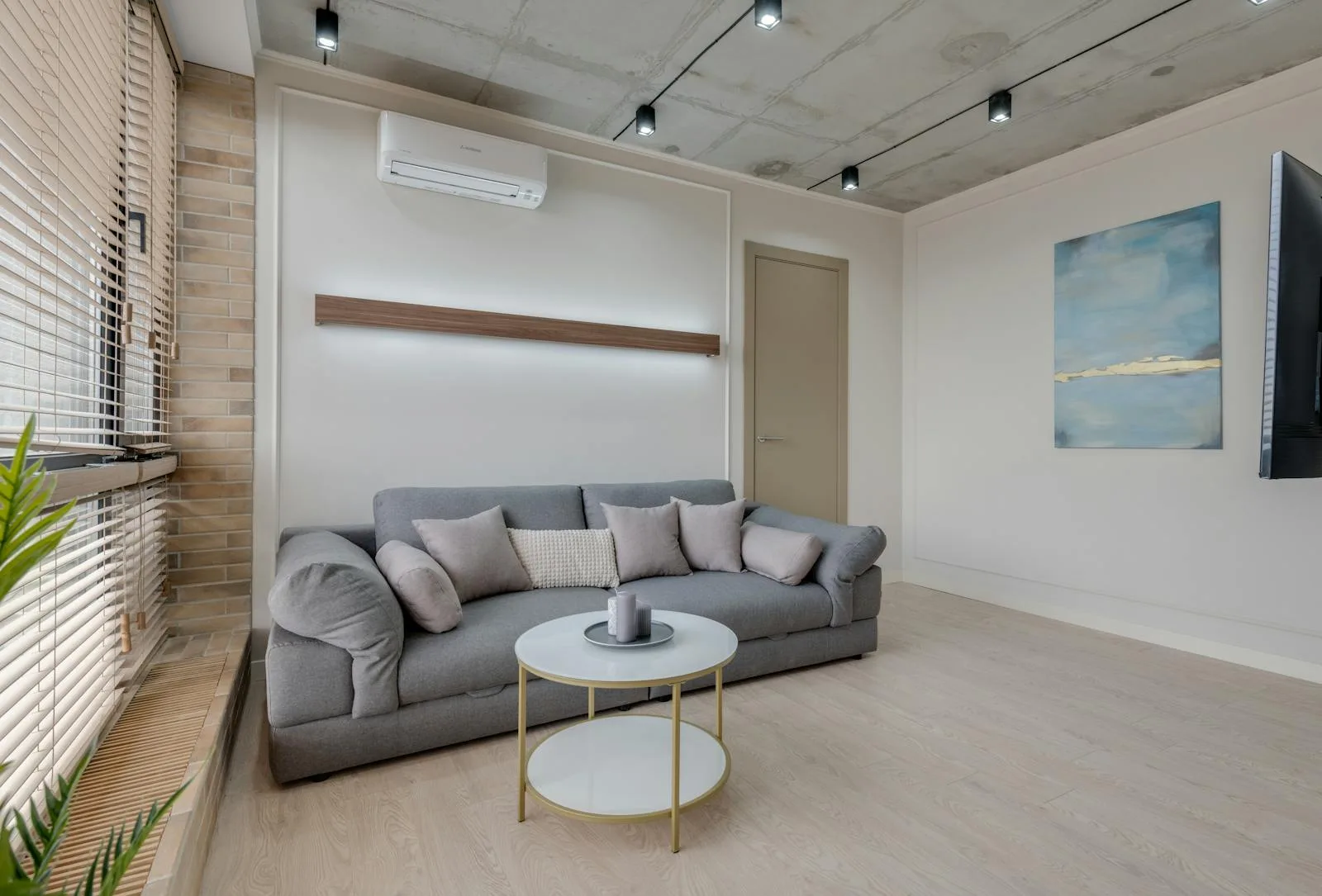
Not every room needs the same humidity level, and some rooms will naturally sit higher or lower.
Bedrooms (aim for 40–50% RH): You spend 7–8 hours here breathing, and your body releases about 40g of moisture per hour. Good ventilation and moderate heating are your main tools. If you wake up with a stuffy nose or dry mouth, check your hygrometer — either extreme could be the cause.
Living rooms (aim for 40–55% RH): Usually the easiest room to manage because it’s the most lived-in and heated. Watch out for wet coats and shoes left by the front door — a designated drying area with ventilation helps.
Kitchens (aim for 50–60% RH, spikes to 70%+ during cooking are normal): The extractor hood is your best friend. Use it on full power whenever you’re boiling or steaming, and leave it running for 10 minutes after you finish. If your kitchen doesn’t have an extractor, open a window — even a crack makes a difference.
Bathrooms (aim for 50–60% RH, spikes to 90%+ during showers are normal): The spike itself isn’t the problem — it’s how quickly it drops afterwards. With a decent extractor fan, humidity should return to normal within 30–60 minutes. If it’s still muggy two hours later, your ventilation needs upgrading.
Lofts and basements: These are problem areas. Lofts can develop condensation when warm, moist air rises from the house and meets cold roof timbers. Basements in older UK homes often have inherent damp issues that need specialist treatment beyond what a dehumidifier can handle.
Common Myths About Indoor Humidity
“Opening windows in winter makes the house damp.” Usually the opposite. Even on a wet day, the mechanical action of air exchange helps disperse concentrated indoor moisture. The exception is during fog or heavy rain when outdoor RH exceeds indoor — but those conditions don’t last all day.
“Mould is caused by cold, not humidity.” Cold surfaces cause condensation, which creates localised humidity, which feeds mould. It’s both. But you can have a warm, humid room that grows mould just fine. The core issue is sustained moisture, whatever the cause.
“You can tell humidity by how the air feels.” You really can’t. Humans are poor humidity sensors. We’re better at detecting temperature changes than moisture changes. A room at 50% and a room at 70% feel broadly similar unless you’re paying close attention. That’s why a hygrometer is worth its £10.
“Dehumidifiers are expensive to run.” Modern compressor dehumidifiers use about 200–400 watts — roughly the same as a few lightbulbs. Running one for 6 hours a day costs around 30–50p depending on your tariff. Compare that to redecorating a mould-damaged room or treating a child’s asthma flare-up.
If you are solving the same room problem, compare this with How to Measure Humidity in Your Home, How to Maintain the Right Humidity for Houseplants, How to Prevent Mould in the Bathroom.
Frequently Asked Questions
What is a good relative humidity level for a UK home? Between 40% and 60% relative humidity is considered healthy for most UK homes. Bedrooms are best at the lower end (40-50%) and living areas can sit slightly higher. Above 60% encourages dust mites and mould growth, while below 30% can cause respiratory irritation and dry skin.
How can I check the humidity in my house? Use a digital hygrometer, which costs around £8-15 from Amazon UK or Argos. Place it at head height, away from windows and radiators, in the room you’re most concerned about. Take readings at different times of day to spot patterns — mornings are typically the highest.
Why are my windows wet with condensation every morning? Condensation happens when warm, moist indoor air meets the cold glass surface of your windows. The air cools below its dew point and can no longer hold its moisture, which deposits as water droplets. It’s a sign your indoor humidity is too high or your ventilation is insufficient — or both.
Does central heating make the air too dry? It can, yes. Central heating warms the air, which increases its moisture-holding capacity, causing relative humidity to drop even though the absolute moisture content hasn’t changed. In well-sealed modern homes or flats with communal heating, indoor RH can fall below 30%, which causes dry skin, sore throats, and increased susceptibility to respiratory infections.
Will a dehumidifier help with mould? A dehumidifier helps prevent mould by keeping humidity below the 70% threshold most mould species need to grow. However, it won’t kill existing mould — you’ll need to clean that with a mould-specific spray or a dilute bleach solution. A dehumidifier works best alongside proper ventilation, not as a replacement for it.