An essential oil diffuser can make a room smell calmer, but it does not make the air cleaner. Essential oil diffuser air quality safety comes down to dose, ventilation, who uses the room, and whether you are using scent to cover up a problem that should be fixed properly. For most healthy adults, occasional short use in a ventilated room is low risk; for asthma, babies, pets, migraines, damp bedrooms or poor ventilation, I would be much more cautious.
In This Article
- Essential Oil Diffuser Air Quality Safety: The Short Answer
- What Diffusers Add to the Air
- Who Should Be More Cautious
- Diffuser Types Compared for Indoor Air
- UK Prices and What I Would Actually Buy
- How to Use One Without Making the Room Stale
- Better Ways to Make a Room Feel Fresh, and When to Stop
- Frequently Asked Questions
Essential Oil Diffuser Air Quality Safety: The Short Answer
Essential oils are not magic air treatment. They are concentrated aromatic compounds released into a room on purpose. That is fine if you treat them like fragrance, not like filtration, medicine or ventilation.
My practical verdict
If you like a diffuser, use it for short sessions, with less oil than the bottle suggests, and with some fresh air moving through the room. I would not run one all evening in a closed bedroom, nursery, home office or small flat. That is where a pleasant scent can become another indoor-air load.
The safest setup is boring:
- Short use: 20-30 minutes, not three hours.
- Low dose: 1-3 drops in an ultrasonic diffuser, not a heavy pour.
- Ventilation: a cracked window, trickle vent or open door.
- Clean water: empty and dry the tank after use.
- No health claims: do not use essential oils to treat asthma, coughs, sleep problems or anxiety without medical advice.
That last point matters. A diffuser can make a room feel more relaxing in the same way warm lighting or clean bedding can. It is not the same as improving the air. If your room smells stale, damp, smoky or musty, the diffuser is not solving the cause.
The indoor-air trade-off
The trade-off is simple: you gain scent, but you add airborne chemicals and, depending on the device, fine droplets. For a healthy adult in a well-ventilated living room, that may be a reasonable swap. For a child with wheeze, a partner with migraines or a poorly ventilated box room, it may not be.
This is why I would judge diffusers in the same mental bucket as candles, room sprays, plug-ins and reed diffusers. Some are nicer than others. None are free from indoor-air impact.
What Diffusers Add to the Air
Essential oils are mainly made up of volatile organic compounds, often called VOCs. VOCs are not automatically dangerous, but they are airborne chemicals. Lavender, eucalyptus, tea tree, peppermint, citrus and pine oils all release scented compounds because those compounds evaporate easily.
VOCs are the point, not a side effect
With a diffuser, the smell is the product. If you can smell it across the room, molecules from that oil are in the air and reaching your nose. The issue is not that every tiny exposure is harmful; it is that “natural” does not mean neutral.
The existing BreatheCleanUK guide to VOCs in the home covers paints, cleaning sprays and furniture. Diffusers sit in the same broad family, but with one difference: you are adding the source deliberately because you enjoy the scent.
A chamber study on essential oil diffusers found measurable emissions of volatile compounds and particulate matter from oils used in diffusers, including lemon, lavender and eucalyptus. The study abstract is available via PubMed. That does not mean one diffuser session is a disaster. It does mean the “it’s only natural oils” argument is too lazy.
Mist is not the same as humidity control
Ultrasonic diffusers use vibration to turn water and oil into a fine mist. That mist can look like a tiny humidifier, but the device is not designed to manage room humidity properly. A 100ml or 500ml diffuser may add a little moisture while it runs, but it is not a controlled humidifier with a humidistat, room-size rating or hygiene plan.
If dry winter air is your real problem, read our UK humidifier guide instead. A proper humidifier costs more to run and clean, but at least it is designed around humidity rather than scent.
Oils can react with existing indoor air
Indoor air is already a mix of particles, moisture, cleaning residues, cooking fumes and outdoor pollution. Scented compounds do not enter a blank laboratory box; they enter your actual room.
That matters in three common UK situations:
- Closed winter rooms: central heating, shut windows and low ventilation let fragrance build up.
- Freshly cleaned rooms: scented cleaners, sprays and diffuser oils stack on top of each other.
- Rooms near busy roads: outdoor pollution plus added fragrance is not a win for air quality.
I would be more relaxed about a diffuser in a large, airy kitchen-diner for half an hour than in a 9m2 bedroom with the door closed. Room volume changes everything.
Who Should Be More Cautious
The people who enjoy a fragrance are not always the people most affected by it. That is the awkward bit with diffusers: one person chooses the scent, everyone else breathes it.
Asthma, COPD and allergy households
If someone in the home has asthma, COPD, chronic cough, allergic rhinitis or unexplained wheeze, I would avoid routine diffuser use. Asthma + Lung UK warns that indoor air pollution and allergens can worsen lung symptoms, and its indoor air pollution advice is built around reducing triggers, improving ventilation and avoiding smoke or strong irritants.
Essential oil diffuser air quality safety is most questionable when the room user is already sensitive. Eucalyptus or peppermint might smell “clear” to you but feel sharp to someone else’s chest. Tea tree and lavender are not automatically gentle just because they are familiar.
Babies, children and bedrooms
I would not use an essential oil diffuser in a baby’s room. For older children, I would still keep it occasional, light and outside sleep hours. Children’s breathing zones are closer to the floor, they spend long stretches in bedrooms, and they cannot always explain that a smell is making their throat, eyes or chest feel odd.
For a child’s bedroom that smells stale, I would spend the money elsewhere first:
- Digital hygrometer: about £8-£15 from Amazon UK to check humidity.
- CO2 monitor: about £35-£90 for a basic NDIR model to check ventilation.
- HEPA purifier: about £90-£180 for a small bedroom if pollen or dust is the issue.
- Mattress and bedding cleaning: free to £20 for decent washable pillow protectors.
Those are less glamorous than a glowing diffuser. They are also more useful if the actual issue is damp, dust, pollen or stale air.
Pets and shared spaces
Pets complicate the decision. Cats, dogs, birds and small mammals are not tiny humans, and some oils are a bad idea around them. I would avoid diffusers in rooms where pets sleep, eat or cannot leave freely. Birds are especially sensitive to airborne contaminants, so I would keep scent devices well away from them.
Even if you choose to use a diffuser in a pet household, do not run it beside a pet bed, litter tray, crate, cage or food bowl. Keep the door open so the animal can leave. If you notice coughing, drooling, lethargy, eye watering, sneezing or strange behaviour after diffuser use, stop.
Migraine and fragrance sensitivity
Some people get headaches from strong scent long before they get classic allergy symptoms. If that is you, a diffuser is not a wellness upgrade. It is a headache machine with mood lighting.
In a shared home office, I would be careful. A £25 diffuser from Amazon UK might seem harmless, but eight hours of low-level scent while someone works can be too much. If one person dislikes it, the diffuser loses. Fresh air wins.
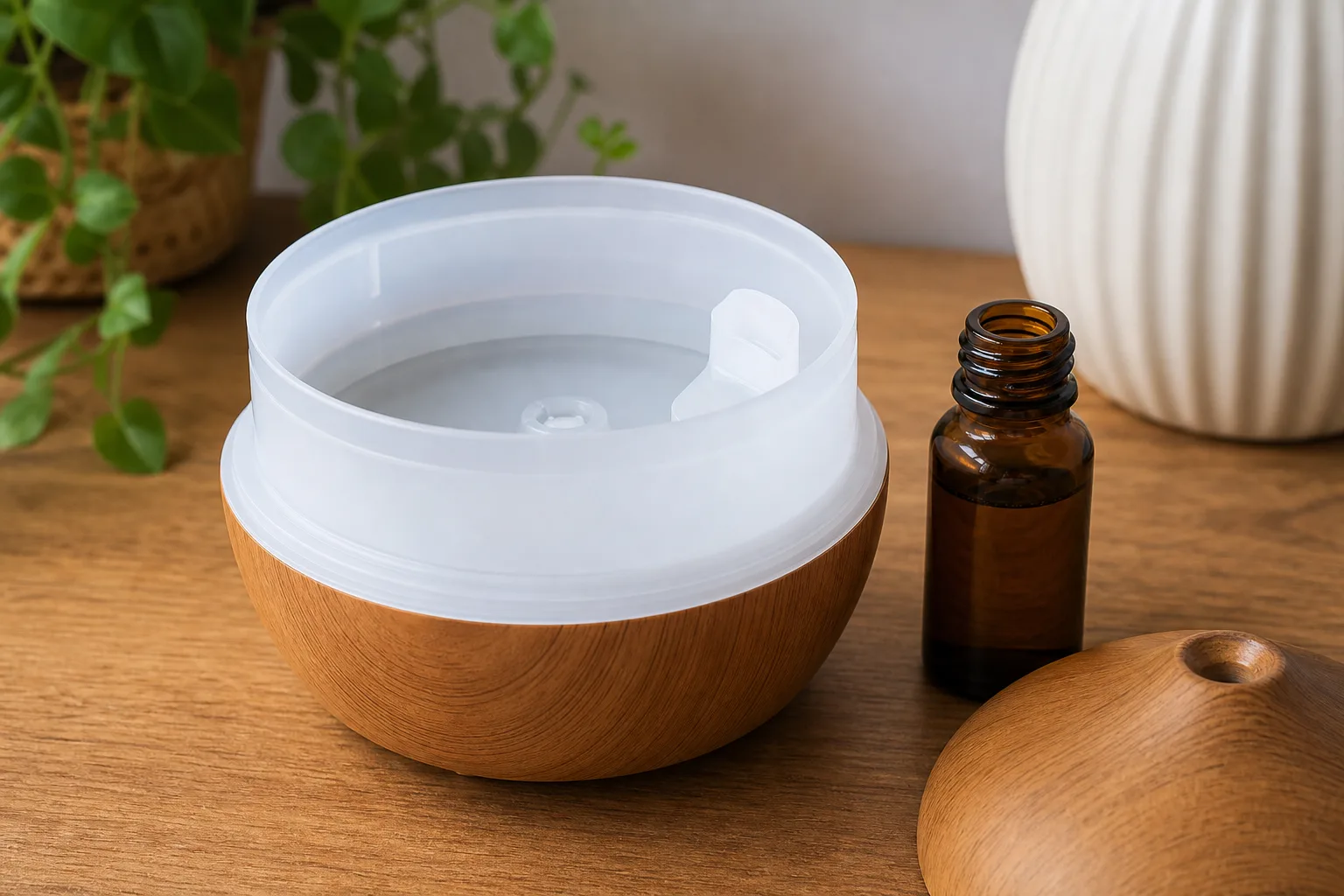
Diffuser Types Compared for Indoor Air
Different diffuser types release scent in different ways. The indoor-air question is not just “which smells strongest?” It is “how much does it add, how quickly, and can you control it?”
Ultrasonic diffusers
Ultrasonic diffusers are the common electric models you see at Argos, Amazon UK, John Lewis and TK Maxx. They use water plus a few drops of oil, then create a cool mist. Prices usually run from about £18 for a basic Amazon UK model to £30 for a Habitat electric diffuser at Argos, with premium Neom pods at John Lewis around £80-£149 depending on size and finish.
They are easy to overuse because the mist looks gentle. I prefer ultrasonic models only if they have:
- Auto shut-off: stops the unit running dry.
- Short timer settings: 30 or 60 minutes is better than endless runtime.
- Removable lid and simple tank: easier to wash and dry properly.
- No proprietary oil pressure: you should not feel trapped into £20 branded oil bottles.
I would avoid using one as a fake humidifier. If your humidity is below 40% for weeks, buy a real humidifier with a cleanable tank. Our guide to the best humidifiers in the UK covers that properly.
Nebulising diffusers
Nebulising diffusers use pure oil without water. They are stronger and usually more expensive, often about £40-£90 online, with some premium glass units above £100. They can make a room smell intense very quickly.
For indoor air, I would be more cautious with these. No water means less mist volume, but the oil concentration can be higher. They make sense for a short scent burst in a hallway or large living space. I would not use one in a bedroom, nursery or asthma household.
Reed diffusers and passive scent
Reed diffusers do not use electricity, mist or heat. They still release fragrance into the air. Cheap reed diffusers cost about £5-£12 from supermarkets, B&M, Home Bargains or Argos. Nicer ones from John Lewis, M&S or The White Company often sit around £20-£40.
The catch is constant exposure. An ultrasonic diffuser may run for half an hour; a reed diffuser sits there all day, every day. If you are sensitive to fragrance, passive scent can be worse because you stop noticing it while still breathing it.
Heat diffusers and oil burners
Tea-light oil burners and heated fragrance dishes are cheap, often £5-£15, but they are my least favourite option indoors. You are adding fragrance and burning a candle at the same time. That means scent compounds plus combustion particles. If you want to reduce indoor pollutants, that is not the smart route.
If you already own one, keep it occasional, never leave it unattended, and do not use it in a small bedroom. For rented flats or homes with curious children, I would skip it.
UK Prices and What I Would Actually Buy
If you still want a diffuser, buy for control and cleaning, not just how pretty it looks on a bedside table.
Sensible budget setup
For most people, I would choose a simple ultrasonic diffuser around £25-£35. The Habitat Confetti Glass Electric Diffuser at Argos is around £30, while ASAKUKI-style 300ml-500ml models on Amazon UK commonly sit around £19-£30. Add one small bottle of oil for about £5-£10, not a giant gift set of scents you will never finish.
That gives you enough to test whether you like diffusing at all. I would not start with a £149 premium pod unless you already know you use fragrance often and tolerate it well.
Mid-range and premium options
MUJI-style ultrasonic diffusers tend to sit higher, often around £60-£90 depending on size and availability. Neom Wellbeing Pods at John Lewis are usually about £80-£149. They look better, feel nicer and often have better timers. They do not change the basic indoor-air trade-off.
If you are paying more, pay for:
- Better build: a stable base, quiet operation and easy tank access.
- Reliable timer: short, clear settings you will use.
- Easy cleaning: no awkward corners that trap oily residue.
- Low light control: a diffuser should not turn a bedroom into a nightclub.
I would not pay extra for vague claims about purifying, balancing ions, improving oxygen or boosting health. Those are marketing claims, not reasons to buy.
Oils cost more than people expect
The device is not the only spend. Basic essential oils can be £4-£8 per 10ml bottle from Amazon UK, Boots or Holland & Barrett. Branded blends are often £15-£25. Neom oils can be around £22 for 10ml.
That matters because people tend to add more oil when a cheap blend smells weak. If you are using 5-8 drops every evening, a small bottle disappears quickly and the room gets heavily scented. A better rule is to use less oil and a shorter timer. If the scent is too faint at that level, the answer may be that the room is too large or too ventilated for diffusing, not that you need to flood it.
What I would avoid
I would avoid three things:
- Tiny USB diffusers for bedrooms: often fiddly to clean and easy to leave beside your face.
- Strong nebulisers for small rooms: too much scent too quickly.
- Bundles with lots of unknown oils: cheap oil sets can smell harsh and encourage overuse.
My pick would be a plain £25-£35 ultrasonic unit with auto shut-off, a 30-minute timer and one mild oil used lightly. Boring, but sensible.

How to Use One Without Making the Room Stale
If you use a diffuser, use it like seasoning. A little improves the room. Too much ruins it.
Use a smaller dose than the manual suggests
Many manuals suggest 3-5 drops. I would start with 1-2 drops in a small bedroom or office, and 2-3 drops in a living room. If you cannot smell it after 10 minutes, do not immediately add more. Step out, come back, and judge it with a fresh nose.
Your nose adapts quickly. That is why people who use strong home fragrance often keep increasing the dose without noticing how heavy the room smells to visitors.
Ventilate before and after
Open a window for 10 minutes before or after use, or keep a trickle vent open. In winter, a short air change is enough. You do not need to freeze the room all evening.
This links back to the basic advice in our ventilation guide: source control first, then fresh air, then devices if needed. A diffuser should never be used to hide stale air from poor ventilation.
Keep the tank clean
An ultrasonic diffuser has a warmish, wet, oily tank. That is not something to ignore for weeks.
After each use:
- Empty the tank: do not leave scented water sitting overnight.
- Wipe it dry: use a clean cloth or kitchen roll.
- Clean weekly: follow the manual, usually with water and a little white vinegar or mild washing-up liquid.
- Let it air dry: store it open rather than sealed damp.
If the tank smells sour, looks slimy or has residue around the disc, stop using it until it is properly cleaned. A dirty diffuser is grim. No lavender blend can save that.
Do not mix fragrance sources
The fastest way to make indoor air feel heavy is stacking scent. Diffuser plus candle plus room spray plus scented laundry beads plus plug-in air freshener is too much.
Pick one scented thing at a time. In a small flat, I would go further: one scented thing in one room, for a short period. If your home only smells good when four products are running, the underlying problem probably needs cleaning, ventilation, damp control or a bin emptying. Annoying, but true.
Better Ways to Make a Room Feel Fresh, and When to Stop
A room that smells good is not always a room with good air. Freshness usually comes from removing sources, not adding perfume.
Better first fixes
Before buying more oils, check the unglamorous stuff:
- Ventilation: open windows briefly and use extractor fans when cooking or showering.
- Humidity: keep most rooms roughly 40-60% relative humidity; use a £8-£15 hygrometer to check.
- Damp: deal with condensation, leaks and mould rather than masking the smell.
- Soft furnishings: wash throws, cushion covers and pet bedding; scent clings to dirty fabric.
- Bins and drains: clean the source before scenting the room.
- Cooking smells: use lids, extractor fans and cross-ventilation before reaching for fragrance.
For pollen, dust or smoke particles, a diffuser is the wrong product. A proper purifier is more relevant. Our air purifier myths guide explains what purifiers can and cannot do.
Lower-pollution scent options
If you mainly want a pleasant smell before guests arrive, try lower-exposure options:
- Fresh air plus clean fabric: free, and usually the biggest improvement.
- Fresh flowers: about £5-£15 from a supermarket, though avoid strong lilies if anyone is sensitive.
- Unlit scented sachets: about £3-£8 for wardrobes, away from breathing zones.
- Short diffuser session: 20 minutes before guests, then off.
- Open baking or cooking smells: nicer than synthetic scent, but still ventilate afterwards.
I would not call these “air quality” fixes. They are comfort choices. That distinction keeps expectations sane.
Stop if the room or your body complains
Stop using a diffuser if anyone notices coughing, tight chest, wheeze, headache, nausea, eye watering, throat irritation, sneezing, dizziness or a heavy lingering smell. Also stop if your air quality monitor shows VOC spikes during use and slow recovery afterwards.
You do not need a lab-grade monitor. A consumer VOC reading is not perfect, but if your £80-£150 air quality monitor jumps every time the diffuser runs, believe the pattern. The device may be imprecise; the trend is still useful.
Essential oil diffuser air quality safety is not about panic. It is about being honest that scent is an added exposure. Used lightly, in the right room, by people who tolerate it, a diffuser can be a nice comfort. Used constantly to mask stale air, damp, pets, smoke or poor ventilation, it is the wrong tool.
Frequently Asked Questions
Are essential oil diffusers bad for indoor air? They can worsen indoor air if used heavily, in closed rooms or around sensitive people. They add scented VOCs and sometimes fine mist, so they are not air purifiers.
Can I use an essential oil diffuser if I have asthma? I would be cautious and ask a clinician if scents trigger symptoms. Strong fragrance, eucalyptus, peppermint and tea tree oils can irritate some people with asthma or sensitive airways.
Is an ultrasonic diffuser the same as a humidifier? No. It may add a small amount of moisture, but it is built for scent, not humidity control. If dry air is the issue, use a proper humidifier and hygrometer.
How long should I run an essential oil diffuser? Start with 20-30 minutes in a ventilated room. Avoid running one for hours in a closed bedroom, nursery or small home office.
Are reed diffusers safer than electric diffusers? Reed diffusers avoid mist and electricity, but they release fragrance all day. For fragrance-sensitive people, constant low-level scent can still be a problem.
What is the safest way to make a room smell fresh? Remove the source of the smell first: ventilate, clean fabrics, manage damp, empty bins and use extractors. Use fragrance lightly only after the room is already clean and aired.