You’ve woken up with a scratchy throat again, the wallpaper in the spare room is starting to peel at the edges, and your toddler’s had a cough that won’t shift — the NHS advises that dry air can worsen persistent coughs since October. So you type “humidifier” into Amazon, and suddenly you’re looking at everything from a tiny USB desk unit to something that looks like it could humidify a warehouse. The product descriptions throw around numbers like “300 ml/hr output” and “covers up to 50 m²” — but what does any of that actually mean for your three-bed semi in Leeds?
Getting the wrong size humidifier is one of the most common mistakes people make, and it matters more than you’d think. Too small and you’ll barely notice a difference. Too large and you’ll end up with condensation streaming down windows and mould creeping into corners. This choose humidifier size room guide walks you through exactly how to match a humidifier to your space — no guesswork, no marketing fluff, just the practical stuff that actually helps.
Why Humidifier Size Actually Matters
It’s tempting to think “bigger is better” and just buy the largest unit you can afford. But humidifiers aren’t like heaters where more power is generally a good thing. An oversized humidifier in a small bedroom can push relative humidity past 60% in a few hours, and that’s where problems start — dust mites thrive, mould spores multiply, and you’ve essentially traded one set of health issues for another.
On the flip side, a compact 200 ml unit designed for a bedside table won’t make a dent in an open-plan kitchen-diner. You’ll run it constantly, refill it twice a day, and wonder why the air still feels like the Sahara.
The sweet spot is a humidifier that can maintain relative humidity between 40% and 60% without running flat out 24/7. That means matching the unit’s output and tank capacity to your room’s volume, and factoring in a few real-world variables that the spec sheets conveniently ignore.
How to Calculate Your Room Size
Before you even look at humidifiers, you need to know what you’re working with. And I don’t mean a vague “it’s a medium-sized room” — I mean actual numbers.
Measuring Floor Area
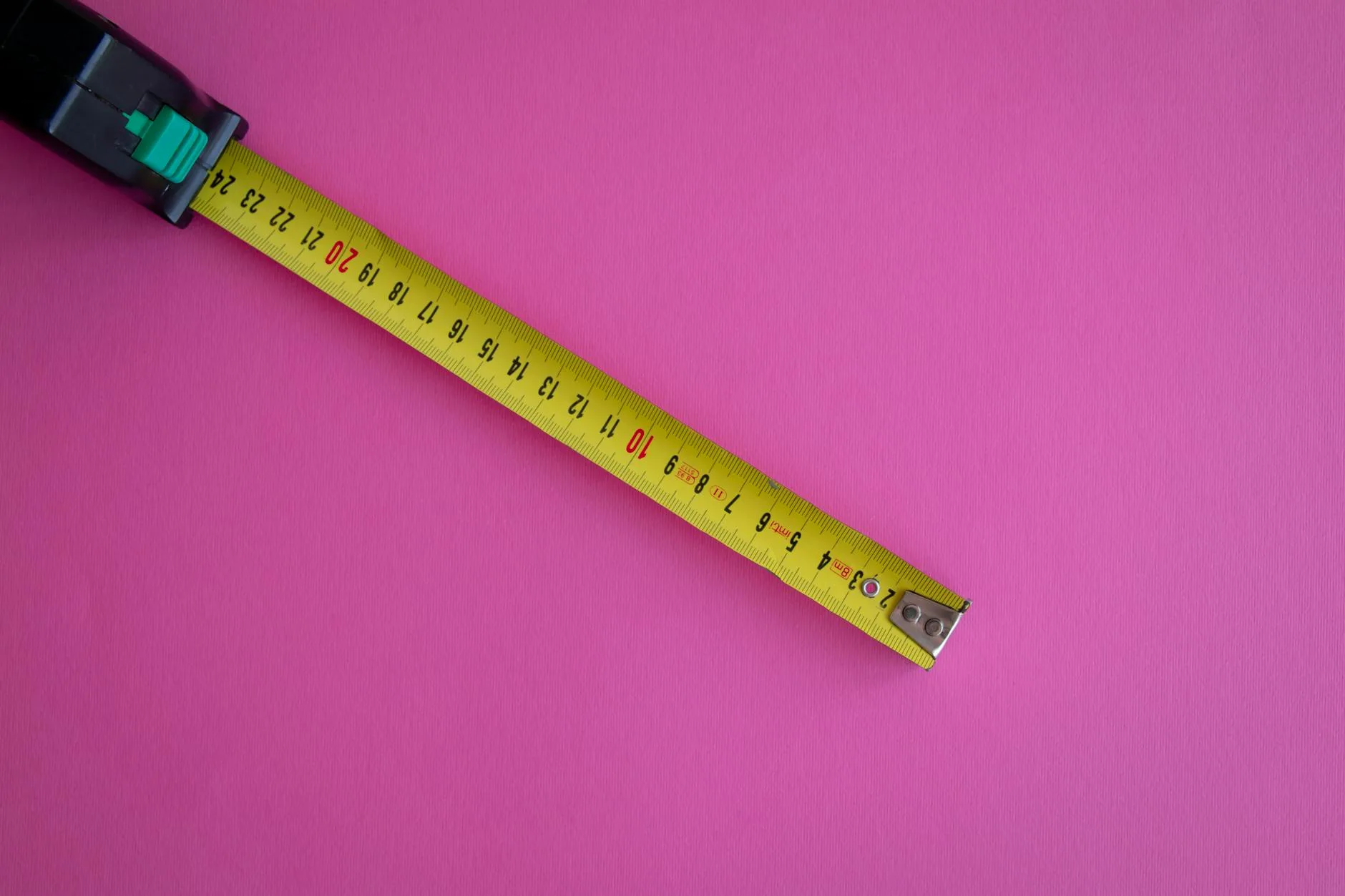
Grab a tape measure and note the length and width of your room in metres. Multiply them together for the floor area in square metres (m²). A typical UK bedroom runs about 10-14 m², a living room 16-25 m², and an open-plan living-kitchen space can easily hit 30-45 m².
For L-shaped rooms, break them into two rectangles, measure each, and add them together. It takes about 90 seconds and saves you from buying the wrong unit entirely.
Why Volume Matters More Than Floor Area
Here’s something most buying guides skip: floor area alone isn’t enough. Humidifiers fill a volume of air, not a floor space. A room with 3-metre ceilings has noticeably more air than one with standard 2.4-metre ceilings, even if the floor area is identical.
Multiply your floor area by ceiling height to get the room volume in cubic metres (m³). A 15 m² bedroom with 2.4 m ceilings is 36 m³. The same floor area in a Victorian terrace with 3 m ceilings? That’s 45 m³ — about 25% more air to humidify.
Most manufacturers quote coverage in square metres because it sounds better on the box. A unit rated for “up to 30 m²” assumes standard ceiling height. If your ceilings are higher, treat the effective coverage as smaller.
Quick Room Size Reference
- Small bedroom or nursery (8-12 m²): 19-29 m³ volume
- Standard double bedroom (12-16 m²): 29-38 m³
- Living room (16-25 m²): 38-60 m³
- Open-plan living space (25-45 m²): 60-108 m³
Matching Humidifier Output to Room Size
Now that you know your room volume, you can match it to the right humidifier. There are three key specs to pay attention to: moisture output rate, tank capacity, and recommended coverage area.
Moisture Output Rate
This is measured in millilitres per hour (ml/hr) and tells you how quickly the unit adds moisture to the air. Here’s a rough guide based on UK rooms with standard ceilings:
- Under 20 m² (small rooms, bedrooms): 150-250 ml/hr is plenty
- 20-30 m² (larger bedrooms, medium living rooms): 250-400 ml/hr
- 30-45 m² (open-plan spaces, large rooms): 400-600 ml/hr
- Over 45 m² (whole-floor coverage): 600+ ml/hr or multiple units
These figures assume you’re starting from typical UK indoor winter humidity of around 30-35%. If your house is particularly dry — underfloor heating, constant radiators, new-build with heavy insulation — you might need to bump up a category.
Tank Capacity and Runtime
Tank capacity determines how long the humidifier runs before you need to refill it. This is where real-world convenience comes in. A 1-litre tank running at 200 ml/hr gives you about 5 hours. That means you’re filling it before bed and again in the morning. Fine for a bedside unit, annoying for a living room.
For overnight use without interruption, aim for a tank that gives you at least 8-10 hours of runtime at the output setting you’ll actually use. In practice:
- Bedrooms: 2-4 litre tank (runs all night on medium)
- Living rooms: 4-6 litre tank (covers an evening and morning)
- Open-plan spaces: 6+ litre tank, or a unit with a direct water line connection
Nobody mentions this in the glossy product shots, but carrying a 6-litre tank from the kitchen to the living room twice a day gets old fast. Think about where your nearest tap is and whether you want to be lugging water around. Some of the larger Philips and Dyson units have wider top-fill openings that make refilling less of a palaver — worth considering if the humidifier won’t live next to a sink.
The Manufacturer’s Coverage Claim — Take It With Salt
When a box says “covers rooms up to 40 m²,” that figure comes from lab testing in a sealed room with controlled temperature and no ventilation. Your house has none of those conditions. Doors open and close, radiators create convection currents, extractor fans pull air out.
A sensible rule of thumb: reduce the manufacturer’s claimed coverage by about 20-30% for real-world UK conditions. A unit rated for 40 m² will comfortably handle 28-32 m² in a normal home. If you’re between sizes, go up, not down. Running a slightly larger unit on a lower setting is quieter and more energy-efficient than running a small unit flat out.
Types of Humidifier and How Size Affects Performance
Not all humidifiers work the same way, and the type you choose affects how well it handles different room sizes. Understanding this saves you from buying a technology that’s fundamentally wrong for your space.
Ultrasonic Humidifiers
The most popular type in the UK right now, and for good reason. They use high-frequency vibrations to create a fine cool mist, they’re whisper-quiet (usually 25-35 dB), and they’re energy-efficient. Most bedroom and mid-size units are ultrasonic.
They work brilliantly in small to medium rooms. In larger spaces, you might notice the mist doesn’t distribute evenly — it tends to humidify the area immediately around the unit rather than the whole room. For open-plan spaces, you’ll either need a high-output ultrasonic with a built-in fan to distribute the mist, or you’re better off with an evaporative unit.
Best for: Bedrooms, nurseries, home offices (up to about 25 m²)
Evaporative Humidifiers
These pull air through a wet wick or filter, and the water evaporates naturally into the air. They’re self-regulating — as humidity rises, evaporation slows down, so they’re almost impossible to over-humidify with. The trade-off is they’re a bit noisier (the fan) and you need to replace the wick filter every few months, which adds to running costs.
They’re the better choice for larger rooms because the fan actively circulates humidified air throughout the space. They also won’t leave white mineral dust on your furniture, which ultrasonic units can do if you use hard tap water (ask me how I know — my dark TV stand looked like it had dandruff).
Best for: Living rooms, open-plan areas, anywhere over 20 m² where even distribution matters
Steam/Warm Mist Humidifiers
These boil water and release warm steam. They’re excellent at killing bacteria in the water and they raise humidity quickly. But they use noticeably more electricity (200-400W vs 20-40W for ultrasonic), they’re a burn risk around children, and they’ll add unwanted heat to a room in summer.
In the UK, where we mostly need humidifiers from October to March, the extra warmth can actually be welcome. But they’re best kept to smaller rooms where you can control the output. I wouldn’t use one in a large open-plan space — the energy cost alone makes it impractical.
Best for: Adult bedrooms in winter, small studies, anyone prone to respiratory infections
Real-World Factors That Change Everything
The room volume calculation gives you a starting point, but several real-world factors can shift what you actually need.
Heating Type
Central heating with radiators is the biggest humidity killer in UK homes. Gas central heating doesn’t just warm the air — it dries it out noticeably. Homes with underfloor heating tend to be slightly less aggressive on humidity, and those with heat pumps or electric panel heaters somewhere in between. If your radiators run constantly from November to February (and whose don’t?), budget for the next size up.
Ventilation and Draughts
Older UK homes — especially Victorian and Edwardian terraces — are notoriously draughty. That constant air exchange means humidity escapes faster, and your humidifier has to work harder. A draughty sash window can undo the work of a small humidifier almost entirely.
New-builds have the opposite problem: they’re so airtight that humidity can build up quickly. If you’re in a post-2015 build, you might find a smaller unit is more than sufficient, and you’ll want one with a built-in humidistat to prevent over-humidifying.
Room Connectivity
Do you keep the bedroom door open or closed at night? An open door in practice doubles or triples the space your humidifier needs to cover, because it’s trying to humidify the hallway and landing too. If you’re buying a bedroom unit, factor in whether you’re a door-open or door-closed sleeper. Door closed? That 12 m² bedroom really is 12 m². Door open? You might be looking at 25+ m² of connected space.
Hard Water Areas
Much of the South East and Midlands has hard water, and this affects ultrasonic humidifiers specifically. Hard water minerals get dispersed as white dust that settles on surfaces around the unit. It’s not harmful, but it’s annoying. Using distilled water eliminates this, but at roughly £1-2 per litre from Halfords or Wilko, the cost adds up if you’re filling a 4-litre tank daily.
Evaporative units handle hard water better because the minerals stay trapped in the wick filter. Another reason they’re worth considering for larger rooms where you’d be going through a lot of water.
How to Monitor and Adjust After Purchase
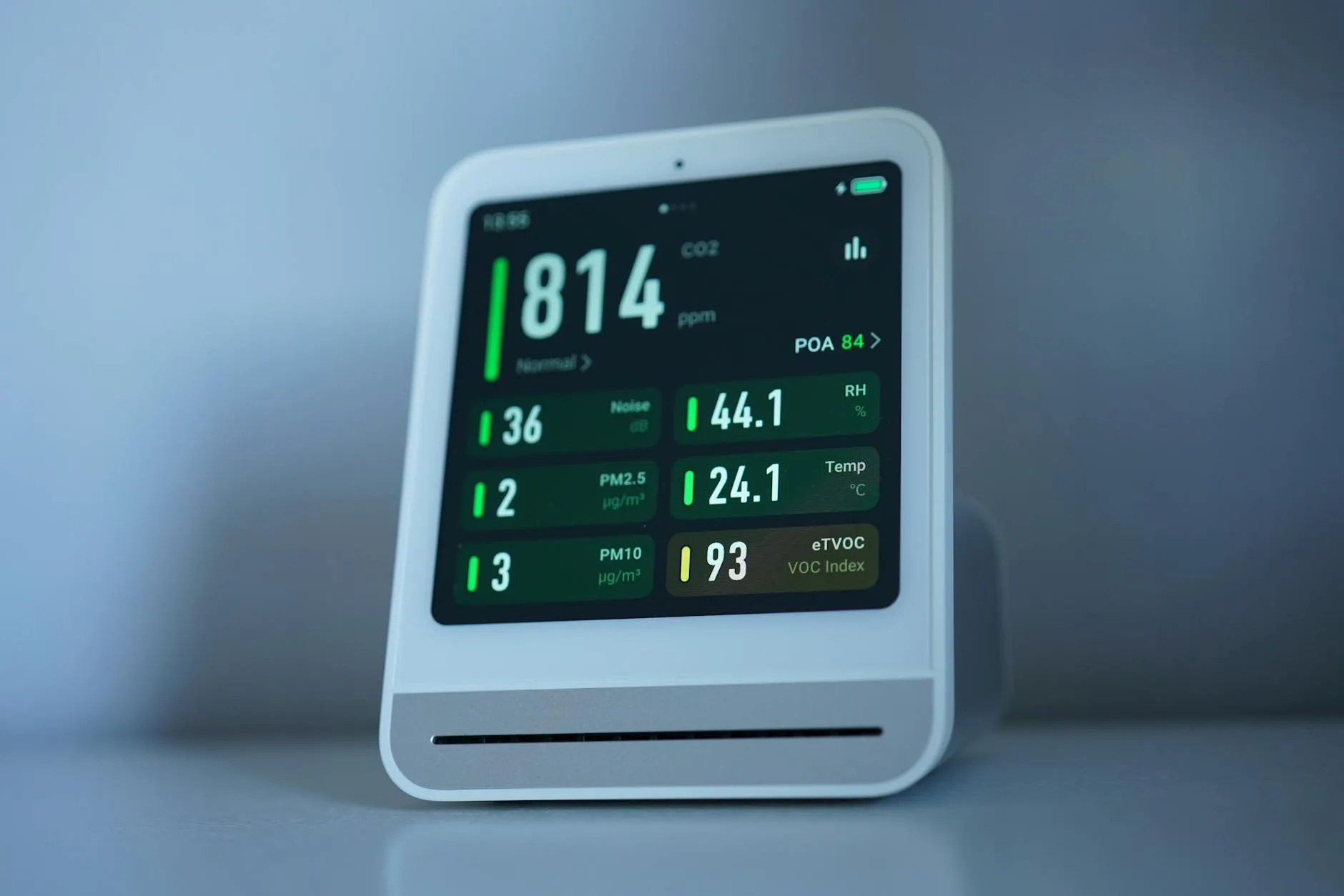
Buying the right-sized humidifier is half the battle. The other half is making sure it’s actually doing its job once it’s running. If you’re serious about improving your indoor air quality, monitoring humidity is not optional.
Get a Separate Hygrometer
Even if your humidifier has a built-in humidity sensor, buy a standalone digital hygrometer and place it on the opposite side of the room. Built-in sensors measure humidity right next to the mist output, which is always higher than the rest of the room. A ThermoPro or Govee hygrometer costs about £8-12 from Amazon UK and gives you an accurate reading of what the room actually feels like.
You’re aiming for 40-50% in most rooms. Nurseries and bedrooms can go up to 55% comfortably. If you’re consistently hitting 60%+ with the humidifier on its lowest setting, the unit is too powerful for the room — run it intermittently or return it for something smaller.
Seasonal Adjustment
Your humidifier needs change noticeably through the year. In the depths of January with the heating on full blast, you might run it on high all night. By April, you might only need it a few hours in the evening. And from June to September, most UK homes don’t need one at all — our summers are humid enough (sometimes too humid, but that’s a different conversation about air purifiers).
A unit with a built-in humidistat handles this automatically — it measures the room humidity and adjusts output to maintain your target level. Worth the extra £20-30 over a manual unit, especially for bedrooms where you don’t want to wake up in a swamp.
Specific Recommendations by Room Type
Rather than leave you with just theory, here’s what I’d actually buy for each scenario.
Nursery or Small Bedroom (8-14 m²)
The Levoit LV600S (about £70-90 from Amazon UK) is the one I’d recommend. It’s ultrasonic, very quiet at 28 dB on low, and has a 6-litre tank that runs all night without a refill. Technically overpowered for a small room, but that means you can run it on the lowest setting and barely hear it — ideal when there’s a sleeping child involved. It also has app control, which means checking humidity without opening the nursery door.
Medium Bedroom or Home Office (14-22 m²)
The Duux Beam Mini (about £80-100 from John Lewis) fits well here. It’s compact, top-fill, runs quietly, and has an accurate built-in humidistat. The 3-litre tank gives about 10 hours on medium. Good looking enough that it doesn’t scream “medical device” on your desk.
Living Room or Open-Plan Space (22-40 m²)
This is where you want to step up to either a large ultrasonic or an evaporative unit. The Philips HU3918 (about £130-160 from Currys or Amazon UK) is an evaporative humidifier with NanoCloud technology that handles rooms up to 45 m². No white dust, self-regulating, and the air it produces feels more natural than ultrasonic mist. The replacement filters cost about £20 and last 3-4 months.
For those with a bigger budget who also want quieter operation for sleep, the Dyson PH04 (about £550-650 from Dyson or John Lewis) combines humidification, air purification, and formaldehyde sensing. Expensive, but it genuinely does the work of two or three devices. If you’re already considering a purifier for the same room, the maths starts to make sense.
If you are solving the same room problem, compare this with How to Prevent Mould in the Bathroom, Best Humidifiers 2026 UK: Ultrasonic, Evaporative & Steam.
Frequently Asked Questions
Can I use one humidifier for my whole house? It's possible with a large console humidifier rated for 60+ m², but results are usually disappointing. Humidity doesn't travel well through doorways and corridors. Two smaller units in the rooms you use most will always outperform one large unit trying to cover everything.
What happens if my humidifier is too big for the room? Over-humidifying creates condensation on windows and cold surfaces, which leads to mould growth. If relative humidity consistently exceeds 60%, you risk dust mite proliferation and potential structural damage from damp. Use a hygrometer to monitor and turn the unit down or off if readings climb too high.
How often should I refill my humidifier? This depends on tank size and output setting. A 4-litre tank running at 250 ml/hr lasts about 16 hours. For overnight bedroom use, a 2-litre tank on low is usually sufficient. Larger living room units with 5-6 litre tanks typically need refilling once daily.
Should I use distilled water in my humidifier? For ultrasonic humidifiers in hard water areas, distilled or demineralised water prevents white mineral dust on surfaces. Evaporative humidifiers handle tap water fine because minerals stay trapped in the wick filter. Boiled and cooled water is a reasonable compromise if you don't want to buy distilled regularly.
Do I need a humidifier in summer in the UK? Usually not. UK summers typically bring indoor humidity levels of 50-70%, which is adequate or even high. Most people only need a humidifier from October to March when central heating dries out indoor air. Air conditioning in summer can dry air out, but few UK homes have it.