Cooking can spike indoor air pollution faster than almost anything else you do at home. Frying onions, searing steak, running a gas hob and burning toast all release particles, gases, moisture and smells that hang around long after dinner if the kitchen has weak extraction. How cooking affects indoor air quality depends on heat, fuel, ventilation and how quickly the room clears afterwards; the aim is not to make cooking scary, but to control the obvious sources so the air clears quickly.
In This Article
- Cooking Indoor Air Quality: What Changes in Your Kitchen
- The Hob, Pan and Recipe Choices That Make the Biggest Difference
- Extractor Fans, Cooker Hoods and Open Windows
- Air Purifiers, Monitors and Dehumidifiers in a Kitchen
- A Practical Cooking Routine for Cleaner Indoor Air
- Rented Flats, Open-Plan Kitchens and Older UK Homes
- When Cooking Air Quality Becomes a Health or Safety Problem
- Frequently Asked Questions
Cooking Indoor Air Quality: What Changes in Your Kitchen
Cooking indoor air quality is mostly about three things: fine particles, gases and moisture. You can smell some of them, but not all of them. The annoying part is that the worst spike is usually short and sharp, so a room can feel fine again while the monitor still shows elevated particles.
Fine Particles from Frying, Grilling and Browning
Fine particles are the main reason cooking shows up so clearly on a PM2.5 monitor. Frying, grilling, roasting at high heat and browning food all create tiny particles from hot oil, food surfaces and combustion. A stir-fry in a dry wok can push readings up quickly; so can a tray of sausages under the grill.
These particles are different from dust. They are small enough to stay airborne, travel into adjoining rooms and take a while to clear. If your kitchen is open-plan, the sofa and dining area can share the same cooking plume. That is why a kitchen-only problem often becomes a whole downstairs air-quality problem.
For wider background on household pollutants, the existing BreatheCleanUK guide to common indoor air pollutants is useful, but cooking deserves its own treatment because the fix is often behavioural: lid on, heat down, extractor on earlier.
Gases from Gas Hobs and Ovens
Gas cooking adds combustion gases to the mix. The main practical concern is nitrogen dioxide, especially when a gas hob runs for a long time in a small kitchen. A recent GOV.UK response to the Air Quality Expert Group indoor-air report notes that nitrogen oxides can be emitted indoors during gas-appliance cooking.
That does not mean every gas hob is a crisis. It does mean extraction matters more. A gas hob used under a weak recirculating hood in a sealed flat is a different proposition from a well-ventilated kitchen with a ducted hood.
Moisture and Grease
Boiling pasta, simmering sauces and cooking rice all add moisture. Moisture itself is not a pollutant in the same way as PM2.5, but it makes condensation and mould more likely if it lingers. Grease is another issue: it coats cabinets, blocks filters and gives smells somewhere to stick.
If condensation is the main thing you notice after cooking, read the BreatheCleanUK guide to stopping condensation on windows as well. In the kitchen, though, the first lever is still extraction at the source.
The Hob, Pan and Recipe Choices That Make the Biggest Difference
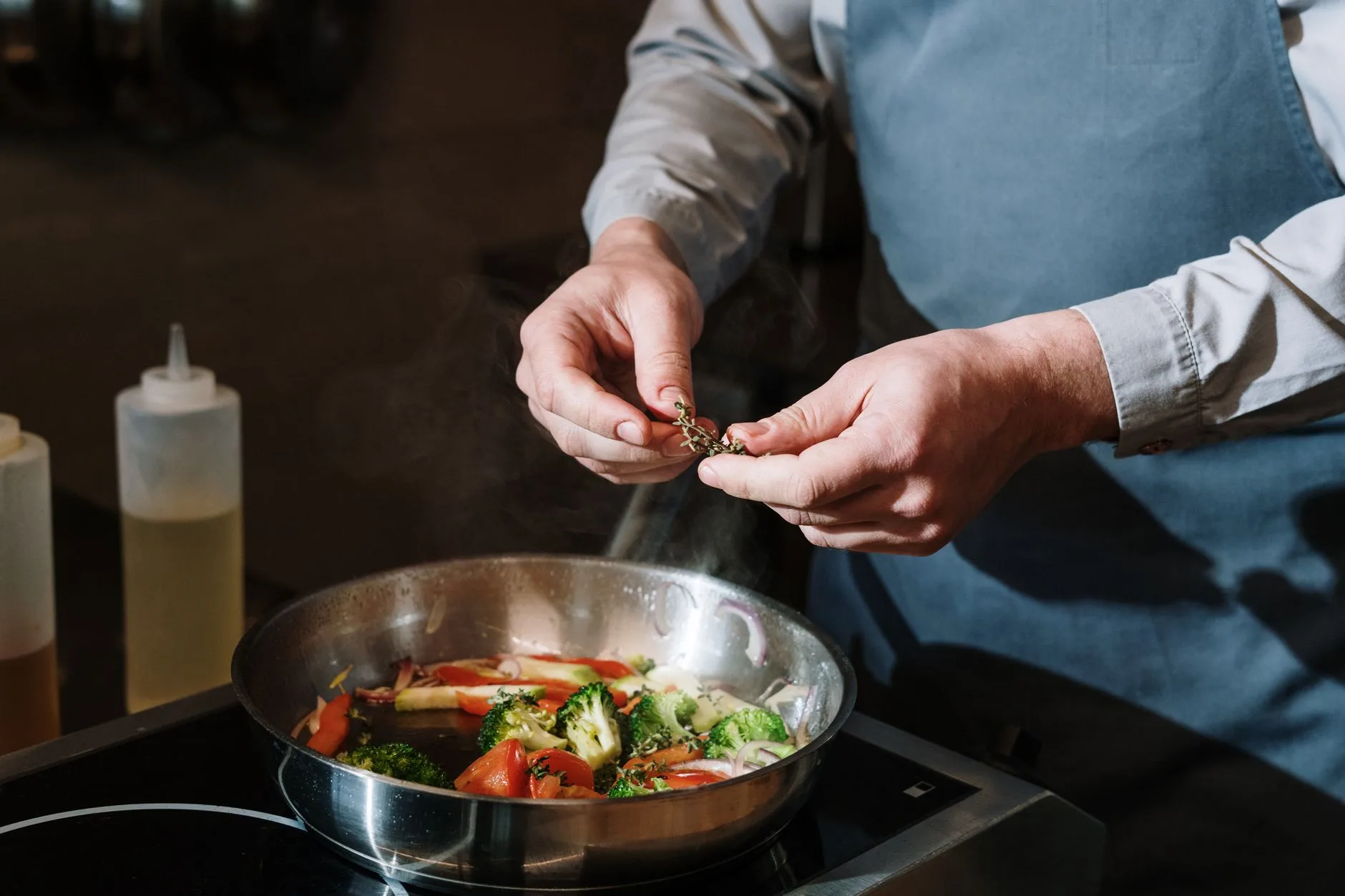
The biggest improvements often come before you buy anything. Change how much smoke, steam and splatter you create, and your extractor or purifier has less to deal with.
Gas, Induction and Electric Hobs
Induction and electric hobs do not burn gas in the room, so they avoid the combustion side of the problem. They can still produce particles from the food and oil, especially at high heat. Gas hobs add flame by-products as well as cooking particles.
If you already have gas, the sensible approach is:
- Use the rear rings under the hood where the extractor captures more of the plume.
- Run the hood before lighting the hob so air is already moving.
- Avoid using gas rings for room heat because that is pollution without cooking benefit.
- Keep pans matched to burner size so flame does not lick up the sides.
Switching from gas to induction is not a casual purchase. A single portable induction hob costs about £45-90 from Amazon UK, Argos or IKEA and is useful for testing the idea. A built-in induction hob usually costs about £220-700 from Currys, John Lewis or AO before installation, and some kitchens need electrical work on top.
Oil Temperature Matters
Oil that shimmers gently is one thing. Oil smoking in the pan is another. The smoke point depends on the oil, but the practical rule is simple: if you can see smoke, you are already making the air worse.
For most UK home cooking, refined rapeseed oil is a good everyday choice at about £2-4 per litre from Tesco, Sainsbury’s or Ocado. Extra virgin olive oil is lovely for lower-temperature cooking and finishing, but it is not the one I would use for a screaming-hot stir-fry. A cheap infrared thermometer is overkill for most kitchens, but a £12-20 probe thermometer from Lakeland or Amazon UK helps with oil temperature if you fry often.
Cooking Methods That Produce Fewer Spikes
You do not need to stop frying. Just pick the cleaner method when the result is still good.
- Lid-on simmering keeps steam and smells down when cooking sauces, rice or pulses.
- Oven roasting on a lined tray is usually cleaner than high-heat pan frying for sausages, bacon and oily fish.
- Air frying can reduce visible oil smoke, though it still needs ventilation and regular basket cleaning.
- Batch cooking creates one longer pollution event rather than several small ones through the day.
Air fryers cost about £60-180 from Ninja, Tower, Lakeland and Currys. They are not magic air-quality devices, but they are easier to contain and clean than a frying pan full of oil.
Extractor Fans, Cooker Hoods and Open Windows
Ventilation is the main fix for cooking indoor air quality. The trick is using it early enough and choosing the right type of extraction for your kitchen.
Ducted Hoods Beat Recirculating Hoods
A ducted cooker hood sends air outside. A recirculating hood pulls air through grease and carbon filters, then sends it back into the room. Recirculating hoods are better than nothing for grease and odour, but they do much less for moisture and gases.
If you own the property and can install ducting, that is the better long-term move. Budget cooker hoods start around £70-120 from B&Q, Wickes and Screwfix, but a decent ducted hood with proper extraction is often £180-450. Installation can add £150-400 depending on duct route, wall type and electrics.
Owners often complain that cooker hoods are too noisy, then run them on the lowest setting. That is understandable, but the lowest setting may not capture a frying plume. A hood on medium for 10 minutes is usually more useful than a hood on low for an hour after the kitchen already smells of chips.
Start the Extractor Before the Pan Gets Hot
Turn the extractor on two or three minutes before frying, grilling or using a gas hob heavily. That gives the air a direction before particles start rising. Leave it running for 10-15 minutes after cooking, longer if you can still smell food in the hall.
This is the same principle as the broader BreatheCleanUK home ventilation guide, but cooking needs more aggressive timing because the source is short and intense.
Use Windows Without Spreading the Problem
Opening a window helps, but only if it creates a sensible airflow. A window behind you and a hood above the hob can work well. A window that pulls smoke across the room before it reaches the hood can make the living area worse.
In winter, a short sharp ventilation burst is usually better than leaving the kitchen window cracked for hours. Open the kitchen window, open a second window or trickle vent on the other side of the home for a few minutes, then close them once the smell and steam have cleared. You lose less heat than you might expect because you are swapping air quickly rather than chilling the walls.
Air Purifiers, Monitors and Dehumidifiers in a Kitchen
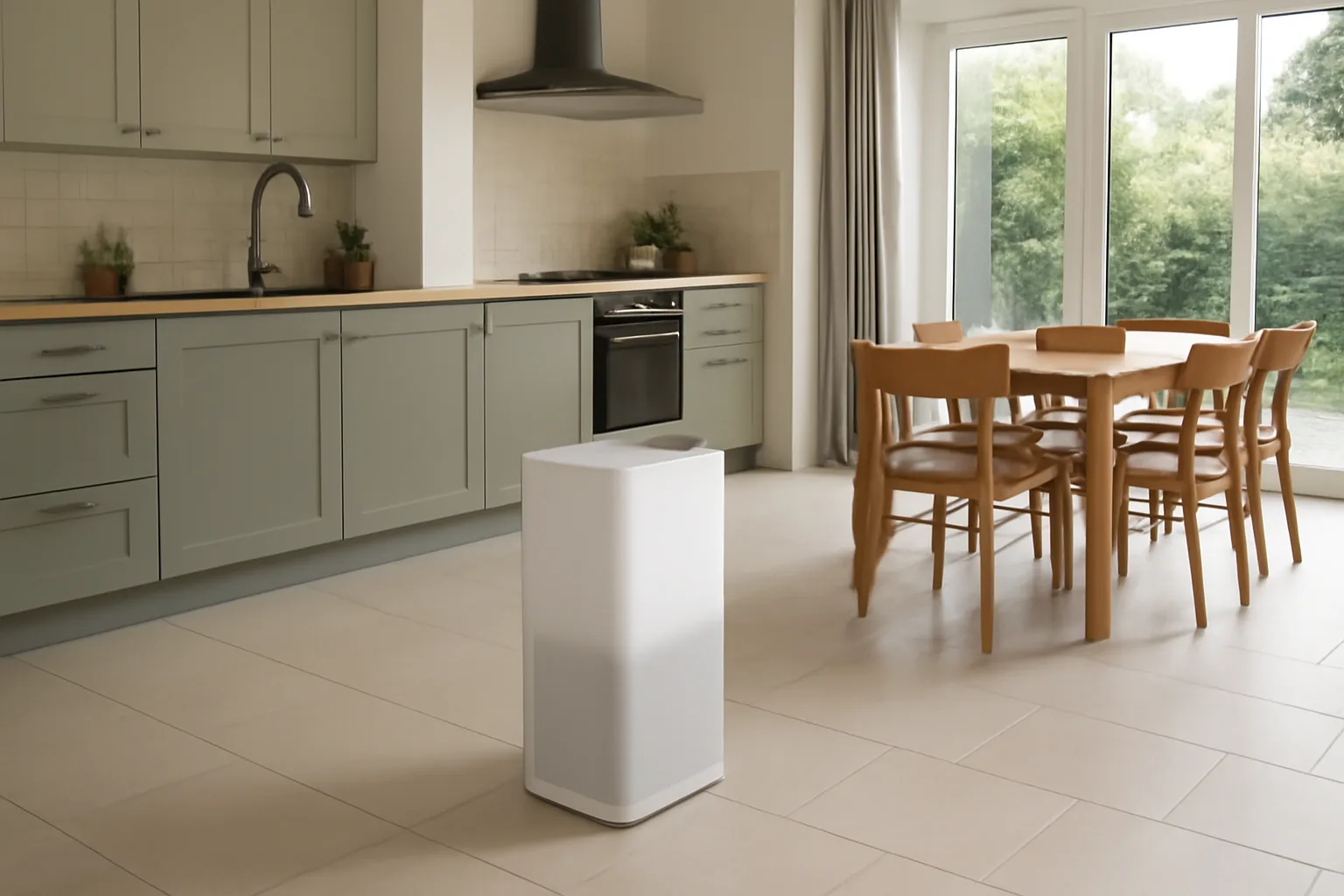
Devices can help, but they are not substitutes for source control. If smoke is pouring off the pan, a purifier on the far side of the room is playing catch-up.
Air Purifiers Can Help with Particles
A HEPA purifier can reduce cooking particles after they escape the hob area. It will not remove nitrogen dioxide well unless it has a meaningful activated carbon filter, and even then the carbon has a finite capacity. For cooking, I would prioritise CADR, filter cost and washable pre-filters over smart features.
Good UK options include:
- Levoit Core 300S — about £130-170 from Amazon UK; a solid small-room purifier for kitchens and open-plan flats if placed away from splatter.
- Blueair Blue Max 3250i — about £180-230 from John Lewis or Amazon UK; stronger airflow for open-plan living spaces.
- Philips 800i Series — about £180-250 from Currys or Argos; good app and auto mode, though replacement filters are not cheap.
If you are choosing a purifier mainly for kitchen particles, compare models using the BreatheCleanUK guide to CADR ratings. Based on the pattern in UK owner reviews, a tiny bedside purifier is the purchase people regret: it sounds busy, clogs quickly and still will not rescue an open-plan kitchen after a smoky fry-up.
Air Quality Monitors Show the Pattern
An air-quality monitor is useful because cooking spikes are easy to miss by smell alone. PM2.5 may still be elevated after the smell fades. A monitor also tells you whether your hood and window routine actually works.
Useful UK choices include the IKEA VINDSTYRKA at about £35, the Qingping Air Monitor Lite at about £80-100, and the Airthings View Pollution at about £220-280. If you only want to understand cooking spikes, a PM2.5 reading matters more than a glossy app.
There is a separate BreatheCleanUK walkthrough on measuring PM2.5 at home. For cooking indoor air quality, run a simple test: note the reading before cooking, during the hottest stage, 15 minutes after, and 45 minutes after. If it takes more than an hour to settle, your extraction routine needs work.
Dehumidifiers Deal with Moisture, Not Smoke
A dehumidifier can help if cooking moisture pushes humidity above 60% and your kitchen regularly gets condensation. It will not remove frying particles or gas-hob by-products.
For small flats, a MeacoDry Arete One 10L costs about £160-190 and is a sensible UK pick. Larger homes may need the 20L version at around £230-280. Cheaper mini dehumidifiers at £35-60 are usually too weak for cooking moisture; they are better for cupboards than kitchens.
A Practical Cooking Routine for Cleaner Indoor Air
The best routine is boring, repeatable and cheap. It should work on a wet Tuesday evening when you are tired, not just when you are doing a science experiment.
Before Cooking
- Clear the hob area so pans sit fully under the hood.
- Open a trickle vent or nearby window if outdoor air is reasonable.
- Turn the extractor on before the pan heats up.
- Choose the rear ring if you are frying or using gas.
- Put lids within reach for simmering and emergency smoke control.
This takes less than a minute. The difference is that you are not waiting until the smoke alarm complains before doing anything.
During Cooking
Keep heat just high enough for the job. If oil smokes, take the pan off the heat rather than waving a tea towel around and carrying on. Use a splatter screen for bacon, burgers and shallow frying; they cost about £8-15 from Lakeland, Dunelm or Amazon UK and reduce greasy aerosol as well as mess.
For boiling and steaming, lids matter. Pasta water does not need to roll like a jacuzzi for 10 minutes. A lower simmer with a lid cracked open releases less steam and uses less energy.
After Cooking
Leave the hood running while you eat. If you have an air purifier, put it on a higher setting for 20-30 minutes after heavy frying, then drop back to auto. Wipe greasy surfaces once they cool, because old grease keeps smells hanging around and makes the next cooking session dirtier.
If you own an air-quality monitor, do not obsess over every peak. Watch recovery time. A short spike that clears in 20-30 minutes is less concerning than a moderate reading that sits there all evening.
Rented Flats, Open-Plan Kitchens and Older UK Homes
Many UK kitchens are awkward: weak recirculating hood, no external wall, painted-shut sash windows, or an open-plan layout that spreads smells everywhere. The answer is not always “install a better extractor”, because renters and leaseholders may not be allowed to.
If You Rent
You can still improve the situation without drilling through walls.
- Clean or replace hood filters every 1-3 months if you cook often; universal carbon filter sheets cost about £8-15.
- Use a portable induction hob for high-heat cooking if your fitted gas hob has poor extraction.
- Put a purifier just outside the kitchen zone so it catches escaping particles without sucking in grease.
- Report broken extractor fans in writing, especially where condensation or mould follows cooking.
The BreatheCleanUK guide to improving air quality in a rented flat covers landlord conversations in more detail. For cooking, keep the request practical: the extractor is noisy, weak, broken or not venting properly, and you are seeing condensation or persistent smells.
If Your Kitchen Is Open-Plan
Open-plan kitchens need faster capture because there is no door to close. A higher-CADR purifier in the living area helps after the event, but extraction at the hob still comes first. If you can, use a fan to push air towards an open kitchen window rather than out into the living space. A basic quiet pedestal fan is about £25-60 from Argos, John Lewis or Screwfix.
Do not place a purifier right beside a frying pan. Grease will clog the pre-filter and shorten filter life. Place it two to three metres away, ideally between the kitchen and the living area.
If You Have an Older House
Older UK homes can be leaky, which helps with some ventilation but does not guarantee good extraction. A draughty Victorian terrace can still trap cooking smells in the stairwell. Check whether old air bricks are blocked, whether the kitchen door seals too tightly, and whether the hood filter is saturated.
If you are doing a kitchen renovation, make ducting part of the plan early. Retrofitting a proper external duct after new cabinets go in is more annoying and usually more expensive.
When Cooking Air Quality Becomes a Health or Safety Problem
Most cooking pollution is about comfort and long-term exposure, not immediate danger. There are exceptions. Carbon monoxide, gas appliance faults and recurring respiratory symptoms deserve faster action.
Carbon Monoxide Is Separate from Cooking Smells
Carbon monoxide has no smell. A smoky kitchen does not tell you whether CO is present, and a clean-smelling room does not prove it is absent. UK homes with fuel-burning appliances should have working carbon monoxide alarms. A decent alarm costs about £15-30 from Screwfix, B&Q, Argos or Amazon UK.
The Health and Safety Executive has clear advice on carbon monoxide risks from gas appliances. If an alarm sounds, or if you suspect a gas appliance is faulty, leave the property, get fresh air and follow the emergency advice rather than trying to ventilate and carry on cooking.
Symptoms and Vulnerable People
People with asthma, COPD, young children and older adults may notice cooking pollution more. If coughing, wheezing or tight chest symptoms reliably follow frying or gas-hob use, treat that pattern seriously. Improve extraction first, then consider a purifier and speak to a clinician if symptoms persist.
For allergy and asthma-focused filtration, the BreatheCleanUK guide to air purifiers and allergies is a better next read than a generic product list.
The Point Where You Should Get Help
Get professional help if:
- Your extractor does not vent or pull at all even after filters are cleaned.
- Condensation and mould return quickly after cooking despite normal ventilation.
- Gas flames burn yellow or orange instead of blue.
- A carbon monoxide alarm sounds or you feel unwell near gas appliances.
For owned homes, an electrician or ventilation installer can assess extractor options. For gas appliances, use a Gas Safe registered engineer. A basic cooker-hood replacement may be a few hundred pounds; sorting a faulty gas appliance is not optional spending, it is safety work.
Frequently Asked Questions
Does cooking really affect indoor air quality? Yes. Frying, grilling, roasting and gas cooking can raise particles, moisture and gases indoors. The spike is often short, but it can spread through open-plan rooms if extraction is weak.
Is gas cooking worse for indoor air than induction? Gas adds combustion by-products as well as food and oil particles, so ventilation matters more. Induction avoids the flame gases, but high-heat cooking can still produce PM2.5 from food and oil.
Will an air purifier remove cooking smells? A purifier with HEPA and a decent carbon filter can reduce particles and some odours, but it should sit away from grease and it will not replace a cooker hood. Expect to pay about £130-250 for a useful kitchen-adjacent model.
Should I open windows while cooking in winter? Usually, yes, but do it briefly and deliberately. Run the extractor, crack a kitchen window during the worst cooking stage, then ventilate for a few minutes after cooking rather than leaving the window open all evening.
How do I know if my cooking ventilation is good enough? Use smell, condensation and recovery time. If a PM2.5 monitor stays high for more than an hour after cooking, or food smells linger upstairs, your extraction routine needs improving.
Can cooking cause mould? Cooking moisture can contribute to condensation and mould, especially in small flats and cold kitchens. Use lids, run the extractor, wipe condensation, and consider a proper dehumidifier if humidity regularly stays above 60%.