Understanding the CADR rating explained is essential for anyone considering an air purifier in the UK. Many shoppers see the numbers on the box—often alongside impressive claims—and assume higher is always better. But CADR is more nuanced, with real-world trade-offs and quirks that matter for British homes. In this guide, I’ll break down how CADR works, what it actually tells you, and how to use it as a practical tool for cleaner indoor air.
In This Article
- What CADR Actually Measures
- CADR Rating Explained for UK Rooms
- Smoke, Dust and Pollen Numbers
- Matching CADR to Room Size
- Why CADR Is Not the Whole Story
- Noise, Filters and Running Costs
- How to Compare Air Purifiers in a Shop
- Common CADR Mistakes
- Frequently Asked Questions
What CADR Actually Measures
CADR stands for Clean Air Delivery Rate. It’s a metric created to give consumers a standard way to compare how quickly different air purifiers can remove three common categories of airborne particles: smoke, dust, and pollen. The Association of Home Appliance Manufacturers (AHAM) developed this system, and you can find a detailed breakdown at the AHAM Verifide CADR explainer.
How CADR Testing Works
During CADR testing, an air purifier is placed in a sealed chamber and challenged with a known concentration of test particles. The machine runs at its highest speed, and sensors track how quickly it reduces the levels of smoke (smallest), dust (medium), and pollen (largest). The result is a set of three numbers—usually given in cubic metres per hour (m³/h) for UK models, or cubic feet per minute (CFM) in US specs.
Why CADR Exists
Before CADR, brands could make vague claims about air cleaning without any way for buyers to compare models. Now, a Dyson or Honeywell purifier with a CADR of 350 m³/h for smoke should clean a room’s air as quickly as any other machine with the same rating, whatever the brand or price point.
What CADR Does NOT Cover
It’s important to understand that CADR only measures particle removal—specifically, how fast the device reduces airborne smoke, dust, and pollen. It does not measure:
- Removal of gases (like VOCs or odours)
- Filtration of viruses or bacteria
- Long-term filter durability
- Performance on low or medium speed settings
So, while a high CADR is a good sign, it’s not the only thing to look for. I’ve seen many people buy a model based solely on CADR, only to be disappointed by noise or running costs later on.
CADR Rating Explained for UK Rooms
UK homes and flats tend to be smaller and more compartmentalised than North American houses. This has real implications for CADR. The numbers you see are based on test chambers that may be larger than your bedroom or lounge, and our typical ceiling heights (usually 2.3–2.5m) affect how much air needs to be cleaned.
Room Size and CADR in the UK
A common UK double bedroom is about 12m², and a lounge might be 18–25m². To work out if a purifier’s CADR is suitable, you need to consider both the floor area and the ceiling height. For example, a 15m² room with a 2.4m ceiling holds 36m³ of air.
The 80/20 Rule
Most experts, including those referenced by AHAM, suggest that a purifier should be able to deliver clean air to the whole room at least five times per hour. This means the CADR (in m³/h) should be at least two-thirds of the room’s volume. For a 36m³ room, a CADR of around 24 m³/h is the bare minimum, but for allergies or pollution hotspots, you’ll want 80–120 m³/h or more.
Real-World Example
I recently helped a friend pick a purifier for her London flat. She was looking at a model rated at 60 m³/h, thinking it was ‘plenty’ for her 20m² living room. But with a 2.5m ceiling, that’s 50m³ of air—so the purifier would only manage a single air change per hour. We stepped up to a 150 m³/h unit, and the difference in air freshness was quickly noticeable.
Internal Resources for UK Context
If you’re unsure about your indoor air quality, check out How to Test Indoor Air Quality at Home for easy ways to measure what you’re breathing, and How to Improve Indoor Air Quality: The Complete UK Guide for practical steps beyond just buying a purifier.
Smoke, Dust and Pollen Numbers
Every CADR rating comes as three separate numbers: one each for smoke, dust, and pollen. Here’s what each means for UK households.
Smoke CADR
Smoke CADR measures how fast the purifier removes the tiniest airborne particles (0.09–1.0 microns). This is crucial for:
- Traffic pollution (PM2.5)
- Tobacco smoke
- Cooking fumes
- Tiny pet dander
If you live near a busy road or have a smoker in the house, prioritise a high smoke CADR.
Dust CADR
Dust CADR covers particles from 0.5–3 microns, including:
- Household dust
- Skin flakes
- Larger pet dander
- Dust mite debris
This is especially relevant if you or your family suffer from dust allergies. For more on this, see Do Air Purifiers Help with Allergies?.
Pollen CADR
Pollen CADR deals with the largest test particles (5–11 microns). It’s the key number for:
- Hay fever sufferers
- Rural or suburban homes with open windows
- Pet owners (as some pollen sticks to fur)
If you’re mainly concerned about seasonal allergies, a high pollen CADR is beneficial. For pet-specific issues, Do Air Purifiers Help with Pet Allergies? goes deeper.
Why the Numbers Differ
It’s normal for a purifier to have different CADR scores for each contaminant. The filter’s design, fan power, and air path all affect which particles are captured most efficiently. I usually recommend looking at the lowest of the three numbers as the ‘true’ CADR for a room, as this will be the limiting factor.
Matching CADR to Room Size
Getting the right CADR for your space is more than just picking the biggest number. Here’s how to do it step by step for a typical UK home.
Step-by-Step: Sizing Your Purifier
- Measure your room: Multiply length × width × ceiling height (in metres) to get the volume in m³.
- Decide on air changes per hour (ACH): For allergy or asthma sufferers, aim for 5–6 ACH; for general use, 3–4 is usually enough.
- Calculate minimum CADR: Divide the room volume by the number of minutes in an hour (60), then multiply by your target ACH.
For example, a 20m² room with a 2.4m ceiling is 48m³. To get 5 ACH:
- 48m³ × 5 = 240m³/h CADR minimum.
UK Product Examples
Some popular air purifiers in the UK market and their CADR ratings:
- Levoit Core 300S: ~195 m³/h (good for small bedrooms)
- Blueair 221: ~350 m³/h (medium lounges)
- Philips Series 3000i: ~400 m³/h (larger open-plan spaces)
What If Your Room Is Oddly Shaped?
If you have an L-shaped or open-plan area, I would measure the whole zone the air can circulate. For rooms with doors or obstacles, consider two smaller purifiers rather than one oversized unit for better coverage.
Sizing for UK Flats and Terraced Homes
Terraced houses and flats often have smaller, closed rooms, so you can get away with lower CADR. But if you’re dealing with damp or mould, as discussed in GOV.UK damp and mould health guidance, prioritise air exchanges and proper placement.
Why CADR Is Not the Whole Story
While CADR is a useful comparison tool, it has limitations—especially in UK living spaces.
Limitations of CADR
- Only highest fan speed tested: Most people run purifiers on medium or auto to reduce noise. CADR doesn’t show how the unit performs at those settings.
- No gas or odour filtration: If you want to tackle VOCs or smells, look for models with activated carbon and check for specific claims or test results.
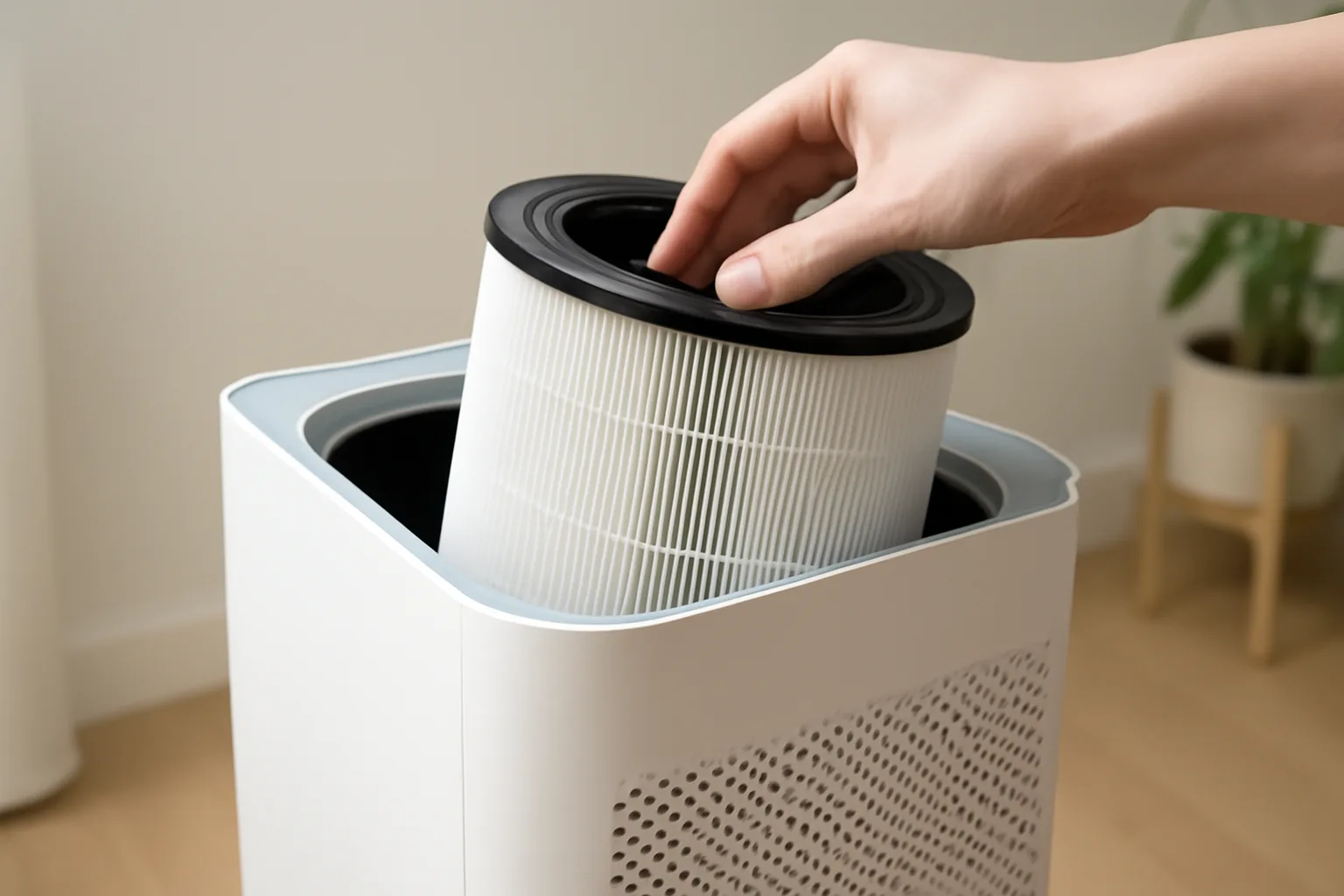
- Filter age and clogging: CADR is measured with a new filter. As filters load up with dust, performance drops—sometimes clearly. I’ve seen many users blame the machine, not realising it’s overdue for a filter change.
Room Layout and Air Flow
British homes often have radiators, alcoves, or clutter that disrupt air movement. A high CADR won’t help much if the purifier is stuck behind a sofa or in a corner. Place it centrally and away from obstructions for best results.
Other Standards to Consider
Some manufacturers list ‘air changes per hour’ (ACH), which is more directly tied to room size. If you see both CADR and ACH, use them together for a more realistic estimate.
When to Ignore High CADR
There’s no point overspending on a huge CADR for a small box room. I’ve made this mistake myself—buying a beast of a machine for my office, only to hate the noise and draftiness. Match the purifier to your real needs, not just the biggest number.
Noise, Filters and Running Costs
Noise and ongoing costs can be just as important as CADR for long-term satisfaction.
Noise Levels in UK Homes
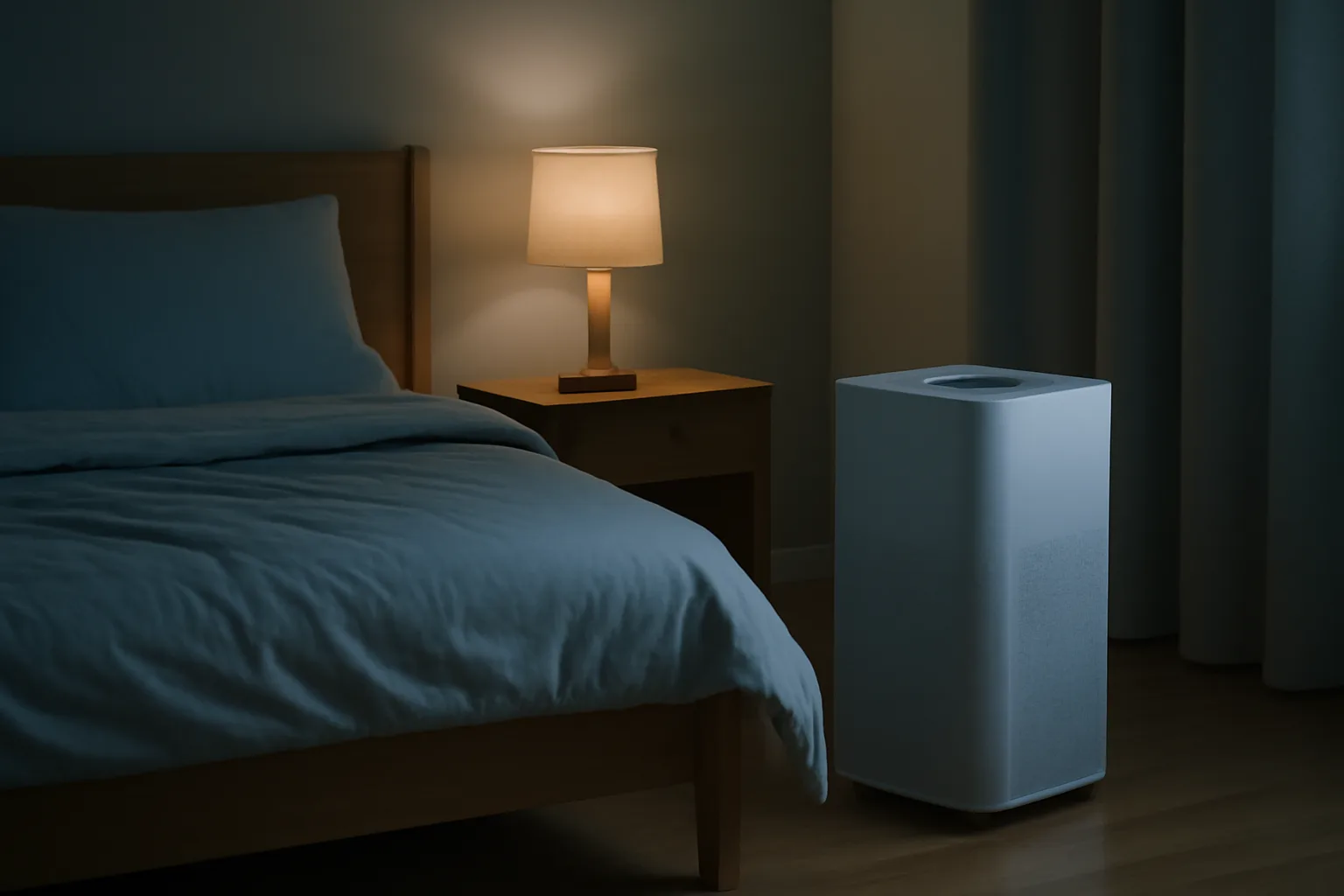
Most CADR tests are done at maximum fan speed, which can be loud. In my experience, even top brands like Dyson and Philips can be intrusive above 55dB—like a loud conversation. If you’re a light sleeper, check for quiet modes or night settings.
Typical Noise Ranges
- Bedroom-friendly: 20–35dB on low
- Living room: 40–55dB on medium/high
- Anything above 60dB is hard to ignore
Filter Types and Costs
- HEPA filters: Standard for particle removal, but need replacing every 6–12 months.
- Carbon filters: Help with odours and gases; also require periodic replacement.
- Washable filters: Some models, like those in Best Air Purifiers with Washable Filters 2026 UK, can be rinsed and reused, saving money.
Electricity Use
Most purifiers are efficient, but higher CADR means a bigger fan and more power. Expect 20–60W in most cases—less than a small kettle, but it adds up if you run it 24/7.
Tips from Experience
I often run my bedroom purifier on low all night, then ramp it up in the morning for a quick air refresh. This keeps noise and running costs down while maintaining good air quality.
How to Compare Air Purifiers in a Shop
Standing in John Lewis or browsing Argos online, it’s easy to be overwhelmed. Here’s how to cut through the jargon and compare models sensibly.
What to Look For
- All three CADR numbers: Don’t rely on a single ‘headline’ figure—check smoke, dust and pollen.
- Room size rating: Make sure the claimed coverage matches your actual space, using your own measurements.
- Noise level at typical settings: Brands often list the quietest and loudest figures. Try to find the noise at the speed you’ll use most.
- Filter replacement cost and type: Can you get filters easily? Are they affordable? Washable options can save hassle.
- Extra features: Some purifiers offer air quality sensors, auto modes, or app controls. These can make a difference in daily use.
Quick Comparison Process
- List your room size and needs (allergies, pets, pollution).
- Shortlist models with suitable CADR and quiet operation.
- Check filter costs and availability.
- Read real UK user reviews—not just manufacturer claims.
- Don’t forget to factor in placement and looks, especially in a small flat.
Useful Internal Resources
For more context, see How to Improve Indoor Air Quality: The Complete UK Guide for tips on combining purifiers with other strategies, and How to Test Indoor Air Quality at Home if you want to measure results.
Common CADR Mistakes
Even with a good understanding of CADR, many shoppers make a few classic errors. Here’s what to avoid based on my own observations and reader feedback.
- Ignoring the smallest CADR number: Some machines have a high pollen score but low smoke removal. For urban areas, smoke CADR matters most.
- Assuming CADR is the only thing that counts: A high CADR with a noisy fan or expensive filters can be a poor choice for daily use.
- Forgetting about room layout: Placing the purifier behind furniture or in a corner drastically reduces its effectiveness.
- Not replacing filters on time: Performance drops as filters clog. Set a reminder or use models with filter-change indicators.
- Running on low and expecting high CADR results: CADR is measured at full blast; real-world cleaning is slower on quieter settings.
- Overlooking gas and odour needs: If you have issues with cooking smells or chemicals, check for substantial carbon filtration.
Frequently Asked Questions
Q1: Does a higher CADR always mean better air cleaning?
Not always. A higher CADR means faster particle removal at maximum speed, but it doesn’t guarantee quieter operation, better gas filtration, or cheaper running costs. Match the CADR to your room size and actual needs for best results.
Q2: How do I convert CADR from CFM to m³/h for UK specs?
Multiply the CFM value by 1.7 to get m³/h. For example, a CADR of 200 CFM is approximately 340 m³/h. Most UK products now list m³/h directly, but imported models may use CFM.
Q3: Can I use one air purifier for my whole flat or house?
Usually not. Air purifiers work best in enclosed rooms. If you have doors closed or multiple floors, you’ll need a separate unit for each major living area.
Q4: Are air purifiers helpful for allergies and pet dander?
Yes, provided you choose a model with a high enough CADR for your room size and type of allergen. For pet-specific advice, see Do Air Purifiers Help with Pet Allergies?.
Q5: How often should I change my air purifier filters?
This varies by brand, usage, and home conditions, but most HEPA filters last 6–12 months. Check your manufacturer’s guidance and look for filter-change indicators. Washable filter models are an option, as discussed in Best Air Purifiers with Washable Filters 2026 UK.
Q6: Do air purifiers help with damp and mould?
They can help reduce airborne mould spores, but they don’t fix underlying damp issues. For health advice, consult GOV.UK damp and mould health guidance.