You spend roughly 90% of your life indoors — at home, at work, in the car. And the air you’re breathing in those spaces is, on average, 2-5 times more polluted than the air outside. That sounds alarming, and it should be — but not because indoor air is some hidden death trap. It’s because most of us never think about it. The sources of indoor pollution are mundane: your cooker, your candles, your cleaning products, your furniture. Understanding what they release and where the problems actually come from is the first step to fixing them.
In This Article
- Why Indoor Air Pollution Matters
- Particulate Matter: PM2.5 and PM10
- Volatile Organic Compounds (VOCs)
- Carbon Dioxide (CO2)
- Nitrogen Dioxide (NO2)
- Carbon Monoxide (CO)
- Mould Spores and Biological Pollutants
- Radon
- How to Reduce Indoor Air Pollution
- Frequently Asked Questions
Why Indoor Air Pollution Matters
The Health Impact
The World Health Organization estimates that 3.2 million deaths annually are linked to indoor air pollution globally. In the UK, the effects are more subtle but cumulative: respiratory irritation, aggravated asthma, headaches, fatigue, poor concentration, and long-term cardiovascular risk.
Why Indoor Air Is Often Worse Than Outdoor
Modern UK homes are increasingly well-sealed for energy efficiency — double glazing, draft-proofing, cavity insulation. This is excellent for heating bills but terrible for air quality. Pollutants generated indoors (cooking, cleaning, off-gassing from furniture) have nowhere to go. In a poorly ventilated home, concentrations build throughout the day.
Who’s Most Vulnerable
- Children — faster breathing rates relative to body size, developing lungs more susceptible to damage
- Elderly people — more likely to spend extended time indoors, often with underlying conditions
- Asthma and allergy sufferers — indoor pollutants are trigger factors for attacks
- People working from home — 8+ hours in a single room with recirculated air
I measured CO2 levels in my home office during a winter work-from-home day using a monitor — by 2pm with the door closed and no ventilation, CO2 hit 2,400ppm (outdoor ambient is ~420ppm). At that level, cognitive performance drops measurably. Opening a window for 10 minutes brought it back to 800ppm.
Particulate Matter: PM2.5 and PM10
What It Is
Tiny particles suspended in the air, classified by size:
- PM10 — particles under 10 micrometres (coarse particles: dust, pollen, mould spores)
- PM2.5 — particles under 2.5 micrometres (fine particles: combustion residue, cooking fumes, smoke)
PM2.5 is the more dangerous category because the particles are small enough to penetrate deep into your lungs and enter your bloodstream.
Indoor Sources
- Cooking — frying, grilling, and toasting generate high levels of PM2.5. A single frying session can spike PM2.5 to 300+ µg/m³ (the WHO guideline is 15 µg/m³ annual average)
- Candles and incense — burning anything produces particulate matter. Scented candles are popular but they’re a meaningful PM2.5 source
- Wood burners and open fires — even with a chimney, wood-burning stoves leak PM2.5 into the room during door opening and through imperfect seals
- Smoking — the single largest indoor PM2.5 source if present
- Vacuuming — disturbs settled dust, temporarily spiking PM10 levels (especially with bagless vacuums that don’t seal well)
- Dust — settled dust resuspends into the air with movement, door opening, and heating system airflow
Why It Matters in the UK
UK homes have high cooking-related particulate exposure because open-plan kitchens are common — cooking fumes spread into living areas without barriers. Our guide to testing indoor air quality covers how to measure PM2.5 levels in your home with affordable monitors.
Volatile Organic Compounds (VOCs)
What They Are
VOCs are gases emitted by certain solids and liquids at room temperature. They’re organic chemicals that evaporate readily — you can often smell them (paint smell, new furniture smell, cleaning product smell).
Indoor Sources
- Paint and varnish — fresh paint off-gases VOCs for weeks (especially oil-based). Even “low VOC” paints emit some formaldehyde and acetaldehyde
- New furniture — pressed wood (MDF, chipboard, plywood) emits formaldehyde from the adhesives binding the wood particles. IKEA furniture, fitted kitchens, laminate flooring — all sources
- Cleaning products — bleach, disinfectant sprays, air fresheners, and oven cleaners release VOCs including chloroform, benzene, and toluene
- Air fresheners — plug-in, spray, and reed diffuser types all emit VOCs. The irony: products sold to “freshen” air are often making it worse
- Personal care products — hairspray, deodorant, nail polish, perfume
- Dry-cleaned clothes — perchloroethylene (PERC) used in dry cleaning off-gases for days after collection
- Printers and copiers — toner particles and ozone from laser printers
Formaldehyde: The Big One
Formaldehyde is the most common VOC in UK homes. Sources include:
- MDF and chipboard furniture (the largest source)
- Insulation materials (urea-formaldehyde foam, though banned in new UK installations since the 1980s)
- Certain cosmetics and personal care products
- Gas cookers (combustion byproduct)
The WHO recommends indoor formaldehyde below 0.1 mg/m³. Many UK homes exceed this, particularly those with new furniture in poorly ventilated rooms. For a deeper dive into VOCs specifically, our VOC reduction guide covers identification and practical solutions.
Carbon Dioxide (CO2)
What It Is
CO2 is a natural byproduct of breathing. It’s not toxic at normal indoor levels but is a reliable proxy for ventilation quality — high CO2 means insufficient fresh air exchange.
Indoor Sources
- People breathing — each person exhales roughly 200ml of CO2 per minute at rest
- Gas appliances — boilers, cookers, and water heaters produce CO2 during combustion
- Pets — contribute smaller but measurable amounts
Levels and Effects
- 400-600 ppm — outdoor-equivalent, excellent ventilation
- 600-1,000 ppm — acceptable for occupied rooms
- 1,000-2,000 ppm — stuffiness, mild drowsiness, reduced concentration
- 2,000-5,000 ppm — headaches, fatigue, measurably impaired cognitive function
- 5,000+ ppm — unsafe for prolonged exposure
A bedroom with two adults sleeping and the door and windows closed will reach 2,000-3,000 ppm by morning. This is why you wake up feeling groggy in an unventilated bedroom — it’s not just tiredness, it’s CO2. Our guide to CO2 monitors covers the best devices for tracking this in real time.

Nitrogen Dioxide (NO2)
What It Is
A brown, pungent gas produced by high-temperature combustion. Irritates the respiratory tract and worsens asthma.
Indoor Sources
- Gas cookers — the primary indoor source in UK homes. Every time you use a gas hob or oven, NO2 levels spike. Studies show homes with gas cookers have 50-100% higher NO2 than homes with electric
- Gas boilers — especially open-flue (non-room-sealed) boilers that draw combustion air from the room
- Portable gas heaters — unflued portable heaters release all combustion products directly into the room
- Tobacco smoke — contains NO2 alongside hundreds of other pollutants
The Gas Cooker Debate
Research from the Royal College of Physicians has highlighted the indoor NO2 contribution from gas cooking. During peak cooking (multiple rings on, oven running), kitchen NO2 can exceed outdoor legal limits. This is particularly concerning in small kitchens without extractor fans.
The practical solution isn’t necessarily replacing your gas cooker (though induction is better for air quality) — it’s ventilation. An extractor fan that vents to outside (not a recirculating filter hood) removes the majority of NO2 during cooking.
Carbon Monoxide (CO)
What It Is
A colourless, odourless gas that’s lethal at high concentrations. CO prevents your blood from carrying oxygen — even low-level exposure causes headaches, dizziness, and confusion.
Indoor Sources
- Faulty gas appliances — the primary risk. Boilers, cookers, and fires that aren’t burning fuel completely produce CO instead of CO2
- Blocked flues and chimneys — combustion gases can’t escape and re-enter the room
- Running engines in enclosed spaces — cars in attached garages with internal doors
- Portable generators — never run indoors
- Barbecues and camping stoves — never use indoors
Why It’s Different
CO is the only indoor pollutant on this list that kills rapidly at high concentrations. Every other pollutant causes gradual, cumulative harm. CO can cause fatal poisoning within hours if an appliance malfunctions.
Protection
- CO alarm — mandatory in all UK rental properties (Smoke and Carbon Monoxide Alarm Regulations 2015). Every home should have one on every floor, particularly near gas appliances and bedrooms
- Annual gas safety check — Gas Safe registered engineer checks all gas appliances yearly. Required for landlords, strongly recommended for homeowners
- Never block ventilation — don’t seal air bricks, trickle vents, or flues even in winter
Mould Spores and Biological Pollutants
What They Are
Living or organic particles in the air:
- Mould spores — released by visible and hidden mould growth
- Dust mites — their faecal matter (not the mites themselves) is a major allergen
- Pet dander — skin cells and proteins from cats, dogs, and other pets
- Pollen — enters through windows and on clothing
- Bacteria — from standing water, damp, and HVAC systems
Indoor Sources of Mould
- Bathroom — condensation from showers, poor ventilation, grout and silicone sealant
- Kitchen — steam from cooking, leaks under sinks
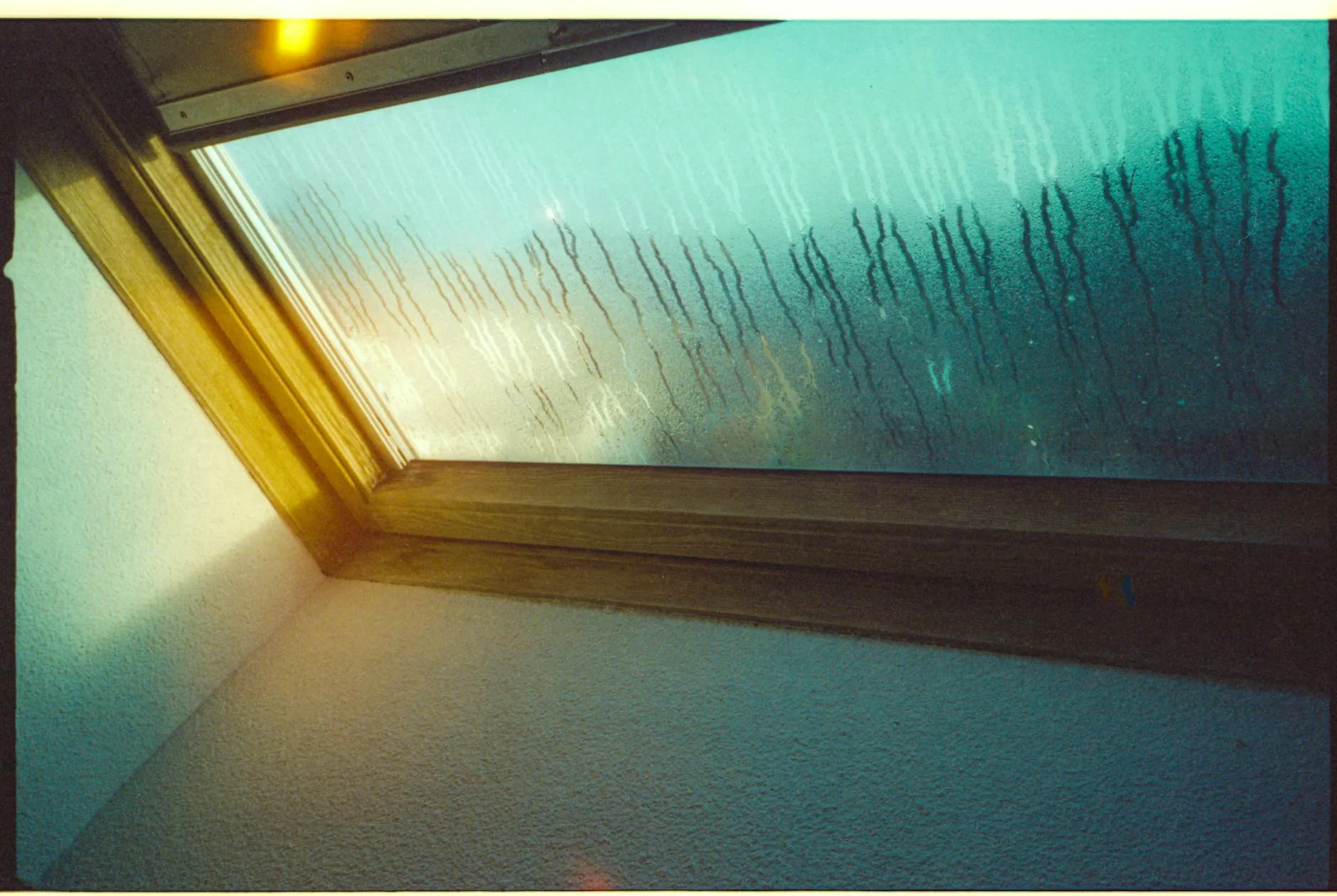
- Window frames — condensation collects on cold surfaces (single glazing and thermal bridges)
- Behind furniture — wardrobes against external walls trap moisture between the wall and furniture
- Loft spaces — inadequate ventilation causes condensation on roof timbers
UK-Specific Problem
UK housing stock is particularly prone to mould due to older construction, cavity walls that bridge moisture, and the national reluctance to heat adequately in winter (energy costs). Roughly 1 in 5 UK homes has visible mould. Our guide to reducing damp and mould covers prevention and remediation for British homes specifically.
Radon
What It Is
A naturally occurring radioactive gas that seeps up from the ground, particularly in areas with granite and limestone geology. It’s the second leading cause of lung cancer in the UK after smoking.
Where It’s Found
Radon accumulates in ground-floor rooms and basements. Parts of the UK have high radon levels:
- South West England (Devon, Cornwall, Somerset) — highest risk area
- Derbyshire Peak District
- Northamptonshire
- Parts of Wales and Scotland
Testing
You can get a radon test kit from UK Radon (part of the UK Health Security Agency) for about £25-50. The test takes 3 months (radon levels fluctuate) and tells you whether your home exceeds the UK action level of 200 Bq/m³.
Mitigation
If levels are high:
- Improved ventilation — the simplest first step
- Radon sump — a small pump beneath the floor that draws radon away before it enters the house (professional installation, about £800-1,500)
- Positive pressure ventilation — forces filtered air into the house, displacing radon-laden air
How to Reduce Indoor Air Pollution
Ventilation Is King
The single most effective action for every pollutant listed above:
- Open windows for 10-15 minutes, twice daily (even in winter — the heat loss is minimal)
- Use extractor fans when cooking and showering
- Don’t block trickle vents on windows — they’re there for continuous background ventilation
- Use a CO2 monitor as a ventilation indicator — if CO2 exceeds 1,000 ppm, air exchange is insufficient
Source Control
- Switch to unscented cleaning products — or use simple solutions (vinegar, bicarbonate of soda)
- Avoid plug-in air fresheners — they add VOCs without removing anything
- Cook with an extractor that vents outside
- Choose solid wood over MDF where budget allows (less formaldehyde)
- Let new furniture off-gas in a ventilated room or garage before putting it in bedrooms
Air Purifiers
A HEPA air purifier removes PM2.5 and PM10 particles, dust mites, and some mould spores. Carbon filters (activated charcoal) also remove VOCs and odours. For rooms where ventilation is limited (basement offices, bedrooms facing busy roads), a purifier fills the gap. Our air purifier buying guide covers the best UK options tested for allergies and asthma.
Humidity Control
Keep indoor humidity between 40-60%:
- Below 40% — dry air irritates airways and skin
- Above 60% — promotes mould growth and dust mite reproduction
A hygrometer (£5-10 from Amazon UK) tells you where you stand. A dehumidifier or improved ventilation brings levels down.
Frequently Asked Questions
What is the most common indoor air pollutant in UK homes? Particulate matter (PM2.5) from cooking is the most widespread day-to-day pollutant, spiking during frying, grilling, and toasting. Carbon dioxide from poor ventilation is the most chronically elevated pollutant, particularly in bedrooms and home offices. Formaldehyde from furniture is the most persistent VOC.
Can indoor plants clean the air? The NASA clean air study found certain plants can absorb some VOCs in laboratory conditions. However, you’d need hundreds of plants in a normal room to match the air-cleaning effect of simply opening a window for 10 minutes. Plants add humidity and visual wellbeing, but they’re not a meaningful air quality solution on their own.
Are gas cookers bad for indoor air quality? Gas cookers produce nitrogen dioxide (NO2) and particulate matter during use. Homes with gas cookers have measurably higher NO2 levels than homes with electric or induction. The solution is adequate ventilation — an extractor fan that vents outside removes the majority of pollutants. Induction hobs are the cleanest cooking option for indoor air quality.
How do I know if my home has poor air quality? Symptoms include persistent stuffiness, condensation on windows, musty smells, aggravated allergies or asthma, headaches after extended time indoors, and visible mould. For objective measurement, a CO2 monitor (£30-80) and a particulate matter monitor (£50-150) give real data you can act on.
Do air purifiers remove all indoor pollutants? HEPA purifiers remove particulate matter (dust, pollen, PM2.5, some mould spores) with high efficiency — 99.97% of particles ≥0.3µm. Adding a carbon filter also removes many VOCs and odours. However, no air purifier removes CO2, CO, or radon. These require ventilation (fresh air exchange) rather than filtration.
If you are solving the same room problem, compare this with How Pets Affect Indoor Air Quality.