You have opened the window, wiped the windowsill, changed the bedding, and still the room feels dusty again by Tuesday. That is where the best air purifier under 100 UK shoppers can buy starts to make sense: not as a miracle box for the whole house, but as a small-room cleaner for pollen, dust, pet dander and everyday smells.
In This Article
- Quick Verdict: Which Budget Air Purifier Should You Buy?
- What Under-100 Air Purifiers Can and Cannot Do
- Best Air Purifiers Under 100 UK Shortlist
- Best Cheap Pick: IKEA UPPATVIND
- Best Small Bedroom Pick: Levoit Core Mini
- Best Smart Budget Pick: GoveeLife Smart Air Purifier Lite
- Best Sale Stretch: Philips 600i Series
- How to Choose a Budget Air Purifier
- Running Costs and Filter Costs
- Where to Put a Small Air Purifier
- Frequently Asked Questions
Quick Verdict: Which Budget Air Purifier Should You Buy?
If I had less than £100 to spend, I would buy the GoveeLife Smart Air Purifier Lite for most bedrooms and small home offices. It has a proper HEPA-style filter setup, smart controls, a compact footprint and a quoted sleep mode around 24 dB. At about £60 direct from Govee UK at the time of writing, it leaves enough budget for the first replacement filter.
For the lowest spend, the IKEA UPPATVIND is the obvious cheap choice at about £29. It is not the most powerful machine here, and it is for very small rooms, but the purifier and filters are cheap enough that it makes sense for a box room, desk corner or rental flat where you do not want a big appliance.
The Levoit Core Mini is the safer pick if you want a familiar purifier brand and a neat bedside unit. It often sits around £45-60 in the UK. The catch is room size. It is a small purifier, not a living-room workhorse.
If you can find the Philips 600i Series close to £100 in a sale, it is the one I would stretch for. The app, published sleep-mode noise and better room coverage make it feel more grown-up than the tiny desktop models.
What Under-100 Air Purifiers Can and Cannot Do
Budget purifiers are useful, but only if you give them a realistic job.
They can help with:
- Pollen and hay fever particles in a bedroom during spring and summer
- Dust and pet dander that stays airborne long enough to be pulled through the filter
- Cooking smells and mild odours if the filter includes activated carbon
- Small-room overnight use where low noise matters more than raw power
- Desk and nursery-sized spaces where a larger purifier would be overkill
They cannot do much for a whole downstairs living space, damp walls, black mould, serious smoke ingress, or a large open-plan kitchen. If the room is big, start with our guide to choosing an air purifier for a large room instead.
The NHS lists pollen, dust mites, mould spores and animal skin flakes as common hay fever triggers, so a purifier can be part of the answer for allergy season, but it is not the whole plan. Bedding, cleaning, ventilation and humidity control still matter. The NHS hay fever guidance is worth reading if symptoms are the reason you are buying.
The other honest limit is speed. A small purifier can improve a room over time, but it will not rescue a smoky kitchen in five minutes. If you fry food, burn candles, spray cleaners or open windows onto a busy road, expect a spike first and a gradual clean-up afterwards. That is normal. The purifier is a steady background tool, not an emergency extractor fan.
Best Air Purifiers Under 100 UK Shortlist
These are the budget models I would shortlist first in the UK. Prices move around, so treat the ranges as a buying guide rather than a promise from every retailer.
This guide leaves out the very cheapest no-name marketplace boxes because the filter supply is often the weak point. If the purifier disappears from sale after six months and you cannot find replacement filters, the low purchase price stops looking clever.
Best Overall Under 100: GoveeLife Smart Air Purifier Lite
The GoveeLife Smart Air Purifier Lite is the best fit for most people trying to stay under £100. Govee UK lists it at about £60, with a compact design, app control, sleep mode, timer and a 3-in-1 filter covering pre-filter, HEPA-style particle capture and activated carbon.
The key point is room size. Govee positions it for smaller rooms rather than big open spaces. That is fine for this budget. A small purifier that is honest about its limits is better than a cheap one claiming to clean half the house.
Buy it if you want:
- App control for schedules and timers
- A small bedroom or office unit
- Sleep mode without spending premium money
- A purifier that looks tidy enough to leave out
Avoid it if you dislike app-connected appliances or need a purifier for a large lounge. In that case, stepping above £100 is the sensible move.
Best Cheap Pick: IKEA UPPATVIND
The IKEA UPPATVIND is the cheap one that makes the most sense. IKEA UK lists it at about £29, which is almost impulse-buy territory compared with most air purifiers. The replacement filter cost is also low, which matters more than people expect.
It is small and simple. That is both the appeal and the limitation.
Use it for:
- A box room
- A desk area
- A small bedroom
- A rental flat where you want something low-risk
- A first purifier before spending more
Do not buy it expecting it to clean a big bedroom quickly or handle strong odours from cooking, smoke or renovation dust. It is a low-cost particle filter for close-range use.
I like it for people who are unsure whether an air purifier will become a habit. If you use it every night for a month and notice fewer dusty mornings, you can later move it to a desk and buy something stronger for the bedroom.
Best Small Bedroom Pick: Levoit Core Mini
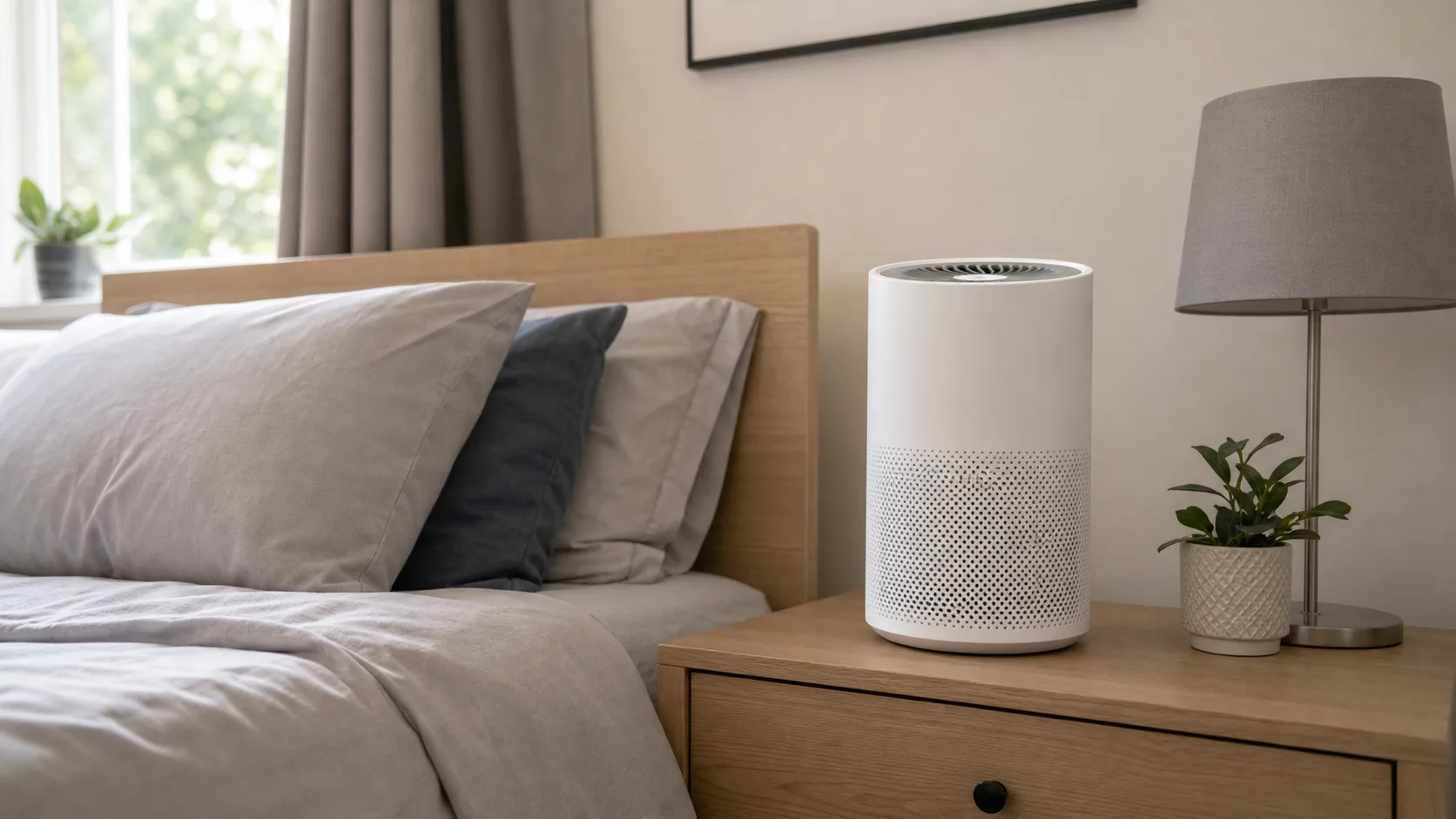
The Levoit Core Mini is probably the most recognisable small purifier in this price range. It is compact, neat enough for a bedside table and often lands around £45-60 from UK retailers.
Its best use is a small bedroom, nursery or home-office corner. It is not the model I would choose for a large main bedroom or a living room with pets, but it works as a personal purifier. Think bedside, not whole-floor.
The three-stage filter setup is the reason it beats many no-name mini purifiers:
- Pre-filter for larger dust and hair
- HEPA-style filter for fine airborne particles
- Carbon layer for light odour control
The fragrance sponge feature is less important. I would ignore it if you are buying for allergies, asthma or general air quality. Adding scent to a room does not make the air cleaner.
If your main concern is overnight noise, compare this with our quiet bedroom air purifier guide. Very small purifiers can be quiet, but they may need to run higher than expected if the room is larger than they suit.
Best Smart Budget Pick: GoveeLife Smart Air Purifier Lite
The GoveeLife earns a second mention because smart control is rare at this price without the device feeling like a toy. The official UK product page lists app and voice control, custom modes, timer settings and a filter-change reminder.
That matters if you want a simple routine:
- Run the purifier on a higher setting for an hour before bed.
- Drop it to sleep mode overnight.
- Set a morning shut-off so it is not running all day.
- Check the filter reminder instead of guessing.
The usual caution applies: smart features are useful only if the core purifier is right for the room. I would rather have a basic purifier with enough airflow than a clever app connected to a weak fan. In this case, the GoveeLife is best for small rooms, not open-plan spaces.
Best Sale Stretch: Philips 600i Series
The Philips 600i Series is often just above the £100 line, but it belongs in this guide because sale pricing can bring it close enough to consider. Philips positions it as a compact connected purifier with very low sleep-mode noise, and UK retailers such as Argos have stocked it.
This is the one to watch if you want something that feels less like a desktop gadget. It suits people who nearly bought a cheaper model, then realised they would rather spend a bit more for stronger coverage and a better app.
I would pick it over the tiny budget models if:
- Your bedroom is a large double
- You want app control without buying an unknown brand
- Noise matters
- You expect to use it every night
- You can find it around £100-120
If it is full price and far above £100, pause and compare it with stronger mid-range models in our main best air purifiers UK guide.
One small point on sale shopping: do not spend the whole budget on the purifier and forget the filter. A £99 purifier with a £35 replacement filter due in six months is a different buy from a £60 purifier with cheaper filters. If the sale model is better built and better suited to the room, fine. If it only looks premium because the list price was inflated, walk away.
How to Choose a Budget Air Purifier
If allergies are the main reason for buying, also compare our air purifiers for allergies guide and the broader best air purifiers UK shortlist. Asthma + Lung UK has a useful overview of indoor air pollution, which helps explain why ventilation, damp control and source reduction still matter alongside a cheap HEPA unit.
The spec sheet can look more technical than it needs to. For under £100, focus on five checks.
Room Size
This is the big one. Cheap purifiers usually suit rooms of roughly 7-20 square metres, depending on the model and fan speed. UK bedrooms vary a lot: a box room may be 6-8 square metres, while a main bedroom in a newer house can be double that.
If the purifier is undersized, it will still move air, but it will not cycle the room fast enough to make much difference. You then run it on high, it gets noisy, and eventually it sits unplugged in the corner.
Filter Type
Look for a particle filter that is clearly described as HEPA, HEPA-type or fine-particle filtration. True HEPA is preferable, but at this price the wording varies. Avoid vague claims such as “fresh air technology” with no clear filter description.
Carbon is useful for smells, but do not expect miracles. A thin carbon layer can reduce light odours; it will not solve heavy cooking fumes or smoke.
For more detail, read our guide to HEPA filters and how they work.
Noise at the Speed You Will Use
The quietest number on the box is not always the useful number. Some purifiers are almost silent on their lowest setting because they barely move air. The question is: how loud is it on the speed that actually cleans your room?
For a bedroom, I would aim for a sleep mode under 30 dB if possible. If the device has a bright display, check whether the lights turn fully off at night.
Replacement Filters
This is where cheap purifiers can get sneaky. A £45 unit with £25 filters every six months is not as cheap as it first looks. Before buying, check:
- Filter price
- Filter availability from UK sellers
- Expected replacement interval
- Whether third-party filters are sensible or risky
- Whether the filter includes carbon or only particle media
Our air purifier running costs guide covers the maths in more detail.
Ozone and Ionisers
For a bedroom or child’s room, I would avoid ioniser-led purifiers and stick with mechanical filtration. You want a fan pulling air through a filter, not a device making bold claims about charged particles. If an ioniser can be switched off, leave it off unless you have a clear reason to use it.
Display, Buttons and Everyday Use
Tiny usability details matter because an air purifier only helps if you keep using it. Check that the controls are easy to reach, the lowest mode is simple to select, and the display can be dimmed or switched off at night. A bright blue light on a bedside table gets annoying quickly.
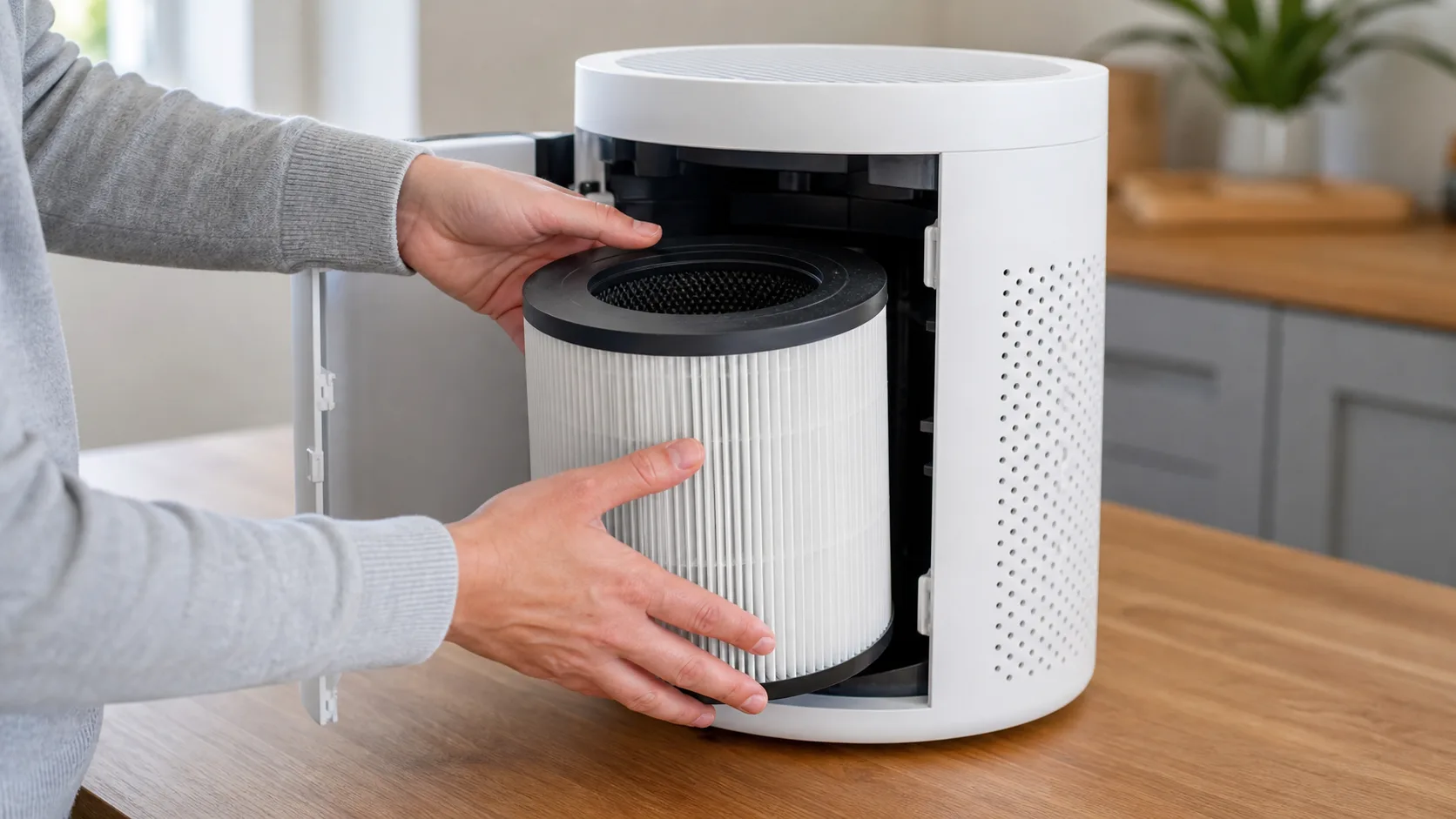
Also check the filter hatch. If changing the filter needs a wrestling match with brittle plastic clips, you will put it off. A budget purifier should be boring to maintain: open, swap filter, close, reset reminder.
Running Costs and Filter Costs
Electricity is usually the smaller cost. A small purifier running overnight might use less power than many lamps. Filters are the real ongoing spend.
Rough annual budgets:
- IKEA UPPATVIND: very low filter cost, but small-room performance
- Levoit Core Mini: often about £20-30 per year in filters, depending on use
- GoveeLife Smart Air Purifier Lite: check Govee UK replacement filter pricing before buying
- Philips 600i: likely higher filter cost, but stronger overall machine
If you run a purifier in a dusty room, with pets, or during pollen season, the filter may need changing sooner than the neat marketing interval. A filter that looks grey, smells stale or triggers a warning light has done its job. Replace it.
Where to Put a Small Air Purifier
Placement matters more with small purifiers because they have less airflow to waste.
Put it:
- Near where you breathe, such as beside the bed or desk
- Away from curtains, which can block intake
- Off the floor if the model allows it
- With space around the air inlet and outlet
- In the room where you actually need it, not out in the hallway
Do not tuck it behind a sofa and expect much. Air needs a clear path through the machine.
For bedrooms, a good routine is to run the purifier for an hour before bed with the door shut, then leave it on low overnight. During pollen season, keep windows closed at peak times and ventilate earlier or later in the day when it suits your symptoms.
Frequently Asked Questions
Is an air purifier under £100 worth it?
Yes, if you are buying for a small room and choose a model with proper particle filtration. It is not worth it if you expect one cheap purifier to clean a large open-plan space.
What is the best air purifier under 100 UK buyers should start with?
For most small bedrooms, the GoveeLife Smart Air Purifier Lite is the best first look. For the lowest spend, IKEA UPPATVIND is the cheap trial option. For brand familiarity, Levoit Core Mini is the safe small-room pick.
Do cheap air purifiers help with hay fever?
They can help reduce airborne pollen in a closed bedroom, especially overnight. They work best alongside normal hay fever steps such as washing bedding, keeping windows closed at high-pollen times and avoiding drying pollen-covered clothes in the bedroom.
How often do budget air purifier filters need changing?
Most small purifiers need filter changes every 4-12 months depending on model, room dust, pets and usage. Check the filter price before buying the purifier.
Should I buy a bigger air purifier instead?
If the room is bigger than about 15-20 square metres, or you want to clean a living room, yes. A slightly more expensive purifier that suits the room is usually better value than a cheap one running flat out.