You’ve just painted the spare bedroom, laid new laminate flooring, and given the whole house a deep clean with some heavy-duty spray. The place looks amazing. But there’s that smell — a sharp, chemical tang that lingers for days, maybe weeks. You open a window, light a candle, and assume it’ll sort itself out. It probably won’t. That smell? It’s volatile organic compounds, and they’re doing more to your indoor air quality than you might realise.
VOCs and indoor air quality are topics that sound technical, but they affect every household in the UK. Whether you live in a Victorian terrace or a new-build flat, your home almost clearly contains multiple sources of these invisible chemicals. The good news is that once you understand what they are and where they come from, reducing your exposure is surprisingly simple.
What Are Volatile Organic Compounds?
Volatile organic compounds — VOCs for short — are a group of carbon-based chemicals that evaporate easily at room temperature. That evaporation is what makes them “volatile.” Once airborne, you breathe them in, and some of them are not great for your health.
The term covers a huge range of chemicals. Formaldehyde, benzene, toluene, xylene, and acetaldehyde are among the most common ones found indoors. Some have a noticeable smell (that “new carpet” or “fresh paint” scent), while others are completely odourless. You can’t always tell they’re there just by sniffing the air.
Here’s what catches most people off guard: indoor VOC concentrations are typically two to five times higher than outdoor levels, according to the US Environmental Protection Agency. During and immediately after activities like painting or varnishing, levels can spike to 1,000 times the outdoor concentration. That’s not a typo.
The reason is simple. Modern homes are designed to be airtight and energy-efficient — brilliant for your heating bills, not so brilliant for venting chemical fumes. All those VOC sources are releasing gases into a space with limited air exchange, and they accumulate.
Common Sources of VOCs in Your Home
This is where it gets a bit depressing, because VOC sources are everywhere. Not in a panic-inducing way — more in a “well, I should probably know about this” way.
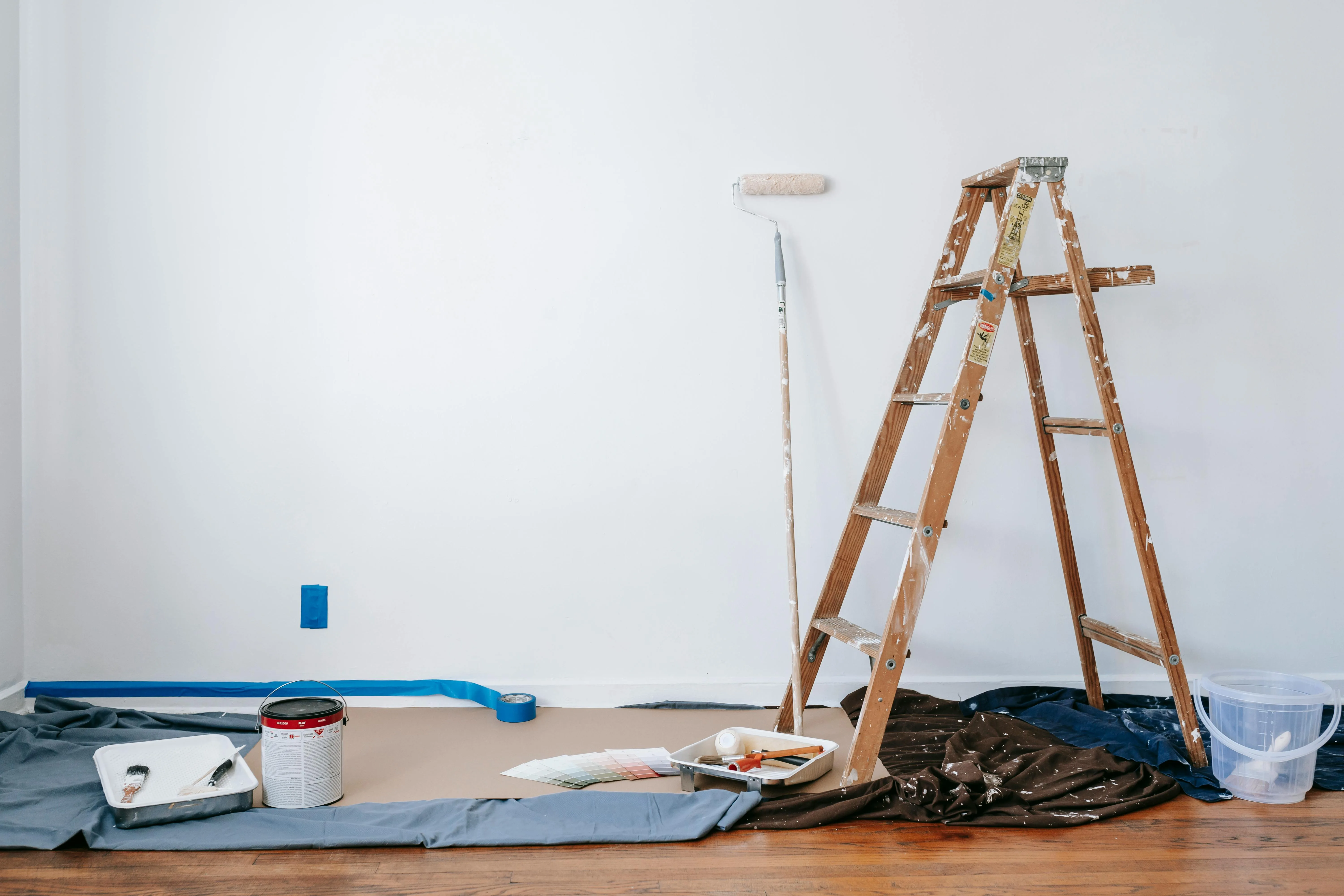
Paints, varnishes, and stains are the obvious culprits. Standard emulsion paints release VOCs for weeks after application, and oil-based paints are far worse. If you’ve recently decorated, your vocs indoor air quality impact is at its highest right now.
Cleaning products are another major source. Bleach, oven cleaner, antibacterial sprays, air fresheners (ironic, that one), and even some “natural” cleaning products can off-gas VOCs. That lemon-fresh scent from your kitchen spray? Limonene — a VOC that reacts with ozone to form formaldehyde.
New furniture and flooring release VOCs through a process called off-gassing. Flat-pack furniture made from MDF or particleboard is bonded with formaldehyde-based resins. New carpets, vinyl flooring, and laminate all contribute. That “new furniture smell” isn’t a sign of quality — it’s a sign of chemical release.
Other sources include:
- Aerosol sprays — deodorants, hairspray, furniture polish
- Scented candles and plug-in air fresheners — they add VOCs rather than removing them
- Building materials — adhesives, sealants, caulk, insulation foam
- Dry-cleaned clothes — the solvent perchloroethylene is a VOC
- Printers and copiers — toner produces VOCs during printing
- Cooking — especially gas hobs, which produce formaldehyde and other compounds
The cumulative effect matters. You might think “it’s just a bit of paint” or “it’s just one candle,” but when you add together every source in a sealed-up home, the total VOC load can be surprisingly high.
How VOCs Affect Your Health
Short-term exposure to elevated VOC levels can cause symptoms you might not immediately connect to air quality:
- Headaches and dizziness — often dismissed as tiredness or dehydration
- Eye, nose, and throat irritation — that scratchy feeling after cleaning
- Nausea — particularly around strong-smelling products
- Fatigue — feeling unusually drained in certain rooms
- Worsened asthma and allergies — VOCs are a known trigger
If you’ve ever felt oddly tired or headachy after a day of decorating, cleaning, or assembling flat-pack furniture, VOCs are almost clearly part of the reason. The NHS recognises that poor indoor air quality can worsen respiratory conditions, and VOCs are a significant contributor.
Long-term exposure is where things get more serious. Formaldehyde is classified as a known human carcinogen by the World Health Organisation. Benzene, found in some adhesives and fuels, is linked to leukaemia. Other VOCs are associated with liver and kidney damage, and central nervous system problems.
That said, context matters. The levels found in most UK homes aren’t going to cause immediate harm. But chronically elevated levels — especially in poorly ventilated spaces, or for people with asthma or chemical sensitivities — are worth taking seriously. Children and elderly people are more vulnerable, too.
How to Measure VOCs at Home
You can’t manage what you can’t measure, and since many VOCs are odourless, relying on your nose isn’t enough.
Indoor air quality monitors are the most practical option for homeowners. Devices like the Airthings Wave Plus, Temtop M10, or the Eve Room measure total VOC (TVOC) levels in real time. They won’t tell you exactly which VOCs are present, but they’ll show you whether your overall levels are elevated. Expect to pay about £80-200 depending on the model.
A few things worth knowing about TVOC readings:
- Below 0.3 mg/m³ — generally considered good
- 0.3-1.0 mg/m³ — moderate; worth investigating sources
- Above 1.0 mg/m³ — high; take action to ventilate and reduce sources
- Above 3.0 mg/m³ — very high; avoid prolonged exposure
These readings fluctuate throughout the day. Cooking, cleaning, and even showering can cause temporary spikes. What matters more is the baseline level when you’re not actively generating VOCs. If your living room reads 0.8 mg/m³ at midnight when nobody’s been cleaning or cooking, that’s a sign your background VOC load is too high.
If you’re interested in a deeper dive into monitoring your home environment, our guide to improving indoor air quality covers monitoring equipment in more detail.
Practical Ways to Reduce VOCs in Your Home
Right, the bit you’re actually here for. Reducing VOCs doesn’t require ripping out your entire house and starting again. Most of these changes are cheap, easy, and make a noticeable difference within days.
Ventilate Properly (It’s Not Just “Open a Window”)
Ventilation is the single most effective way to reduce indoor VOC levels. But “open a window” is oversimplified advice.
Cross-ventilation is what you’re aiming for — opening windows on opposite sides of your home to create airflow through the space, not just at one end. Even 10-15 minutes of cross-ventilation in the morning can noticeably reduce overnight VOC build-up.
If you’ve just painted or installed new flooring, ventilate that room as much as possible for the first 72 hours. Keep the door closed to the rest of the house and windows open in that room. This is when off-gassing is at its peak.
Mechanical ventilation helps too. Extractor fans in kitchens and bathrooms remove VOCs generated by cooking and cleaning. If your home has a mechanical ventilation system with heat recovery (MVHR), make sure the filters are clean — clogged filters reduce airflow and defeat the purpose.
Choose Low-VOC Products
This is where you can make the biggest long-term difference. The products you bring into your home determine your baseline VOC load.
Paint: Look for paints labelled “low VOC” or “zero VOC.” In the UK, Dulux Easycare, Little Greene, and Farrow & Ball all offer low-VOC options. The EU’s VOC content limits (Directive 2004/42/CE) cap decorative paints, but “within limits” and “low” aren’t the same thing. A tin labelled as compliant might still contain up to 30g/L of VOCs. Zero-VOC options contain less than 5g/L.
Cleaning products: Swap to fragrance-free, plant-based cleaners. Method, Ecover, and Bio-D are widely available at Sainsbury’s, Waitrose, and most supermarkets. Or go simpler — white vinegar, bicarbonate of soda, and castile soap handle most household cleaning without any VOCs at all.
Furniture: When buying new furniture, look for items made from solid wood rather than MDF or particleboard. If that’s not in the budget (solid wood isn’t cheap), look for furniture with E1 or E0 formaldehyde emission ratings. IKEA has been using lower-emission boards in recent years, which is worth knowing.
Flooring: Solid wood or ceramic tiles are the lowest-VOC options. If you want carpet, look for ones carrying the GUT or CRI Green Label. Ask about the underlay too — that’s often a bigger VOC source than the carpet itself.
Use an Air Purifier with an Activated Carbon Filter
HEPA filters, which most air purifiers use, are brilliant for particles — dust, pollen, pet dander. But VOCs are gases, not particles, and they pass straight through a HEPA filter.
To actually capture VOCs, you need an activated carbon filter (sometimes called a charcoal filter). The carbon has a massive surface area that adsorbs gas molecules as air passes through. The more carbon in the filter, the more effective it is.
If you’re choosing a purifier partly for VOC reduction, look for models with a substantial carbon filter — not just a thin sheet of carbon-impregnated mesh. Our guide to choosing an air purifier for a large room covers what to look for in terms of filter types and room coverage. The best air purifiers for 2026 also highlights models with effective carbon filtration.
Worth mentioning: carbon filters need replacing regularly, usually every 3-6 months depending on use. Once saturated, they stop adsorbing VOCs entirely. Factor replacement filter costs into your budget — typically £20-50 per filter.
Let New Products Off-Gas Before Bringing Them Indoors
This is one of the simplest and most effective tricks. New furniture, rugs, and even mattresses off-gas most heavily in their first few days.
If you can, unwrap new items in a garage, conservatory, or well-ventilated room and leave them for 3-7 days before moving them to their permanent spot. A new memory foam mattress in a sealed bedroom on night one is going to give you a rough night’s sleep — and not just because it’s unfamiliar.
For items you can’t easily relocate, maximise ventilation in the room for the first week. Open windows, run a fan, and keep the door open during the day.
Rethink Scented Products
This one’s hard for some people to hear, because scented candles and plug-in fresheners feel like they’re making the air better. They’re not. They’re adding VOCs to an enclosed space.
Plug-in air fresheners are particularly problematic. They continuously release synthetic fragrance compounds — including formaldehyde and benzene — throughout the day. A 2019 study by the University of Melbourne found that a third of Australians reported health problems from exposure to fragranced products, and there’s no reason to think the UK is any different.
If you want your home to smell pleasant, try:
- Essential oil diffusers — not VOC-free, but generally lower impact than synthetic fragrances
- Opening windows — fresh air is the original air freshener
- Baking or cooking something that smells good — a pot of simmering cinnamon sticks works wonders
- Beeswax candles — produce far fewer VOCs than paraffin candles
Control Humidity
Higher humidity levels increase the rate at which some materials off-gas VOCs. Keeping your home’s relative humidity between 40-60% helps reduce VOC release and has the added benefit of discouraging mould growth.
If humidity is something you’re struggling with, our guide to healthy humidity levels covers how to measure and manage it. And if you’re looking at getting a humidifier to bring dry winter air into range, choosing the right size matters more than you’d think.

Bring in Some Houseplants (With Realistic Expectations)
NASA’s famous Clean Air Study from 1989 suggested that certain houseplants — peace lilies, spider plants, devil’s ivy — could remove VOCs from indoor air. That study gets referenced constantly, and it’s partly why every “improve your air quality” article mentions plants.
The reality is more nuanced. NASA’s study was conducted in sealed chambers, not real homes. A 2019 review published in the Journal of Exposure Science & Environmental Epidemiology concluded that you’d need roughly 10-1,000 plants per square metre to match the air-cleaning rate of simply opening a window.
That said, plants aren’t useless. They do absorb some VOCs, they improve humidity, and they make a room feel more pleasant. Just don’t rely on them as your primary VOC reduction strategy. Think of them as a nice bonus, not a solution.
When to Be Most Concerned About VOCs
Some situations create particularly high VOC exposure:
- During and after decorating — the first 72 hours after painting are the worst
- Moving into a new-build home — everything is fresh and off-gassing simultaneously
- After buying lots of new furniture at once — furnishing a whole room or house in one go
- Winter months — windows stay closed, heating is on, and ventilation drops to near zero
- Using multiple cleaning products in one session — spring cleaning can create a chemical cocktail
If you or someone in your household has asthma, allergies, or chemical sensitivities, these high-exposure moments are worth planning for. Ventilate aggressively, stay out of freshly painted rooms, and spread new furniture purchases over time rather than doing everything at once.
If you are solving the same room problem, compare this with Common Indoor Air Pollutants and Where They Come From.
Frequently Asked Questions
How long do VOCs take to off-gas from new furniture? Most new furniture off-gases the majority of its VOCs within 1-4 weeks, though some products (particularly those using formaldehyde-based adhesives) can continue releasing small amounts for months or even years. The first 72 hours see the highest emissions.
Are low-VOC paints as good as regular paints? Modern low-VOC and zero-VOC paints perform just as well as traditional formulas in terms of coverage, durability, and finish. Brands like Dulux, Farrow & Ball, and Little Greene offer low-VOC options that are indistinguishable from standard paints once applied.
Can you smell VOCs in your home? Some VOCs have a noticeable odour (paint fumes, new carpet smell, cleaning product scents), but many are completely odourless. Formaldehyde, for example, is only detectable by smell at concentrations much higher than those that can affect health. An indoor air quality monitor is more reliable than your nose.
Do HEPA air purifiers remove VOCs? HEPA filters capture particles like dust and pollen but cannot remove VOCs, which are gases. To filter VOCs, you need an air purifier with an activated carbon (charcoal) filter. The thicker the carbon filter, the more effective it is at adsorbing volatile organic compounds.
Are VOCs dangerous at normal household levels? At typical household levels, VOCs are unlikely to cause serious immediate harm, but they can trigger headaches, irritation, and worsen asthma. Chronic exposure to elevated levels, particularly formaldehyde and benzene, is associated with more serious health risks. Reducing exposure through ventilation and source control is a sensible precaution.