If you want a self watering planter reservoir explained without the marketing fluff, start with the basic job: keeping compost evenly moist without leaving the roots sitting in stale water. The trick is understanding the reservoir, wick, insert and overflow design before you trust one with a favourite calathea, peace lily or herb pot.
In This Article
- Self watering planter reservoir explained: what the reservoir actually does
- Wicks, inserts and false bottoms compared
- How to size the reservoir for UK houseplants
- Filling, overflow and drainage mistakes
- Which plants suit self-watering reservoirs
- What to buy in the UK and what to avoid
- Set-up checklist and maintenance routine
- Frequently Asked Questions
Self watering planter reservoir explained: what the reservoir actually does
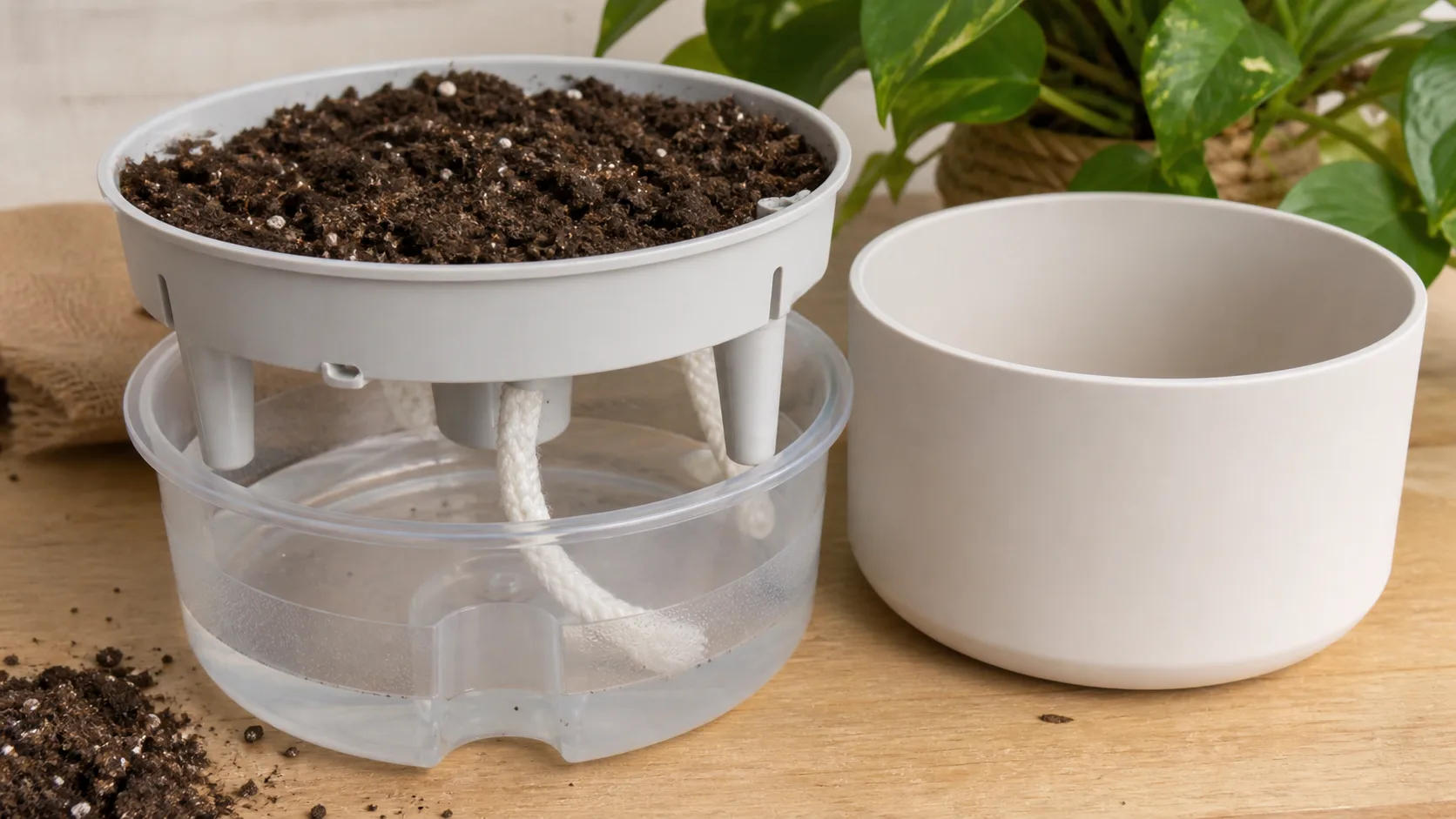
A self-watering planter is not really self-watering in the magical sense. It is a small water store under, beside or inside the pot, designed so the compost can pull moisture up gradually. In plain English, self watering planter reservoir explained means this: water sits away from the main root zone, then capillary action moves it into the compost when the mix is dry enough to draw it.
That distinction matters. A reservoir is not the same as leaving a nursery pot standing in a saucer. In a saucer, the lower compost can stay wet for days, especially in a cool UK room in winter. In a better self-watering design, there is usually an air gap, a wick, a perforated insert or a raised inner pot so the plant is not permanently drowning.
The best setups do three jobs:
- Store a limited amount of water so the plant has a buffer between normal waterings.
- Move water slowly through a wick, capillary mat, porous medium or contact with the lower compost.
- Leave somewhere for excess water to escape so one heavy refill does not turn the reservoir into a stagnant bath.
That is why reservoir design matters more than the marketing phrase on the pot. A £6 plastic insert can work well if it fits the pot properly and has a clear fill line. A £55 premium self-watering planter can still cause problems if the overflow plug is closed outdoors or the compost is too dense.
Self-watering also does not remove the need to understand the plant. A peace lily in a bright kitchen may use the reservoir quickly. A snake plant in a cool north-facing bedroom may sit wet for too long. If you are still learning the basics, start with our beginner’s guide to indoor plant care and guide to watering houseplants correctly before converting everything at once.
Wicks, inserts and false bottoms compared
Most indoor self-watering pots use one of three designs. None is automatically best. The right choice depends on the plant, pot size and how much attention you will still give it.
Wick systems
A wick system uses cord, capillary matting or a fabric strip to bridge the water reservoir and the compost. Water travels up the wick gradually. This is the simplest design and it is common in small herb pots, windowsill planters and DIY conversions.
Budget wick kits are often around £4-£10 from Amazon UK, The Range or garden-centre own brands. They are useful for small pots, short holidays and low-risk plants. The downside is that cheap cord can clog with mineral deposits, algae or compost dust. If the wick dries out fully, it may need soaking before it works again.
Wicks suit:
- Small herb pots on a bright kitchen windowsill.
- Trailing plants in 12-17cm nursery pots.
- Short-term watering help while you are away for a long weekend.
They are weaker for large plants because one thin wick may not move enough water across the whole root ball. Two or three wicks help, but by that point an insert or purpose-built pot usually makes more sense.
Insert reservoirs
Insert systems sit inside an outer decorative pot. They usually have a raised base, water meter and fill tube. Elho-style self-watering inserts, for example, typically cost about £8-£20 depending on size, while larger branded systems can cost more. They are tidy because you can use them with a decorative cover pot rather than replacing the whole planter.
The main advantage is control. A water-level indicator tells you roughly when the reservoir is empty, and the insert keeps the wet zone separate from most of the root ball. In practice, I would trust a properly fitted insert more than a random plastic pot with no overflow marker.
The weakness is fit. If the insert is too small for the pot, compost can slump around the sides and sit in water. If it is too tall, the plant may be raised awkwardly and the pot looks wrong. Measure the inside diameter and depth of the decorative pot before buying.
False-bottom planters
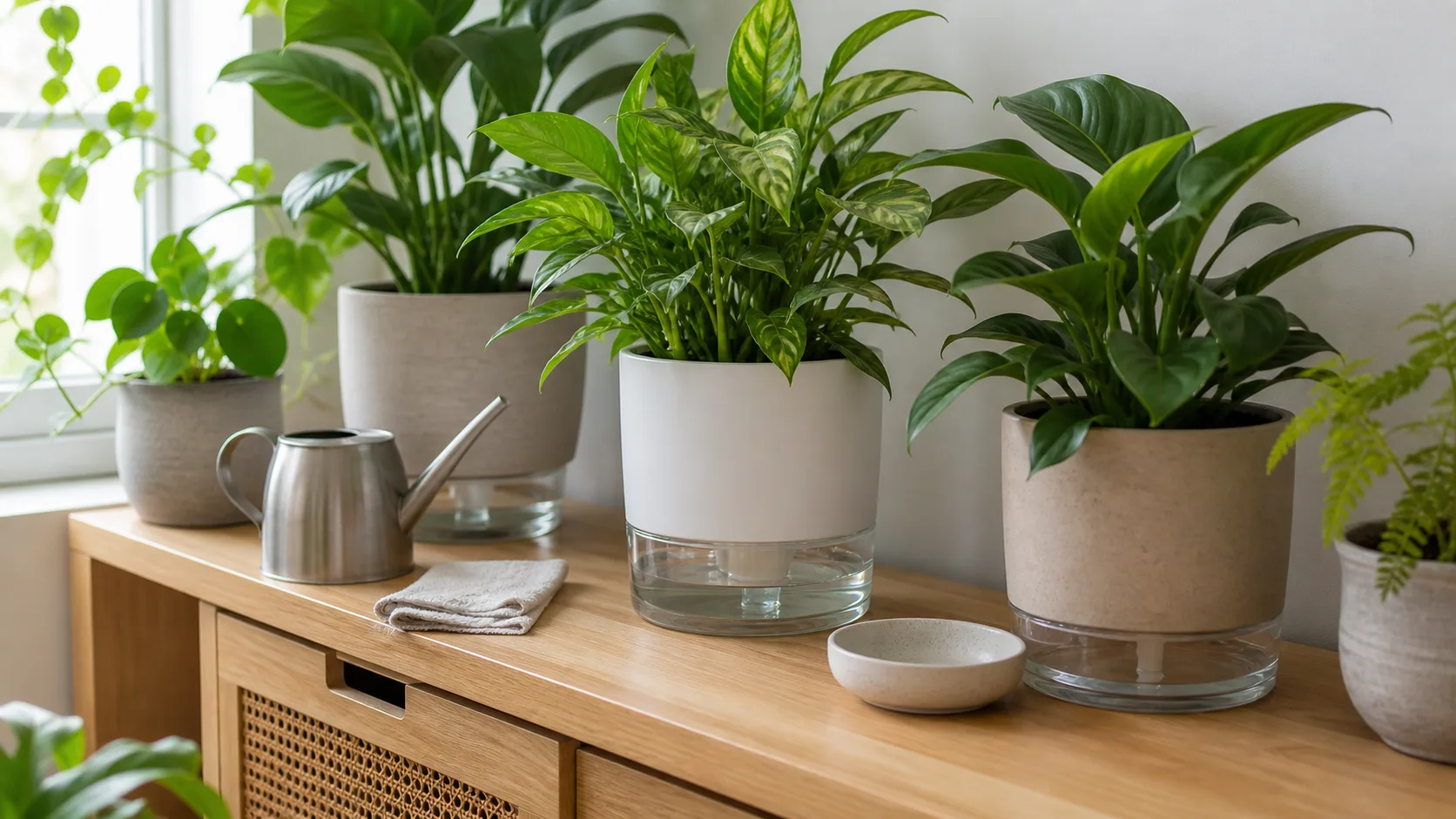
A false-bottom planter has a built-in raised platform or inner liner. The reservoir sits below it. Some use a water-level tube; others rely on overflow holes or a plug. Lechuza-style planters are the obvious premium example, with small indoor models often around £13-£25 and larger floor pots commonly £50-£170.
These are the neatest option for living rooms, offices and bigger plants because the reservoir is part of the pot rather than an add-on. The catch is that premium pots make people overconfident. A large reservoir can still overwater a plant if the compost is heavy, the room is cold or the overflow is blocked.
False-bottom planters suit:
- Medium foliage plants such as peace lilies, pothos, philodendrons and calatheas.
- Office plants where watering happens irregularly.
- Decorative spaces where a visible saucer or plastic insert would look messy.
How to size the reservoir for UK houseplants
Reservoir size should be boring. That is a compliment. The goal is a steady buffer, not a two-litre tank under every plant.
For most indoor houseplants, aim for a reservoir that holds roughly one normal watering, not three. A 12-14cm pot might only need 200-400ml. A 17-20cm pot may suit 500ml-1 litre. A large floor-standing plant in a 30cm planter might justify 2-4 litres, but only if the plant is actively growing and the pot has a proper overflow route. The practical rule is simple: enough backup to smooth out your routine, not enough water to keep the lower roots permanently wet.
UK homes complicate this because indoor conditions swing through the year. Central heating can dry compost quickly in January, while a cool spare room in November can keep it damp for ages. The RHS guidance on growing houseplants is a useful reminder that watering depends on plant type, compost, temperature, light and season rather than a fixed calendar.
A practical sizing rule
Use this as a starting point:
- Small herbs and nursery pots: 100-300ml reservoir, refilled often.
- Standard 15-20cm houseplants: 500ml-1 litre reservoir, checked weekly at first.
- Large foliage plants: 1.5-4 litres, but only with a working overflow and airy compost.
If you are unsure, choose the smaller reservoir and refill it more often. A thirsty plant wilts and tells you quickly. A plant with wet roots declines quietly, then suddenly looks awful.
Match reservoir size to compost
Reservoirs work best with an open, airy potting mix. Standard houseplant compost can be fine, but if it compacts into a dense block, capillary watering becomes patchy. The top may look dry while the lower root zone stays wet.
For foliage plants, I like a mix that includes bark, perlite or coco chips. You do not need an expensive boutique blend for every plant, but a £4 bag of perlite from B&Q or a £5-£8 houseplant soil improver from a garden centre can make a bigger difference than buying a fancier pot.
If your current issue is damp air rather than plant watering, keep that separate. A reservoir will not fix condensation or mould. For that, see our guides to reducing damp and mould in UK homes and measuring indoor humidity.
Filling, overflow and drainage mistakes
Most self-watering planter failures come from one of four mistakes: filling too high, blocking the overflow, using compost that stays wet, or assuming the gauge is more accurate than the plant.
Do not fill past the maximum line
The maximum line is not a target to beat. It is the highest safe fill level for that design. If you fill above it, the lower compost may sit directly in water. That removes the air gap the whole system depends on.
Water-level gauges are also rough indicators, not lab instruments. Mineral deposits, compost dust and root growth can make them stick. If the gauge says empty but the pot still feels heavy, wait. If the gauge says half full but the plant is wilting and the compost is bone dry, the wick may not be working.
Check the overflow route before first use
Indoor planters may have no open overflow because they are designed to protect furniture. Outdoor-capable pots often have a removable plug. If you use one indoors, keep the plug in and fill carefully. If you use it outdoors on a balcony, patio or conservatory threshold, check the instructions because heavy rain can flood a sealed reservoir.
For indoor use, place the pot on a tray for the first few fills. It is dull advice until the first time a poorly fitted insert leaks onto an oak sideboard. A £3-£6 plant saucer is cheaper than repairing a water mark.
Avoid the holiday-fill trap
The worst time to max-fill a self-watering reservoir is the night before a two-week trip, especially if the plant has never used that pot before. Test the setup for at least two normal watering cycles first. Watch how fast the reservoir drops and how damp the compost feels at finger depth.
If you need holiday cover, combine methods conservatively: water the plant normally, move it out of harsh sun, fill the reservoir to the recommended line and ask someone to check once if you are away longer than a week. The RHS houseplant holiday-care advice gives the same basic steer: reduce stress first, then use water reserves carefully. Do not turn a small 13cm fern into a water-storage experiment five minutes before leaving for Heathrow.
Which plants suit self-watering reservoirs
Self-watering reservoirs suit plants that prefer steady moisture but still need oxygen around the roots. They are not automatically good for every houseplant.
Good candidates include:
- Peace lilies: forgiving, thirsty and quick to show when they are dry.
- Pothos and philodendrons: adaptable, especially in airy compost.
- Calatheas and marantas: useful candidates if you avoid cold, soggy compost.
- Herbs: basil, parsley and mint can work well in bright kitchens, though they still need light.
- Ferns: often benefit from steadier moisture, but they dislike stagnant, cold conditions.
Poor candidates include most succulents and cacti. Snake plants and ZZ plants can tolerate neglect, but that does not mean they want a reservoir constantly available. If you use a reservoir with those, leave it empty most of the time and water from above occasionally.
Use plant behaviour, not the pot label
The plant tells you more than the packaging. Yellowing lower leaves, sour-smelling compost, fungus gnats and soft stems often point to too much moisture. Crispy edges, repeated wilting and compost shrinking from the pot sides suggest the reservoir is too small, the wick is failing or the plant is in too much sun.
If you are diagnosing broader plant issues, our common houseplant problems guide is a better next read. Reservoirs are one tool, not the answer to pests, poor light or exhausted compost.
What to buy in the UK and what to avoid
For most people, I would not start with a premium planter. Start with one plant, one reservoir system and two weeks of observation. Once you understand how your room behaves, then upgrade the pots you actually see every day.
Budget options under £10
Cheap wick kits, watering cones and simple self-watering inserts usually cost about £4-£10 from Amazon UK, The Range, B&Q or garden centres. They are fine for herbs, small trailing plants and temporary cover.
What to check:
- Replaceable wick: useful if the cord clogs or goes green.
- Clear water path: you should understand how water reaches the compost.
- Stable fit: the insert should not wobble or tip when the pot is moved.
Avoid no-name gadgets with tiny reservoirs, vague capacity claims and no way to clean them. If you cannot rinse it, inspect it or replace the wick, it is probably not a good long-term indoor plant solution.
Mid-range inserts and inner pots
Elho-style inserts and branded self-watering inner pots tend to sit around £8-£25 for common houseplant sizes. This is the sweet spot for many UK homes because you can keep your decorative pot and improve the watering system inside it.
Look for a proper fill tube, water-level indicator and a size chart. If the retailer only shows a pretty lifestyle photo and no measurements, skip it. Inner diameter matters more than colour.
Premium self-watering planters
Lechuza-style planters and similar premium systems range from roughly £13 for small table pots to £50-£170 for larger indoor floor planters. They make sense for statement plants, offices and rooms where you want a cleaner look.
The premium pick is worth it when the pot is part of the room. It is not worth it for a £4 supermarket basil plant unless you simply like the look. For basic plant health, correct light, compost and watering habits still beat expensive plastic.
Set-up checklist and maintenance routine
Set up one pot properly before converting a whole shelf of plants. The first fortnight tells you whether the system fits your home.
- Choose the right plant: start with a moisture-loving but forgiving plant such as pothos, peace lily or basil.
- Check the fit: the insert or inner pot should sit level, with no compost falling into the reservoir.
- Use airy compost: add perlite, bark or a houseplant mix if the current compost is dense.
- Water from above first: settle the compost and moisten the root ball before relying on the reservoir.
- Fill only to the line: never cover the air gap just because you are going away.
- Check after 48 hours: feel the pot weight, inspect the gauge and check the lower compost smell.
- Adjust before adding more plants: change wick position, compost or fill level if the first test is too wet or too dry.
For maintenance, rinse the reservoir every few months if the design allows it. Wipe algae from clear fill tubes. Replace wicks when they become stiff, clogged or stained. If you use liquid feed, go weaker than the bottle suggests at first because salts can build up in reservoir systems. A half-strength houseplant feed every few weeks during active growth is usually safer than strong feeds sitting in the tank.
Do not ignore normal plant checks. Rotate the pot for even light. Check under leaves for pests. Lift the nursery pot or liner occasionally to see whether roots are growing into the reservoir. Roots will chase water, and once they fill the tank, the system stops behaving predictably.
The bottom line: a self-watering reservoir is best treated as a moisture buffer, not an autopilot. Set it up carefully, keep the overflow route honest, and it can make indoor plants easier to live with. Treat it as a magic pot and it will eventually remind you that roots need air as much as water.
Frequently Asked Questions
Do self-watering planters cause root rot? They can if the reservoir is overfilled, the compost is too dense or the plant prefers dry conditions. A good design leaves an air gap and moves water slowly rather than keeping the entire root ball wet.
How often should I refill a self-watering planter reservoir? Check weekly at first. Small indoor pots may need topping up every few days in summer, while larger reservoirs can last one to three weeks depending on plant size, room temperature and light.
Should I water from the top or only use the reservoir? Water from the top when first potting the plant so the compost and wick are evenly moist. After that, you can mostly refill the reservoir, with an occasional top watering to flush the compost.
Can I use self-watering pots for succulents? Usually not as a default setup. Succulents and cacti prefer a wet-then-dry cycle, so a constantly available reservoir can keep the lower compost too damp.
What is the best cheap self-watering option in the UK? For small plants, a simple wick insert around £5-£10 is the safest cheap test. For nicer indoor pots, a branded insert around £10-£25 is usually more reliable than a tiny watering cone.
Why is my self-watering planter still dry at the top? The surface can look dry while the lower compost is moist. Check the pot weight and finger depth before refilling. If the whole root ball is dry, the wick may not be touching the compost properly.