If your vents look dusty, rooms feel stale, or the system sounds as if it is working harder than usual, the filter is the first thing to check. The practical answer to when to replace home ventilation filters is every 3-6 months for most UK homes, sooner during heavy pollen season, decorating work, nearby building dust, or if you have pets. Waiting for a warning light is fine on some MVHR units, but it is a poor plan if the filter already looks grey and airflow has dropped.
In This Article
- When to Replace Home Ventilation Filters: The Short Answer
- Dust, Pollen and Airflow Signs You Should Not Ignore
- What Type of Filter Are You Actually Looking At?
- A Practical Replacement Routine for UK Homes
- Costs, Sizing and Where to Buy Replacement Filters
- What Happens If You Leave Filters Too Long?
- The Simple Rule I Would Use at Home
- Frequently Asked Questions
When to Replace Home Ventilation Filters: The Short Answer
Most home ventilation filters should be checked every month and replaced every 3-6 months. That is the sensible starting point for MVHR systems, PIV loft units, cooker hood grease filters, bathroom extractor filters and small whole-house ventilation units.
The exact interval depends on what the filter is doing. A coarse dust filter in a loft-mounted PIV unit may last longer than a fine pollen filter in an MVHR intake. A cooker hood grease filter can need cleaning or replacing far sooner if you fry often. A bathroom extractor with a removable filter may look fine in summer and then clog quickly through winter when showers run hotter and windows stay shut.
Use the interval, then use your eyes
Manufacturer intervals are useful, but they are not magic. If the booklet says six months and the filter looks filthy after ten weeks, replace it. If the booklet says three months and it still looks clean after two months, keep the next check in the calendar rather than binning it early.
My rule is simple: inspect monthly, replace by condition, never stretch beyond the stated maximum. Filters are cheap compared with a struggling fan motor, damp patches, or a room that never clears after cooking or showering.
A sensible UK starting schedule
For a normal UK home, I would use this as a baseline:
- MVHR intake and extract filters: check monthly, replace every 3-6 months.
- PIV unit filters: check every 2-3 months, replace around every 6-12 months depending on the model.
- Cooker hood grease filters: clean metal filters monthly; replace paper or carbon filters every 3-6 months.
- Bathroom extractor filters: check every 1-2 months, especially in winter.
- Vent covers and grilles: vacuum every month so the filter is not fighting surface dust as well.
That gives you a rhythm without turning filter care into a weekend hobby. Nobody needs that.
Dust, Pollen and Airflow Signs You Should Not Ignore
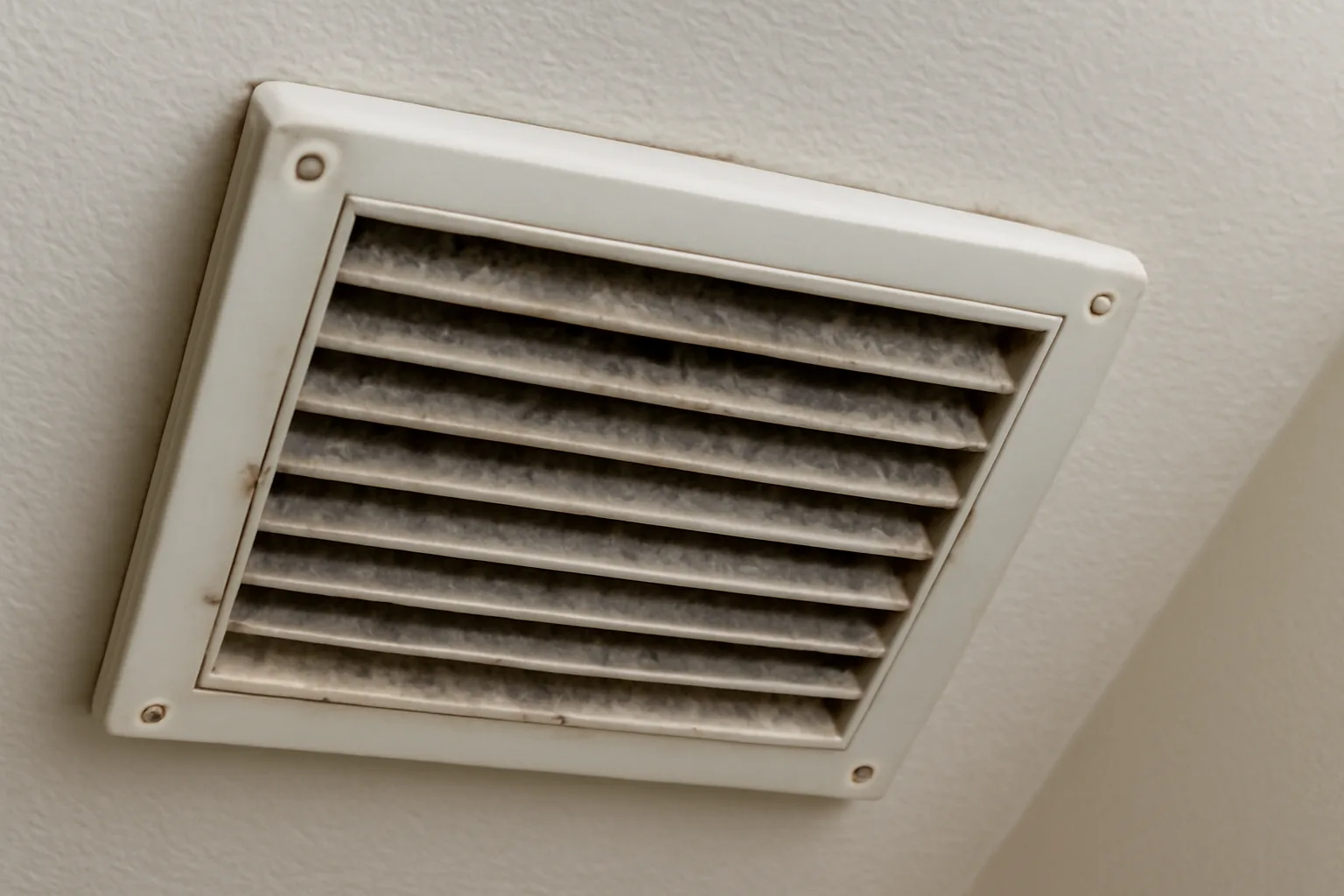
The clearest sign is a filter that has changed colour. A clean white or pale grey filter that turns dark grey, brown, fluffy, greasy or visibly clogged has done its job and needs attention. Do not shake it out over the sink and hope for the best if it is a disposable filter; that just releases the dust you were trying to remove.
Dust returning faster than usual
If shelves, TV stands and window boards are getting dusty a day or two after cleaning, look at both the filter and the vent grilles. This does not always mean the ventilation system is the cause, but it is a useful warning sign.
Common causes include:
- A clogged intake filter: less filtered air comes in, so stale indoor air hangs around.
- Dirty extract grilles: bathroom and kitchen moisture moves away more slowly.
- A filter fitted the wrong way round: airflow arrows matter on many cartridge filters.
- Gaps around a cheap replacement filter: air bypasses the filter instead of going through it.
That last one is easy to miss. A £9 no-name filter that does not seal properly can perform worse than a £22 branded replacement because air takes the easiest route around the edge.
Pollen symptoms indoors
If hay fever symptoms flare indoors after you have closed the windows, the intake filter may be overloaded or too coarse for the job. The NHS has useful guidance on hay fever triggers and symptom control, and for a ventilation system the practical point is this: pollen captured at the intake only helps if the filter is clean enough and fine enough.
During April to August, I would check intake filters more often. In homes near fields, busy roads, building sites or mature trees, a three-month interval is more realistic than six months. If someone in the house has asthma or strong hay fever, paying for a finer compatible filter can be worth it.
Weak airflow and noisier fans
Hold a tissue near an extract vent. If it barely moves where it used to pull clearly, the filter, grille or duct path may be blocked. Fan noise can change too: a tired whine, pulsing sound, or higher pitch often means the unit is fighting restriction.
Do not keep turning the fan speed up to compensate. That may hide the problem while using more electricity and adding noise. Clean the grille, inspect the filter, then check whether airflow improves.
What Type of Filter Are You Actually Looking At?
Before buying anything, identify the system. “Ventilation filter” covers several different parts, and they are not interchangeable.
MVHR filters
MVHR stands for mechanical ventilation with heat recovery. These units usually have two filters: one on the fresh-air intake and one on the stale-air extract side. Some use coarse G4/ISO Coarse filters; others allow finer ePM1 or pollen-grade options.
If you have MVHR, buy the exact size listed by the unit maker. Common replacement sets cost about £18-£45, while finer pollen-grade sets can run closer to £35-£70. Specialist ventilation suppliers, Amazon UK and manufacturer stores often sell compatible sets, but I would avoid vague listings that do not name your unit.
PIV filters
Positive input ventilation units are often mounted in the loft and gently push filtered air into the home. They are common in damp or condensation-prone houses because they keep air moving. The filters are usually larger pads or sleeves and may last longer than MVHR filters because the setup is simpler.
Expect to pay roughly £20-£50 for a replacement PIV filter, depending on brand. Nuaire, EnviroVent and Vent-Axia style parts are often sold through ventilation specialists, Screwfix trade counters, Amazon UK and direct manufacturer channels.
Cooker hood filters
Cooker hoods usually have metal grease filters, disposable paper grease filters, carbon filters, or a mix. Metal mesh filters are normally washable. Carbon filters are not; once odours linger after cooking, replace them.
Metal mesh replacements are often £15-£40. Carbon filter pairs commonly sit around £12-£35 from Currys, AO, Amazon UK, eSpares, manufacturer stores or appliance spares sites. If your hood recirculates air rather than venting outside, the carbon filter matters more because it is doing the odour work.
Bathroom and utility extractor filters
Not every bathroom extractor has a replaceable filter. Many just have a removable grille that needs cleaning. Some continuous running units and through-wall fans use foam or cartridge filters.
If the fan is above a shower, isolate the power safely before removing the cover. If you are not sure how to do that, do not poke around with wet hands and a butter knife. Replacement foam pads can cost £5-£15; full branded filter cartridges may be £15-£30.
A Practical Replacement Routine for UK Homes
The best routine is boring enough that you will actually do it. Put it in the same mental bucket as changing smoke alarm batteries, descaling the kettle and cleaning the washing machine drawer.
Monthly five-minute check
Once a month, walk around the house and check:
- Visible vent grilles: vacuum dust from the surface with a brush attachment.
- Kitchen hood filters: look for grease, tackiness or lingering cooking smells.
- Bathroom fan covers: check for fluff, dust and reduced pull.
- MVHR or PIV access panel: inspect the filter face if it is easy and safe to reach.
- Airflow feel: note any room that now clears moisture or smells more slowly.
This is also a good point to check your wider ventilation habits. If condensation keeps returning, read our guide to how to stop condensation on windows and our advice on reducing damp and mould in UK homes. Filters help, but they do not fix every moisture problem on their own.
Seasonal checks matter
UK homes put different loads on filters through the year. Spring and early summer bring pollen. Autumn brings leaf dust and damp air. Winter brings closed windows, more cooking indoors and heavier bathroom moisture.
I would mark three dates:
- March: inspect before pollen season properly gets going.
- September: inspect after summer dust and before wetter weather.
- December: inspect before the house spends weeks closed up and busy.
If the system uses disposable filters, keep one spare set in the cupboard. Nothing kills a maintenance habit faster than finding the right size, getting distracted, and then ordering it six weeks later.
After decorating, sanding or building work
Replace or at least inspect filters after dusty work. Sanding plaster, cutting MDF, drilling masonry, lifting old carpets and fitting kitchens all create fine dust that clogs filters quickly.
If you have work done in the house, switch off the ventilation system if the installer recommends it and the room can be ventilated another way. Then check the filter once the dust has settled. A filter that would normally last six months can look grim after a single renovation week.
Costs, Sizing and Where to Buy Replacement Filters
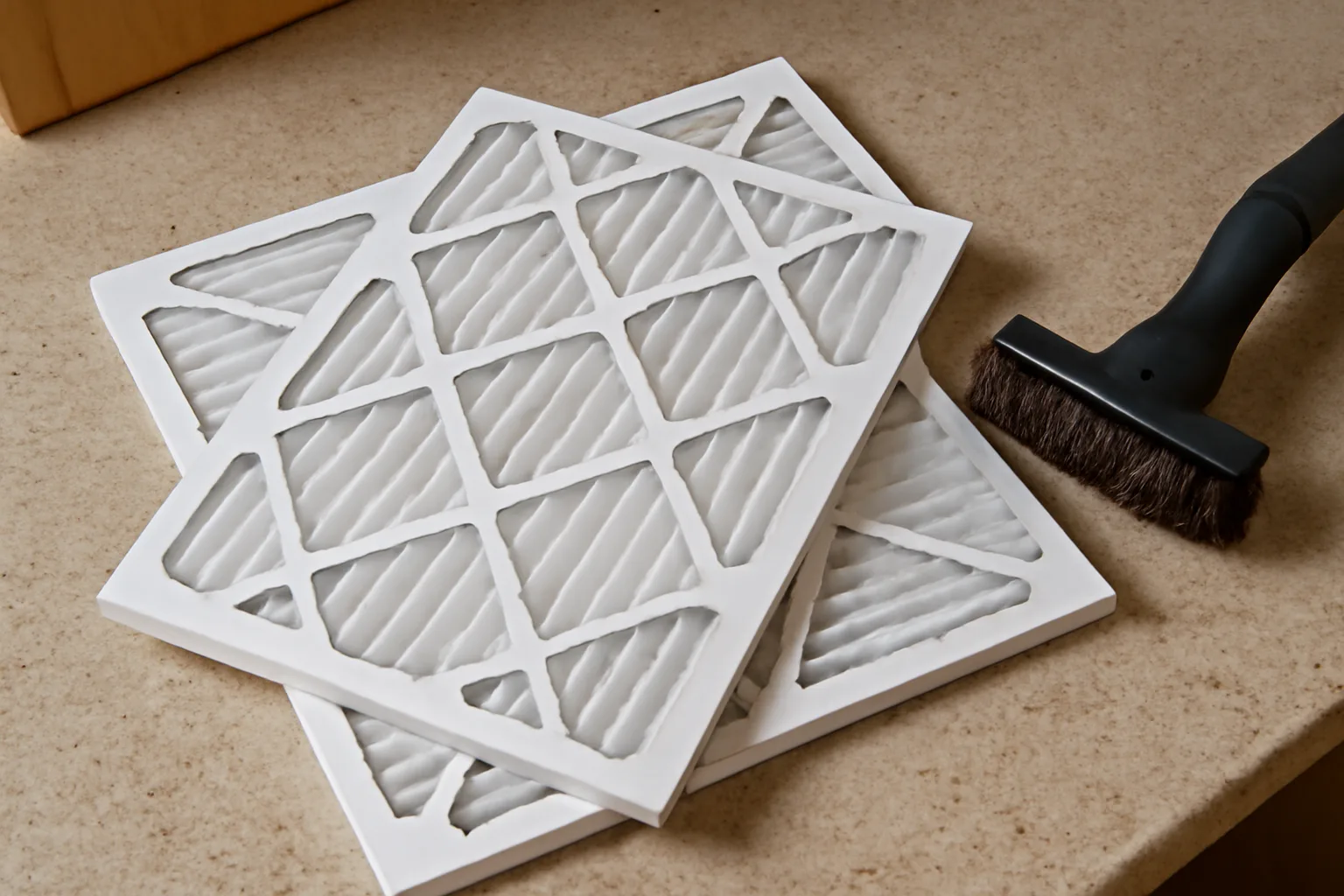
The most common mistake is buying by description rather than size and model. “MVHR pollen filter” is not enough. You need the unit brand, model number, filter dimensions and grade.
What replacement filters cost
As a rough UK guide:
- Basic foam vent pads: £5-£15.
- Cooker hood carbon filters: £12-£35 per pair.
- Cooker hood metal grease filters: £15-£40 each.
- MVHR standard filter set: £18-£45.
- MVHR pollen-grade filter set: £35-£70.
- PIV replacement filter: £20-£50.
- Vent cleaning brush or vacuum attachment: £6-£18 from Amazon UK, B&Q or Screwfix.
For rented homes, do not assume the tenant must pay for system parts. Check the tenancy agreement and ask the landlord or managing agent, especially for built-in ventilation systems. The government guidance on damp and mould health risks in rented homes is clear that ventilation and moisture issues should be taken seriously, not waved away as lifestyle.
Where I would buy
For branded MVHR and PIV parts, I would start with the manufacturer or a specialist ventilation supplier. For cooker hood filters, appliance spares sites are often better than general marketplaces because they let you search by model number. Screwfix and Toolstation are useful for common extractor parts. Currys and AO are fine for mainstream cooker hood carbon filters. Amazon UK is convenient, but check dimensions and recent reviews carefully.
Do not overpay for a “premium” filter if the listing cannot name the grade, dimensions or compatible unit. A proper fit beats fancy wording.
Check the direction arrow
Many filters have an airflow arrow printed on the frame. Fit it the wrong way round and you can reduce performance or cause the filter to bow. Take a quick photo before removing the old one. It saves the classic “which way did this go?” moment.
What Happens If You Leave Filters Too Long?
A clogged filter does not just look unpleasant. It changes how the system works.
Airflow drops first
The first problem is reduced airflow. Bathrooms clear steam more slowly, bedrooms feel stuffier, and kitchen smells hang around longer. If you already have poor ventilation, that extra restriction can tip the house into regular condensation.
This is where filters connect with broader indoor air quality. If you are unsure whether the house has a wider issue, our guide to testing indoor air quality at home explains low-cost monitors, what they can measure and where they fall short.
Fans work harder
Restricted airflow can make fans noisier and less efficient. A small continuous fan may only use a few watts, but running it against a blocked filter is still wasteful. Larger MVHR units are more expensive, so it makes sense to protect them with basic filter care.
Based on owner manuals and installer guidance, most replacement filters are meant to be user-maintenance items. If the unit needs tools, ladder access, or electrical isolation you are not confident with, book an installer service instead. A basic domestic ventilation service can be around £90-£180, while full MVHR servicing may be £150-£300 depending on access and system size.
Damp and mould risk increases
Filters are not the only cause of damp, but blocked ventilation can make damp problems harder to control. If moisture from showers, drying clothes and cooking stays in the air for longer, cold surfaces are more likely to collect condensation.
For the bigger picture, see our guide to how to improve indoor air quality and our room-specific advice on improving air quality in a rented flat. The filter is one small part of the system, but it is one of the cheapest parts to keep right.
The Simple Rule I Would Use at Home
If I were setting this up from scratch, I would write the filter size and replacement date on a note inside the cupboard door or near the unit. Then I would keep one spare set and check the filter monthly.
For most homes, that means:
- Replace MVHR filters every 3-6 months.
- Replace or clean cooker hood filters every 1-6 months, depending on type and cooking habits.
- Check PIV filters every 2-3 months and replace when dirty or by the maker’s interval.
- Clean bathroom fan grilles monthly and replace internal filters where fitted.
- Shorten every interval after building work, heavy pollen, pets, smoke, or visible airflow loss.
That is the answer to when to replace home ventilation filters in real life: not by blind calendar, not by panic, but by monthly checks, visible condition and the system’s stated limit. A clean filter will not solve every air quality problem, but a dirty one can quietly make several problems worse.
Frequently Asked Questions
How often should I replace home ventilation filters? Most homes should check filters monthly and replace them every 3-6 months. PIV filters may last longer, while cooker hood and bathroom filters can need attention sooner.
Can I wash home ventilation filters instead of replacing them? Only wash filters if the manufacturer says they are washable. Metal cooker hood grease filters usually can be washed, but MVHR, pollen, carbon and many foam filters are normally replacement parts.
Why does my filter get dirty so quickly? Pets, pollen, nearby traffic, open fires, building dust, decorating work and frequent frying can all load filters quickly. If a new filter clogs within weeks, check for dust sources and poor sealing around the filter frame.
Do better filters improve indoor air quality? A finer compatible filter can reduce incoming pollen and fine dust, but it must fit the unit and allow enough airflow. Do not fit a dense filter grade that the fan was not designed to handle.
What happens if I run ventilation with a blocked filter? Airflow drops, fans can get noisier, rooms clear moisture more slowly and the system may work harder than it should. In damp homes, that can make condensation and mould risk harder to control.
Where is the filter in a home ventilation system? MVHR filters are usually inside the main unit, PIV filters are often in the loft unit, cooker hood filters sit behind the underside grille, and bathroom extractor filters may sit behind the front cover if the model uses one.