Your monstera’s leaves are browning at the edges. The calathea has curled in on itself like it’s personally offended by your heating system. And that fern you bought from the garden centre three weeks ago? Already crispy. The problem isn’t watering, light, or even the plant itself — it’s almost always humidity. UK homes in winter sit at about 30-40% relative humidity thanks to central heating, and most popular houseplants evolved in tropical forests where it’s 60-80%.
I killed three calatheas before I figured this out. The fourth one is still alive eighteen months later — thriving, actually — because I finally addressed the humidity problem properly rather than just misting and hoping. Here’s everything that actually works, what doesn’t, and how to match humidity solutions to your specific plants without turning your house into a sauna.
In This Article
- Why UK Homes Are Too Dry for Most Houseplants
- How to Measure Humidity Around Your Plants
- Which Plants Need High Humidity
- The Best Ways to Increase Humidity
- Methods That Don’t Work as Well as People Think
- Room-by-Room Humidity Strategies
- Seasonal Humidity Management
- Signs Your Plants Need More Humidity
- Balancing Plant Humidity with Home Health
- Frequently Asked Questions
Why UK Homes Are Too Dry for Most Houseplants
The Central Heating Problem
Central heating doesn’t just warm air — it sharply lowers relative humidity. Cold air holds less moisture than warm air, so when your boiler heats cold outdoor air from 5°C to 21°C, the relative humidity plummets. A room at 21°C with central heating running typically sits at 25-35% RH. That’s drier than the Sahara Desert on some days.
Your skin notices (dry lips, itchy skin). Your sinuses notice (nosebleeds, sore throat). And your plants notice most of all — because unlike you, they can’t walk to the kitchen for a glass of water. Their only moisture source beyond the soil is the air around their leaves.
What Tropical Plants Expect
Most popular houseplants — monsteras, philodendrons, calatheas, ferns, orchids, alocasias — come from tropical or subtropical environments where humidity rarely drops below 60%. Some, like calatheas and ferns, evolved in the understory of rainforests where humidity can sit at 80-90%.
When we bring these plants into UK homes at 30% humidity, we’re asking them to live in conditions roughly equivalent to a mild desert. They survive (many are tougher than people think), but they don’t thrive. The difference between a monstera that pushes out one sad leaf every three months and one that unfurls a new leaf every few weeks often comes down to humidity.
The UK Seasonal Swing
British homes have a humidity problem that’s worse than consistently dry climates because it swings wildly:
- Summer (June-September): 50-70% RH naturally — plants do well without intervention
- Autumn/Spring (Oct-Nov, Mar-May): 40-55% RH — some plants start struggling
- Winter (December-February): 25-40% RH — crisis territory for humidity-loving plants
This swing is why plants that looked gorgeous all summer suddenly decline in November. The heating came on and nobody adjusted the humidity strategy.
How to Measure Humidity Around Your Plants
Why You Need a Hygrometer
Guessing humidity doesn’t work. You cannot feel the difference between 35% and 55% RH — both feel “normal” to human skin. But your plants can tell the difference immediately. A basic digital hygrometer costs about £8-12 from Amazon and gives you actual data to work with.
Where to Place It
Humidity varies wildly within a single room:
- Near windows: Usually drier (cold glass condenses moisture, and draughts pull it away)
- Centre of room: Average reading
- Near a plant grouping: Often 5-10% higher than room average due to transpiration
- Bathroom: Often 20-30% higher than other rooms
Place your hygrometer at plant height, near your humidity-sensitive plants. Not on a shelf 2 metres away — right amongst the leaves. You need to know what the air around them actually reads.
Target Humidity Ranges
- 40-50% RH: Sufficient for succulents, snake plants, ZZ plants, dracaenas, pothos
- 50-60% RH: Ideal for monsteras, philodendrons, peace lilies, most orchids
- 60-70% RH: Required for calatheas, ferns, alocasias, anthuriums
- 70%+ RH: Needed for some rare aroids, terrariums plants, certain ferns
The RHS houseplant care guidance recommends grouping plants by similar environmental needs — humidity being one of the most important.
Which Plants Need High Humidity
High Humidity (60%+ RH)
- Calatheas / Marantas — the drama queens. Brown crispy edges within days if humidity drops below 50%
- Maidenhair ferns — notoriously fussy. Need consistent 60%+ or they crisp
- Alocasias — large leaves transpire heavily and need humid air to compensate
- Anthuriums — especially the velvet-leaved varieties (crystallinum, clarinervium)
- Fittonias — collapse visibly when dry (but recover quickly when misted)
Moderate Humidity (50-60% RH)
- Monsteras — surprisingly tolerant but produce larger, more fenestrated leaves with good humidity
- Philodendrons — most species cope at 50% but prefer 60%
- Orchids (Phalaenopsis) — adaptable but flower more reliably with 50%+ humidity
- Peace lilies — brown tips are almost always a humidity issue
- Most ferns (Boston, birds nest) — less demanding than maidenhair but still humidity-lovers
Low Humidity Tolerant (40%+ is fine)
- Snake plants — almost indestructible in any humidity
- ZZ plants — evolved for drought
- Succulents and cacti — prefer dry air, can rot in high humidity
- Pothos — extremely adaptable
- Dracaenas — tip browning can happen below 40% but they tolerate it
The Best Ways to Increase Humidity
Humidifier (Most Effective)
Running a humidifier in the room with your plants is by far the most reliable method. A small ultrasonic humidifier (about £25-40 from Amazon or Argos) can raise room humidity by 15-25% and maintain it consistently.
What to look for:
- Output: Minimum 200ml/hour for a typical bedroom
- Tank size: 2-3 litres means overnight running without refilling
- Adjustable output — you want to set it rather than running at full blast permanently
- Cool mist — better for plants than warm mist (which can encourage mould)
- Hygrostat — built-in humidity sensor that turns it off when the target is reached (prevents over-humidifying)
We’ve covered this in detail in our guide to choosing the right humidifier size — the key is matching output to room volume.
Grouping Plants Together
Plants transpire — they release moisture through their leaves. A single plant barely affects ambient humidity, but a group of 5-10 plants in close proximity can raise local humidity by 5-10% through collective transpiration alone.
This is free, looks beautiful, and genuinely works. The more foliage packed together, the better the microclimate. I keep my humidity-sensitive plants (calatheas, ferns, alocasia) clustered on one shelf and the hygrometer reads consistently 8-12% higher than the rest of the room.
Pebble Trays
A shallow tray filled with pebbles and water, placed underneath or around plants. As the water evaporates, it raises humidity in the immediate vicinity.
How to do it properly:
- Find a tray slightly larger than your plant pot (plastic, ceramic, or metal — anything waterproof)
- Fill with a single layer of pebbles, gravel, or LECA balls
- Add water until it’s just below the top of the pebbles (plants should NOT sit in water)
- Place plant pot on top of the pebbles
- Refill water every 2-3 days as it evaporates
The effect is modest — maybe 5-8% increase in the air immediately around the plant. Better than nothing, but won’t rescue a calathea in a room at 30% RH.
Terrariums and Cloches
For plants that need very high humidity (70%+), enclosed or semi-enclosed containers create a self-sustaining humid microclimate. Glass terrariums, wardian cases, or even a clear plastic bag loosely placed over a plant for a few hours can provide emergency humidity relief.
- Closed terrariums: 80-95% RH — perfect for fittonias, mosses, ferns
- Open terrariums / cloches: 60-75% RH — good for calatheas, small anthuriums
- IKEA cabinets (modified): The “IKEA greenhouse” trend uses glass display cabinets with added humidity and grow lights — creating a controlled tropical environment
Methods That Don’t Work as Well as People Think
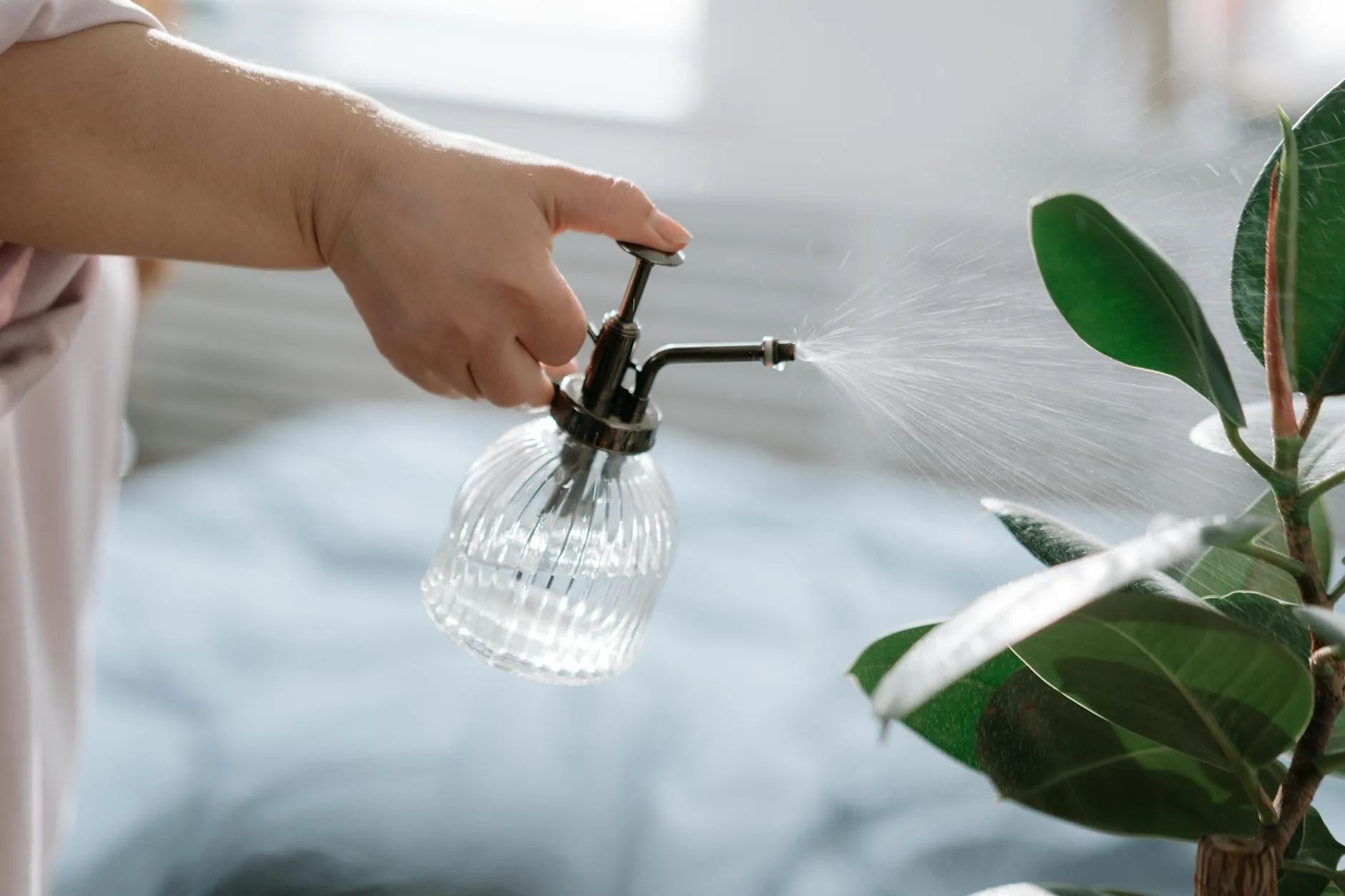
Misting
Every plant care guide recommends misting. It’s satisfying, it feels like you’re helping, and it does almost nothing for sustained humidity. Water droplets from misting evaporate within minutes. To meaningfully raise humidity through misting alone, you’d need to spray every 15-20 minutes — all day long.
Worse, misting can leave water sitting on leaves for extended periods, which encourages fungal problems (especially on calatheas, which are already drama queens without adding leaf spot to the mix).
When misting IS useful:
- Emergency rescue for a wilting fittonia (buys time while you fix the real problem)
- Cleaning dusty leaves (functional, not for humidity)
- Air plants (Tillandsia) that absorb water through leaves
Putting Bowls of Water on Radiators
A classic piece of advice. The theory: water evaporates from the bowl as the radiator heats it, adding moisture to the air. The reality: a single bowl might add 100-200ml of moisture to a room over a day. That’s barely measurable against the cubic metres of air the central heating is drying.
It’s not harmful, but it’s a token gesture. You’d need 10+ bowls to make a meaningful difference — at which point just buy a humidifier.
Putting Plants in the Bathroom
Bathrooms are humid during and shortly after showers. The rest of the time, they’re often drier than other rooms (ventilation fans, tiled surfaces that don’t retain moisture). If your bathroom gets natural light and stays warm, it can work for some plants. But don’t assume “bathroom = humid” permanently.
Room-by-Room Humidity Strategies
Living Room
Typically your largest collection of plants but also the room where central heating runs longest.
- Best approach: Humidifier + plant grouping
- Budget approach: Group humidity-loving plants together on a large pebble tray, keep humidity-tolerant plants (pothos, snake plants) separately
- Humidifier placement: Between the plant grouping and the nearest radiator (intercepts the dry air before it reaches the plants)
Bedroom
Usually cooler than the living room (most people sleep at 16-18°C), which means humidity naturally stays higher. Often the best room for calatheas and ferns.
- Best approach: Small humidifier running overnight (benefits your sleep AND the plants)
- Note: Keep humidity below 60% to avoid dust mite issues — there’s a balance between plant health and healthy home humidity levels
Kitchen
Steam from cooking and boiling kettles provides natural humidity spikes throughout the day. Good for herbs, smaller tropical plants, and orchids on windowsills.
- Best approach: Position plants near the hob/sink area where steam naturally rises
- Watch out for: Temperature swings (cold draughts from open windows vs hot steam) — some plants hate the inconsistency more than the low humidity itself
Home Office
Often a smaller room with a computer generating dry heat. Good candidate for a small desktop humidifier.
- Best approach: Desktop humidifier (under £30) running during working hours
- Added benefit: Better for your own concentration and skin too
Seasonal Humidity Management
Winter Strategy (October to March)
This is when plants suffer. Your action plan:
- Start running humidifiers when you switch the central heating on (don’t wait for damage)
- Move humidity-sensitive plants away from radiators (even 1 metre makes a difference)
- Group plants more tightly than in summer
- Reduce heating in the room with your most sensitive plants if possible (18°C with 50% humidity is better than 22°C with 30% humidity for tropical plants)
- Check your hygrometer weekly — a sudden cold snap means the heating works harder and humidity drops further
Summer Strategy (April to September)
Nature does most of the work. UK summer humidity is usually 50-65% outdoors, and plants often boom during this period.
- Turn off humidifiers (unless your home is unusually dry)
- Open windows for natural air circulation (benefits plants and reduces stale air)
- Some plants can go outside (monsteras, palms, citrus) — the natural humidity and air movement accelerates growth
- Watch for overwatering — higher humidity means soil dries slower
Transition Periods (March/April and September/October)
The dangerous times. Heating switches on or off, temperatures fluctuate, and plants that looked fine yesterday suddenly show stress.
- September/October: Start monitoring humidity as the heating comes on. If it drops below 45%, begin humidifier use immediately
- March/April: Gradually reduce humidifier use as natural humidity rises. Plants adjust better to gradual changes than sudden ones
Signs Your Plants Need More Humidity
Brown Leaf Edges
The classic sign. Leaf edges and tips turn brown and crispy while the rest of the leaf stays green. This happens because the edges lose moisture fastest (thinnest tissue, most exposed to air). If you’re watering correctly and still seeing brown edges, it’s almost always humidity.
Curling Leaves
Leaves curl inward to reduce their surface area and minimise moisture loss. Calatheas are famous for this — leaves that should lie flat roll into tubes. It’s the plant’s emergency response to dry air.
Dropped Lower Leaves
When a plant can’t support all its foliage in dry conditions, it sacrifices the oldest leaves first. If your plant is dropping lower leaves despite adequate light and water, check humidity before panicking about root rot.
Slow or Stunted Growth
Plants in low humidity grow slower because they partially close their stomata (leaf pores) to conserve moisture. This reduces photosynthesis and limits growth. A plant that pushed new leaves monthly in summer and stops in winter is often responding to humidity more than light levels.
Flower Buds Dropping
Orchids and peace lilies commonly drop flower buds in dry air. The plant decides it can’t sustain flowering in adverse conditions and aborts blooms. Consistent humidity during bud development is critical.
Balancing Plant Humidity with Home Health
The Mould Risk
High humidity (above 60%) combined with poor ventilation invites mould. Black mould on walls and window frames is a health hazard — for you, much more than for the plants. The NHS advises keeping home humidity between 40-60% for human health.
Finding the Sweet Spot
- 40-55% whole-room humidity — healthy for humans, acceptable for most plants
- Localised higher humidity (60%+) around plant groupings via humidifiers pointed at plants, not at walls
- Good ventilation — keep air moving (even cracking a window for 10 minutes daily helps)
- Watch for condensation — if your windows are dripping wet every morning, you’ve overdone it
What NOT to Do
- Don’t run a humidifier non-stop in a room with poor ventilation
- Don’t aim for 70%+ whole-room humidity (even for demanding plants) — use terrariums or cloches instead
- Don’t ignore mould if it appears — reduce humidity and improve ventilation immediately
- Don’t humidify rooms with existing damp problems
The ideal approach: keep the room at 45-55% for human health, and create localised humid microclimates for demanding plants using grouping, pebble trays, and directed humidifier output.
Frequently Asked Questions
What humidity level do most houseplants need? Most popular houseplants prefer 50-60% relative humidity. Hardy species (snake plants, pothos, ZZ plants) tolerate 40%, while calatheas, ferns, and alocasias want 60%+. The key insight: UK homes in winter typically sit at 30-40%, which is below what even “easy” tropical plants prefer. Even modest humidity increases make a visible difference.
Does misting actually help with humidity? Very little. Misting raises humidity for 5-10 minutes before the droplets evaporate. To meaningfully raise humidity through misting alone, you’d need to spray every 15-20 minutes throughout the day. A humidifier, pebble tray, or plant grouping provides sustained humidity that actually helps. Misting is fine for cleaning leaves or emergency rescue of wilting plants, but it’s not a humidity solution.
Can you have too much humidity for houseplants? Some plants (succulents, cacti, most Mediterranean herbs) prefer dry air and can develop fungal issues or root rot in high humidity. For tropical houseplants, the practical ceiling is about 70% in a normal room — above this you risk mould on walls and furnishings. Use enclosed terrariums for plants needing 70%+ rather than raising whole-room humidity to unsafe levels.
Where should I put a humidifier for my plants? Position the humidifier within 1-2 metres of your humidity-loving plants, ideally between them and the nearest heat source (radiator, sunny window). Point the mist output toward the plants, not toward walls or soft furnishings. Elevating the humidifier slightly (on a shelf or table) helps the mist disperse evenly across the foliage.
Why do my plants look fine in summer but struggle in winter? British summer humidity naturally sits at 50-65% — perfect for most houseplants. When central heating starts in October/November, indoor humidity drops to 25-40%. Plants that thrived all summer suddenly face desert-like conditions. The solution: start humidifying as soon as you switch the heating on, not after you see damage. Damage means cells have already died — prevention is easier than recovery.
If you are solving the same room problem, compare this with Best Humidifiers for Plants 2026 UK: Tropical Houseplant Care, How to Measure Humidity in Your Home, How to Repot Houseplants: Signs, Soil & Step-by-Step.