Your bedroom windows are streaming with condensation every morning, and someone told you to buy a humidifier. Someone else said you need a dehumidifier. They’re opposite machines — one adds moisture, one removes it — and buying the wrong one makes your problem worse, not better. The right choice depends entirely on what’s actually happening in your home, and figuring that out takes about 30 seconds with a cheap hygrometer.
In This Article
- What Humidifiers and Dehumidifiers Actually Do
- How to Tell Which One You Need
- When You Need a Dehumidifier
- When You Need a Humidifier
- The Ideal Humidity Range
- Seasonal Patterns in UK Homes
- Dehumidifier Types and How They Work
- Humidifier Types and How They Work
- Running Costs Compared
- Can You Need Both?
- Frequently Asked Questions
What Humidifiers and Dehumidifiers Actually Do
Humidifiers Add Moisture
A humidifier releases water vapour into the air, raising the relative humidity in a room. You’d use one when the air is too dry — typically during winter when central heating runs constantly and strips moisture from the indoor environment.
Symptoms of air that’s too dry:
- Dry, cracked skin and lips — especially overnight
- Static electricity — getting shocked touching door handles and light switches
- Dry throat and nose — waking up with a sore throat despite not being ill
- Wooden furniture cracking — joints opening up, floorboards creaking more than usual
- Houseplants struggling — leaf tips turning brown, soil drying out rapidly
Dehumidifiers Remove Moisture
A dehumidifier extracts water from the air, lowering humidity. You’d use one when there’s too much moisture — causing condensation, damp, mould, or a musty smell.
Symptoms of air that’s too humid:
- Condensation on windows — especially in the morning
- Musty or damp smell — particularly in bathrooms, kitchens, and bedrooms
- Visible mould — black spots on walls, ceilings, window frames, or around tiles
- Damp patches on walls — especially on exterior walls
- Clothes taking ages to dry — even on an indoor airer in a heated room
- Dust mites thriving — allergies worse indoors than outdoors
How to Tell Which One You Need
The 30-Second Test
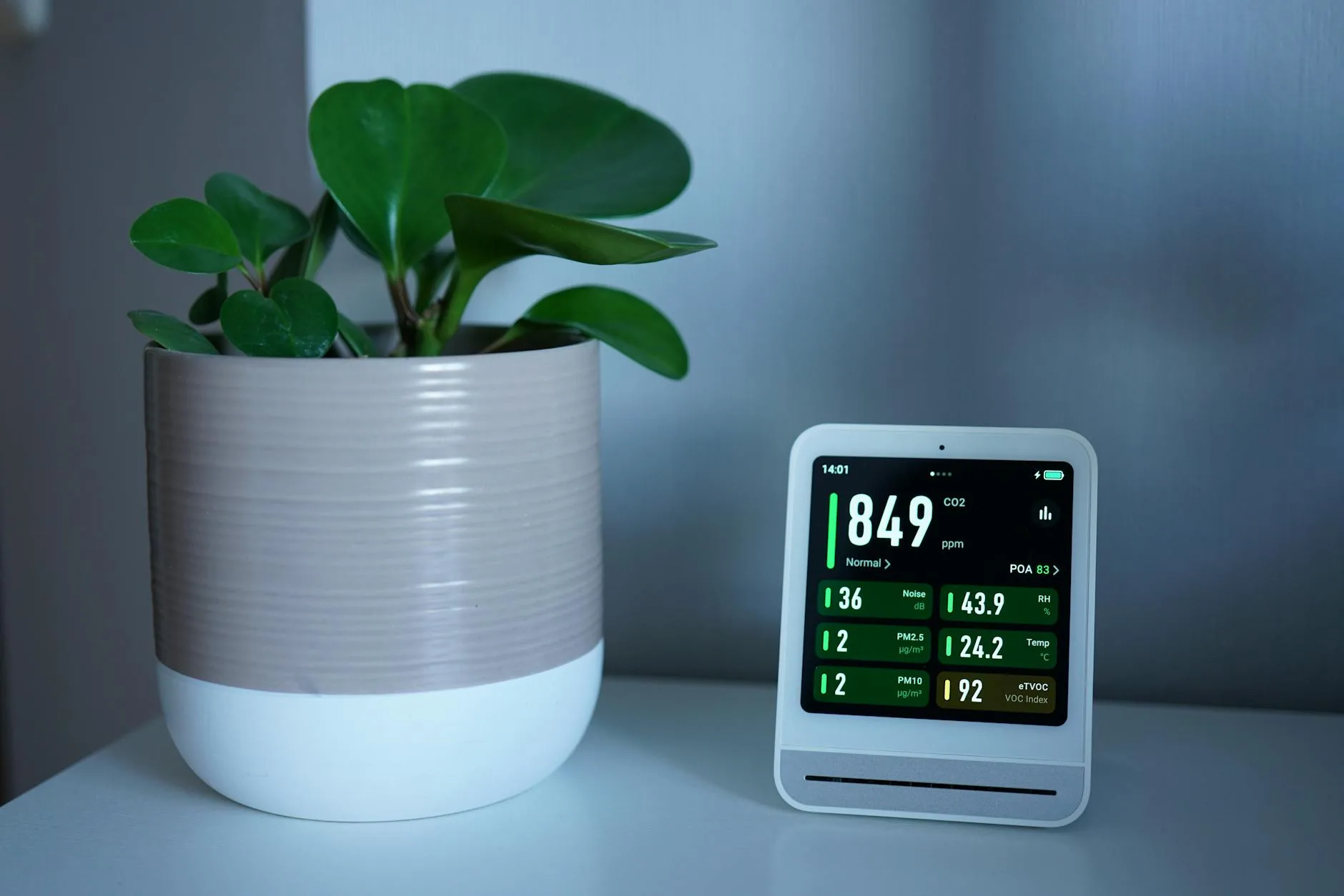
Buy a digital hygrometer (about £5-10 from Amazon UK or Argos). Place it in the room you’re concerned about and check the reading after an hour.
- Below 40% humidity → you need a humidifier
- 40-60% humidity → you’re in the healthy range. No action needed
- Above 60% humidity → you need a dehumidifier
That’s the entire diagnostic process. No professional assessment needed, no expensive consultation. A £7 hygrometer tells you everything. After buying one for every room in the house, I was surprised to find our bedroom at 72% humidity in winter — which explained the condensation we’d been living with for months. Our guide on how to measure humidity covers the details.
The Obvious Signs
If you already know which problem you have, you probably don’t need a hygrometer:
- Condensation on windows = too humid → dehumidifier
- Mould anywhere = too humid → dehumidifier
- Static shocks and dry skin in winter = too dry → humidifier
- Waking with a dry throat every morning = too dry → humidifier

When You Need a Dehumidifier
The UK Default Problem
Most UK homes have a humidity problem, not a dryness problem. Our climate is damp, our homes are increasingly well-sealed (double glazing, draught-proofing), and we generate significant moisture through cooking, bathing, and drying clothes indoors. A family of four produces about 10-15 litres of moisture per day just through breathing, showering, and cooking.
In older, draughty homes, this moisture escapes through gaps and ventilation. In modern or retrofitted homes, it gets trapped — and shows up as condensation, damp, and eventually mould.
Common Dehumidifier Situations
- Drying clothes indoors — a single load of wet washing releases about 2 litres of water into the air. In a closed room without ventilation, that’s enough to push humidity above 80%. A dehumidifier for drying clothes is one of the most practical household appliances you can buy
- Bathroom after showers — a 10-minute hot shower produces about 1.5 litres of steam. Without an extractor fan or window, that moisture soaks into walls and ceilings
- Basements and cellars — naturally cool and poorly ventilated, these are prime damp territory
- New builds — a new house contains thousands of litres of water in its plaster, concrete, and screed. It takes 12-18 months to dry out, and a dehumidifier speeds this process
- After a flood or leak — essential for drying out the property before mould takes hold
Health Implications
According to the NHS guidance on damp and mould, living in a damp home can cause or worsen respiratory conditions including asthma, allergies, and bronchitis. Children, elderly people, and those with existing respiratory conditions are particularly vulnerable. Reducing humidity below 60% is one of the most effective ways to prevent mould growth and the health problems it causes.
When You Need a Humidifier
The Winter Dryness Problem
Central heating is the main cause of indoor dryness in the UK. Radiators heat the air without adding moisture, which drops relative humidity — sometimes to 20-30% in well-heated homes during cold spells. This is below the comfort threshold for most people and well below what houseplants need.
Common Humidifier Situations
- Bedrooms in winter — dry air overnight causes sore throats, dry nasal passages, and disrupted sleep. A bedroom humidifier running overnight keeps humidity at a comfortable 40-50%
- Homes with wood flooring or furniture — wood expands and contracts with humidity changes. Consistently dry air causes cracks, warping, and loosening joints. Antique furniture is particularly vulnerable
- Nurseries and children’s rooms — babies are more sensitive to dry air than adults. Dry nasal passages make breathing harder and can worsen congestion during colds
- Home offices — hours in a heated room with a computer (which generates dry heat) can leave you with dry eyes, headaches, and scratchy throat by the end of the day
- For indoor plants — tropical houseplants need 50-60% humidity. Most UK homes in winter drop to 30-40%, which causes brown leaf tips and stunted growth
When NOT to Use a Humidifier
Don’t use a humidifier if your humidity is already above 50%. Adding moisture to air that’s already adequately humid pushes you into dehumidifier territory — condensation, damp, and mould. Always check with a hygrometer before running a humidifier.
The Ideal Humidity Range
The Sweet Spot: 40-60%
This range balances comfort, health, and building protection:
- Below 30% — uncomfortably dry. Skin cracks, static electricity, respiratory irritation
- 30-40% — dry but tolerable. Humidifier beneficial, especially for sleeping
- 40-50% — ideal for most people. Comfortable, healthy, good for buildings
- 50-60% — upper comfortable range. Monitor for condensation on cold surfaces
- 60-70% — too humid. Dust mites thrive, mould risk increases. Dehumidifier recommended
- Above 70% — mould will grow. Dehumidifier essential, plus investigate the moisture source
Room-by-Room Targets
- Living rooms and bedrooms: 40-55%
- Kitchens: 50-60% (higher due to cooking — adequate ventilation is more important than dehumidification here)
- Bathrooms: 50-65% (use an extractor fan during and after showering rather than relying on a dehumidifier)
- Basements: below 60% (can be challenging — a dehumidifier may need to run continuously)
Seasonal Patterns in UK Homes
Winter (November-March)
The season of contradictions. Outside air is cold and damp, but inside, central heating dries the air. What happens depends on your home:
- Well-sealed modern homes → humidity builds up from cooking, bathing, and breathing. Condensation forms on cold windows. You likely need a dehumidifier, or at minimum better ventilation
- Older, draughty homes → the heating dries the air because moisture escapes through gaps. Humidity can drop to 25-35%. You might need a humidifier for comfort, especially in bedrooms
This is why “buy a humidifier” and “buy a dehumidifier” can both be correct advice for winter — it depends entirely on your home’s characteristics.
Spring and Autumn (April-May, September-October)
Transition seasons. Heating is intermittent, windows get opened more, and outdoor humidity fluctuates. Most homes are in the comfortable 40-55% range naturally. Neither machine is usually needed.
Summer (June-August)
UK summers can be surprisingly humid — especially during thundery spells. If you find your home feels muggy indoors even with windows open, a dehumidifier removes the stickiness. Humidifiers are almost never needed in a British summer.
Dehumidifier Types and How They Work
Compressor (Refrigerant) Dehumidifiers
The most common type. A fan draws moist air over cold coils (like a miniature fridge). The moisture condenses on the coils, drips into a tank, and dry air is blown back into the room.
- Best temperature range: Above 15°C. Performance drops below 10°C as the coils ice up
- Extraction rate: 10-25 litres per day for home models
- Noise: Moderate — the compressor hums. Comparable to a fridge
- Price: £100-250 for a decent home model
- Best for: Living spaces, bedrooms, laundry drying in heated rooms
Desiccant Dehumidifiers
Use a rotating desiccant wheel that absorbs moisture from the air. The wheel is heated internally to release the collected water into a tank. No cold coils means they work at any temperature.
- Best temperature range: Any — works equally well at 5°C and 25°C
- Extraction rate: 7-12 litres per day for home models
- Noise: Quieter than compressor models — just the fan, no compressor hum
- Price: £150-300
- Best for: Unheated spaces (garages, conservatories, caravans), cold bedrooms, anywhere below 15°C
Which Type for Your Situation
- Heated rooms (living room, bedroom, kitchen) → compressor. More efficient, cheaper to run, higher extraction rate
- Unheated or cold spaces (garage, conservatory, basement) → desiccant. Works at low temperatures where compressor models struggle
- Laundry drying → either works, but compressor models extract more water per hour in a warm room. Our bathroom dehumidifier guide covers compact options for smaller spaces
Humidifier Types and How They Work
Ultrasonic
Uses high-frequency vibrations to create a fine mist. Quiet, energy-efficient, and the most popular type for bedrooms. Can leave a fine white dust on surfaces if used with hard water (the minerals in the water become airborne). Using distilled or filtered water prevents this.
- Noise: Very quiet — a gentle hum
- Price: £20-60
- Running cost: Low — typically 20-40W
- Best for: Bedrooms, nurseries, small rooms
Evaporative
A fan blows air through a wet wick or filter. The air picks up moisture naturally — no mist, no white dust. Self-regulating: as humidity rises, the evaporation rate slows automatically. Requires filter replacement every 1-3 months.
- Noise: Moderate — the fan is audible
- Price: £30-80
- Running cost: Low to moderate — 15-40W plus filter costs
- Best for: Living rooms, offices, rooms where white mineral dust would be a problem
Steam (Warm Mist)
Boils water to create steam, then cools it slightly before releasing. Produces sterile moisture (the boiling kills bacteria and mould spores). Uses more electricity than other types.
- Noise: Bubbling sound — some people find it soothing, others find it irritating
- Price: £30-70
- Running cost: Higher — 200-400W due to the heating element
- Best for: Rooms where sterile moisture is important (nurseries, sick rooms). Also warms the room slightly
Our humidifier buying guide compares specific models across all three types.
Running Costs Compared
Dehumidifiers
- Compressor models: 200-500W typical draw. Running for 8 hours per day costs about 40p-£1.00 per day (at 24.5p/kWh)
- Desiccant models: 300-600W typical draw. Running for 8 hours per day costs about 60p-£1.20 per day
- Monthly cost (typical use): £10-25 for moderate use (4-8 hours daily during the damp season)
Humidifiers
- Ultrasonic: 20-40W. Running overnight (8 hours) costs about 4-8p per night
- Evaporative: 15-40W. Similar to ultrasonic
- Steam: 200-400W. Running overnight costs about 40-80p per night
- Monthly cost (typical use): £1-5 for ultrasonic/evaporative, £10-20 for steam
The Cost of Doing Nothing
Mould remediation in a UK home costs £500-5,000 depending on severity. Replacing a mould-damaged bedroom carpet costs £300-800. Repainting a mould-affected ceiling costs £100-300. A £150 dehumidifier running at £15/month is vastly cheaper than dealing with the consequences of unchecked damp.
Can You Need Both?
Yes — In Different Rooms or Seasons
It’s entirely possible to need a dehumidifier in the bathroom and a humidifier in the bedroom, especially in winter. The bathroom accumulates moisture from showers. The bedroom dries out from central heating running all night.
I’ve found that our utility room needs the dehumidifier from October right through to March, while the bedroom only needs the humidifier during proper cold snaps in January and February. Similarly, you might need a dehumidifier from October to March (managing condensation) and a humidifier during a cold snap in January when the heating has been running flat out for a week and the bedroom air is parched.
The Hygrometer Rules
Don’t guess. Put a hygrometer in each problem room. Below 40%? Humidifier. Above 60%? Dehumidifier. Within range? Save your money. After monitoring every room in our house for a month, we discovered we only actually needed a dehumidifier in one room (the utility room where we dry clothes) and a humidifier in one room (the master bedroom in deep winter). Every other room was fine with basic ventilation.
Frequently Asked Questions
Do most UK homes need a humidifier or a dehumidifier? Most UK homes are more likely to need a dehumidifier. The UK climate is naturally damp, and modern homes trap moisture from cooking, bathing, and breathing. However, bedrooms in well-heated homes can become too dry in winter — so the answer depends on the specific room. A £7 hygrometer tells you definitively which you need.
Can I use a dehumidifier and humidifier at the same time? Not in the same room — they’d work against each other. But you can use a dehumidifier in a damp room (bathroom, utility room) while running a humidifier in a dry room (heated bedroom) simultaneously. Different rooms often have very different humidity levels.
Will a dehumidifier help with condensation on windows? Yes — this is one of the most effective solutions. Condensation forms when moisture in the air hits a cold surface (the window glass). Reducing indoor humidity below 55% in rooms with single-glazed or poorly insulated windows usually eliminates morning condensation. Improving ventilation helps too — opening a window slightly or running an extractor fan.
Is a humidifier safe to use in a baby’s room? Yes, but choose an ultrasonic or evaporative model rather than a steam humidifier (which contains boiling water). Keep the humidifier out of reach, clean it regularly to prevent mould growth inside the unit, and use a hygrometer to ensure humidity stays between 40-60%. Don’t over-humidify — too much moisture is as problematic as too little.
How much does it cost to run a dehumidifier? A typical compressor dehumidifier running for 6-8 hours daily costs about £10-20 per month in electricity at current UK rates (24.5p/kWh). Most dehumidifiers have a humidistat that turns the machine off when the target humidity is reached, so they don’t run continuously. The cost is considerably less than dealing with mould damage to your home.