Among humidity-sensing bathroom extractor fans, the Airflow Aria Quiet 100HT is our best choice for a straightforward 100 mm replacement: it combines an adjustable humidity sensor and timer with a manufacturer-rated maximum of 26.9 l/s. Choose the Manrose QF100H if value matters most, the Xpelair C4HTSR if you want a choice of grille shape, or the Airflow QuietAir QT100HT for its two-speed control and low stated noise. Ask your electrician to check the duct, wiring and position before ordering; the fan’s published airflow is a starting point, while installed extraction is the result that matters.
Our top four humidity-sensing bathroom extractor fans
A humidity sensor starts or boosts extraction when moisture rises. A run-on timer keeps the fan working after a switch-triggered session or after humidity drops, depending on the model and wiring. Those two controls are useful when a bathroom stays steamy after the light goes off, but the right fan still has to fit the existing route and be installed correctly.

Airflow Aria Quiet 100HT
Best overall
A balanced humidity-and-timer choice for a conventional short 100 mm route.

Manrose QF100H
Best value
A simpler open-grille option with humidity control and timed run-on.

Xpelair C4HTSR
Best flexible finish
Two installer-selected speeds and a choice of round or square front.

Airflow QuietAir QT100HT
Best premium controls
Two airflow settings, humidistat, timer and delay-start option.
These are intermittent, fixed extractor fans. A long or awkward duct, a ceiling route, an existing continuous-running system or an unusual control arrangement may need a different design. If the current fan spins but leaves the room steamy, use our fan-not-clearing-steam checks before assuming the motor is the fault.
In This Article
- Our top four humidity-sensing bathroom extractor fans
- Compare the four fans at a glance
- The four fans in detail
- How to choose the right humidity sensor and timer
- Airflow, ducting and noise: what the figures mean
- What to confirm before an electrician installs one
- Which fan should you buy?
- Before you order: model codes and changing offers
- Frequently Asked Questions
Compare the four fans at a glance
The table uses manufacturer-published maximum free-air figures, rounded where necessary. They describe the fan under specified test conditions, not a guarantee of airflow at your bathroom grille. All four shortlisted models are the humidity-and-timer versions; timer-only neighbours in the same ranges are different purchases.
| Fan | Best for | 100 mm duct | Published free-air flow | Control | Stated sound at 3 m |
|---|---|---|---|---|---|
| Airflow Aria Quiet 100HT | Best overall | Yes | Up to 26.9 l/s | Adjustable humidity and timer | 25 dB(A) |
| Manrose QF100H | Value | Yes | 21 l/s | Adjustable humidity and timer | 27 dB(A) |
| Xpelair C4HTSR | Choice of front and speed | Yes | 15 or 21 l/s | Humidistat and timer | 16 or 29 dB(A) |
| Airflow QuietAir QT100HT | Premium two-speed control | Yes | 21 or 25 l/s | Adjustable humidity and timer | 25 or 30 dB(A) |
Sound figures depend on speed, measurement distance and installation. The lowest Xpelair sound number belongs to its lower-flow setting; compare the same speed and test distance before calling one fan quieter. The two Airflow products serve different preferences: Aria Quiet has the highest quoted free-air rate here, while QuietAir offers a more detailed two-speed and delay-start package. Neither figure settles a long-duct choice on its own.
The four fans in detail
1. Airflow Aria Quiet 100HT — best overall for a conventional replacement
The Aria Quiet 100HT is the easiest recommendation for a typical short 100 mm route where you want automatic moisture response and timed run-on. Airflow specifies up to 26.9 l/s, 25 dB(A) at 3 m and 7.5 W for this range, with wall and ceiling mounting listed. The 100HT suffix matters: the standard and timer-only Aria Quiet versions do not give you the same humidity control.
Its advantage is a useful margin between the published free-air rate and England’s 15 l/s intermittent bathroom design figure. That margin is not a compliance certificate. A duct bend, restrictive grille, long flexible hose or poor make-up air can reduce the installed result. Ask the installer to assess the route and, where the work requires it, measure the finished extract rate. Airflow’s Aria Quiet 100HT specification is the model reference for the figures here.
- Choose it if: you have a conventional 100 mm wall or ceiling position and want a balanced humidity/timer specification.
- Check before ordering: the actual duct path, controls and product dimensions; ask an electrician to confirm the proposed location.
- Main compromise: its attractive free-air figure does not make it the right answer for every long or sharply bent duct.
2. Manrose QF100H — best value humidistat-and-timer option
The QF100H is a practical lower-cost choice when the existing installation suits a traditional open-grille axial fan. Manrose gives it a 100 mm spigot, 21 l/s maximum free-air performance, 27 dB(A) stated sound and an adjustable humidity control paired with an electronic run-on timer. It is the QF100H humidity model, rather than the QF100T timer-only model. That single letter is worth checking on the box and the order confirmation.
Its straightforward design is a benefit if you want a familiar replacement rather than a decorative faceplate. The Manrose figure still needs to be read against the real duct: 21 l/s at the fan can become less at the outlet once resistance is added. The open front is also more visible than Xpelair’s covered face, which may matter in a newly finished bathroom. Manrose’s QF100H product page identifies the control type and model.
- Choose it if: the electrician confirms a suitable short 100 mm route and you want a modestly priced humidity-sensing replacement.
- Check before ordering: whether the existing switched and permanent supply suits the proposed control arrangement.
- Main compromise: the published flow is lower than the Aria Quiet’s, and its open grille is more conspicuous.
3. Xpelair C4HTSR — best if you want a choice of front
Xpelair’s C4HTSR supplies both round and square fascia options, which gives you a useful design choice without changing the fan body. Its two speeds are set during installation: 15 l/s or 21 l/s in the manufacturer’s data, with different noise figures at each setting. The humidistat and timer are built into this exact model. Nearby C4TSR and C4SR variants have different controls, so the full code belongs on the order.
The lower speed may appeal in a small ensuite where sound matters, but the installer should judge the required airflow through the actual duct. Choosing the lowest number solely because the catalogue calls it quieter can leave too little installed extraction. At the higher setting the specification gives more airflow and more sound. Xpelair lists the model for wall, ceiling and panel fitting; the route and position still need professional assessment. The C4 range data sheet gives the speed, flow and control distinctions.
- Choose it if: you want humidistat/timer control plus a covered front that can be round or square.
- Check before ordering: which speed the installer intends to use and how the chosen speed performs on your route.
- Main compromise: its quietest stated setting is also the lower-flow one.
4. Airflow QuietAir QT100HT — best premium two-speed control
The QuietAir QT100HT is for a buyer who values its control options and documented low-power, low-noise specification enough to spend more. Airflow lists two free-air settings of 21 and 25 l/s, sound at 3 m of 25 and 30 dB(A), adjustable humidity and timer control, and an optional two-minute delay start. That delay can avoid a brief fan run every time somebody switches on the light, depending on how the unit is set up.
Choose the QuietAir for a specific reason: its two-speed package, delay-start behaviour or another feature you value. If your electrician finds a long or restrictive duct, ask for the fan and duct to be designed together rather than assuming a higher free-air number alone will solve it. Airflow’s QuietAir QT100HT specification gives the model’s controls and figures.
- Choose it if: adjustable humidity, timer and delayed start all matter in a frequently used bathroom.
- Check before ordering: that the chosen wiring/control setup supports the behaviour you expect.
- Main compromise: its extra spend may offer little practical gain on a simple short-duct replacement.
How to choose the right humidity sensor and timer
Decide what should start the fan
A humidistat reacts to moisture in the air. That makes it useful for a shower room where the light switch is not always a good proxy for steam. Some models can also run from a light switch or a separate control, subject to their wiring arrangement. Write down the behaviour you want before buying: automatic start during a shower, light-switch operation for odours, and run-on after either event are three different questions.
A sensor setting is a threshold, not a promise that the mirror will clear in a fixed number of minutes. Seasonal background humidity, an open bathroom door and sensor location can all affect when the fan starts. If you already have a working fan that runs at the wrong times, the installer may be able to adjust the controls or diagnose the setup before replacing it. Our home humidity measurement guide explains how to compare room readings sensibly.
Understand the timer before choosing a model
A run-on timer can keep extraction going when the light is off. Check whether the product offers the timer period and switching behaviour you want, and whether the existing installation provides the necessary supplies. The four shortlisted products all include humidity control and a timer, but they are not interchangeable drop-in switches. A timer-only fan in the same family may look identical from the front.
A bathroom that dries slowly may need more than a longer timer. An obstructed external grille, damaged duct or inadequate air path can make a spinning fan seem busy while moving little air. Our bathroom mould prevention guide covers everyday moisture habits; the fan diagnostic guide covers signs that point to the extraction route itself.
Airflow, ducting and noise: what the figures mean
Read litres per second as a system question
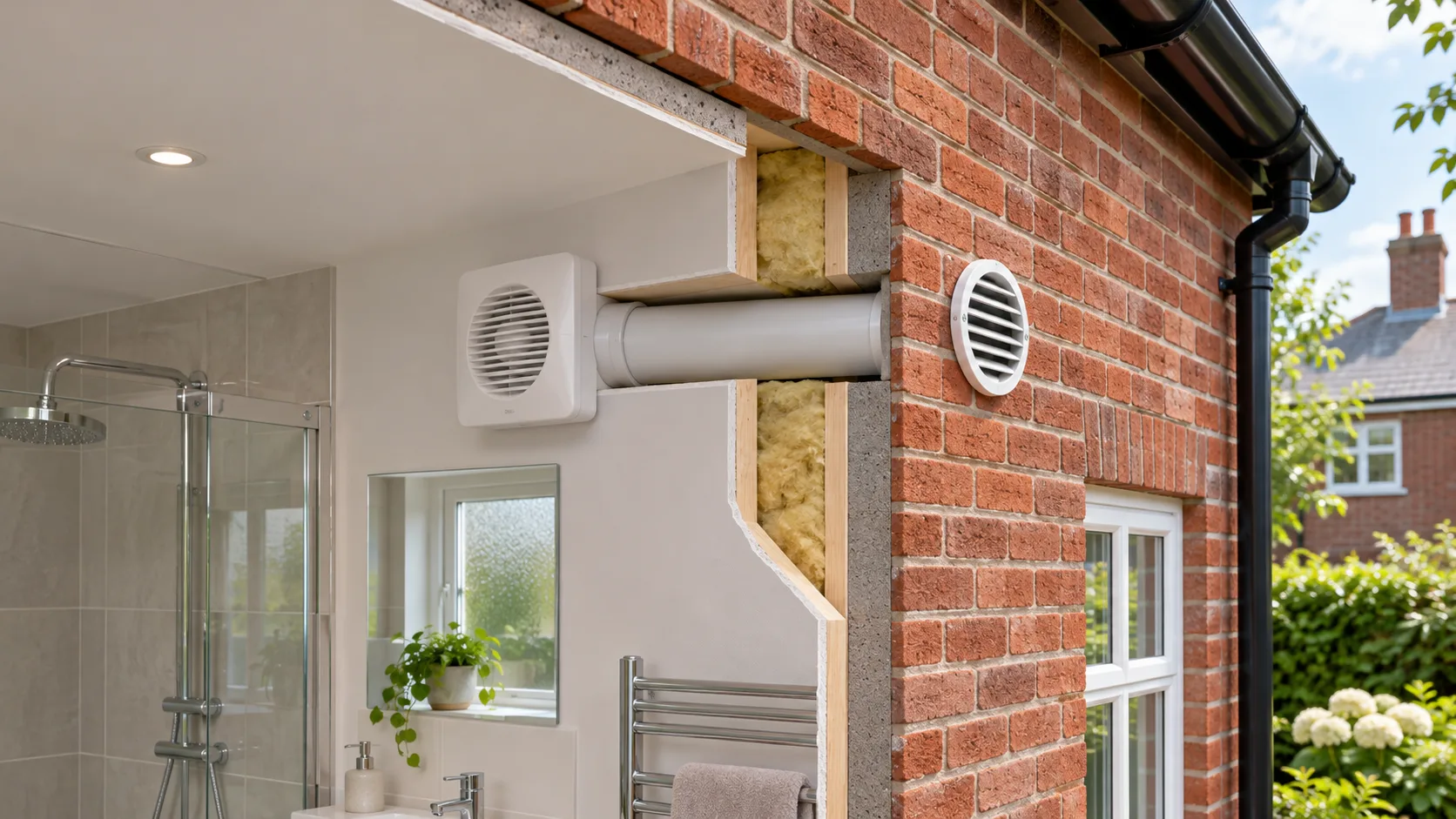
Litres per second (l/s) describe airflow. Manufacturers usually give a fan’s maximum under laboratory or free-air conditions. Your installed fan must push air through a duct, bends and an external terminal, drawing replacement air into the room as it does so. The longer or more restrictive the route, the more important it becomes to examine the pressure/flow curve and the installed result. A fan turning visibly is evidence of power, not measured extraction.
In England, the 2021 Approved Document F, Volume 1, Table 1.1 gives 15 l/s as the minimum intermittent bathroom extract rate for the relevant dwelling design context. It is guidance for design and commissioning, rather than a claim that any box labelled 15 l/s will deliver 15 l/s after installation. The government document also distinguishes intermittent and continuous systems. The 2026 edition has been published but, for ordinary work, its approval takes effect in March 2027 under the stated transition; the work’s date and jurisdiction matter. Ask the professional responsible for the work which standard applies to your home.
This is why a product table should start a conversation, not finish one. If the existing bathroom has a long ceiling or loft route, an inline or other pressure-suitable system may be preferable to any of these four wall-style axial picks. If the current fan’s performance is poor, investigate the existing route before assuming a higher advertised free-air figure will cure it. Our whole-home ventilation guide gives the wider context.
Compare sound on like-for-like settings
A 25 dB(A) claim sounds precise but is only comparable when the distance, speed and test method are similar. Xpelair’s low-speed and high-speed figures differ substantially; the two Airflow QuietAir settings also trade airflow for sound. Installation can add vibration or airflow noise that a catalogue number will not show. If the bathroom adjoins a bedroom, tell the installer that noise matters so mounting, duct and terminal choices can be considered together.
What to confirm before an electrician installs one
The safest purchase starts with a short survey. Electrical Safety First advises using a registered electrician for extractor fan replacement or installation and explains that bathroom zones and isolation matter. Their extractor-fan safety advice is a useful starting point. This guide is a buying comparison, not wiring or bathroom-zone instructions.
- Identify the existing fan and duct. Photograph the model label and the room side of the fitting without opening an electrical enclosure. Ask the electrician to confirm the duct diameter, route, external outlet and whether an axial fan suits the resistance.
- Describe the controls you want. Explain whether you want humidity-triggered operation, a light-switch trigger, timed run-on or a delay start. Let the electrician check the existing supplies and the model’s instructions.
- Confirm the proposed position. The electrician should assess the bathroom location, product rating and applicable wiring rules; an IP label alone does not settle suitability.
- Discuss installed airflow. Ask how the completed route will be checked against the applicable ventilation design guidance. The manufacturer’s free-air number is not a substitute for a completed-system result.
- Check physical fit and maintenance access. Compare spigot, face size, duct connection, available depth and access for cleaning the visible grille as the manual permits.
If you smell burning, see damaged wiring or find the fan unusually hot, stop using it and arrange professional advice. Avoid removing covers or testing live wiring yourself. A portable dehumidifier can manage residual moisture in some homes, but it does not replace the bathroom’s required extract ventilation; our bathroom dehumidifier guide treats it as a separate buying decision.
Which fan should you buy?
For a conventional 100 mm replacement with a short, suitable duct, start with the Airflow Aria Quiet 100HT. Its adjustable humidity/timer package, published 26.9 l/s maximum and 25 dB(A) at 3 m make it the most balanced of these four on paper. Ask the installer to confirm the completed result before treating those numbers as the bathroom’s performance.
The Manrose QF100H is the value pick when a simple open grille is acceptable and its 21 l/s published rate suits the route. Choose the Xpelair C4HTSR for its round-or-square fascia and installer-selected speed; decide the speed on airflow needs as well as sound. Spend more on the QuietAir QT100HT when its two-speed and delay-start controls solve a real preference in your room.
The biggest buying mistake is ordering a fan by sound or free-air flow alone while leaving the duct and controls unexamined. A professional survey may reveal that a cleaned outlet, a corrected duct or a different fan type is the better first spend. If the fan route is sound but condensation persists elsewhere, our guide to reducing damp and mould can help separate ventilation from other moisture sources.
Before you order: model codes and changing offers
Match the whole model code
Read the complete suffix on the fan you are replacing and on the new product. QF100H, C4HTSR, Aria Quiet 100HT and QT100HT are the humidity-and-timer models discussed here. Nearby variants can share a photograph while offering only a basic switch or a timer. If a retailer’s description and the manufacturer’s specification disagree, ask the seller for the exact model before buying.
Treat star ratings as one clue
Customer ratings can help reveal complaints about noise or setup, but they cannot tell you the airflow through your own duct. The recommendations here use published manufacturer specifications and practical fit criteria; BreatheCleanUK has not installed or lab-tested these four fans. Confirm the full model code, seller and current offer before ordering.
Frequently Asked Questions
Is a humidity-sensing fan better than a timer-only fan? A humidistat is useful when showers create steam without a predictable light-switch pattern. A timer-only fan can work well when its trigger and run-on period suit the room. The duct and installed airflow matter with either type.
Can I replace a timer fan with a humidistat model myself? Ask a registered electrician to assess and carry out the replacement. The new model may need a different control or supply arrangement, and its position and isolation need to suit the bathroom.
Does a 100 mm fan fit every 100 mm bathroom duct? The nominal diameter is only one dimension. Check the spigot, available depth, faceplate, duct route and external terminal with the installer before ordering.
Will a 25 l/s fan deliver 25 l/s in my bathroom? That figure is normally a manufacturer-rated condition. Duct resistance, bends and the outlet affect installed flow, which should be assessed or measured as appropriate for the work.
Why does my humidistat fan keep running after a shower? It may be responding to humidity above its set point or completing a run-on period. If the room stays damp or the fan behaves unexpectedly, check the manual and ask an electrician to assess the controls and extraction route.