Carbon monoxide alarms are cheap, dull-looking bits of plastic that only matter on the day you need one. This carbon monoxide detector guide UK homeowners and renters can use is about where to put them, which type to buy, and how to keep them working after the first week of good intentions has passed.
In This Article
- What a Carbon Monoxide Detector Actually Does
- Carbon Monoxide Detector Guide UK: Where You Need Alarms
- Placement Rules: Height, Distance and Rooms to Avoid
- Which Carbon Monoxide Detector to Buy
- How to Install and Set Up the Alarm
- Testing, Batteries and Replacement Dates
- What to Do If the Alarm Sounds
- Common Placement and Maintenance Mistakes
- Frequently Asked Questions
What a Carbon Monoxide Detector Actually Does
A carbon monoxide detector is not an air-quality monitor, a smoke alarm, or a boiler service in a plastic case. It is a single-purpose safety alarm that listens for carbon monoxide, usually shortened to CO, and makes a loud warning sound when the concentration reaches a dangerous level.
Carbon monoxide is awkward because you cannot smell it, see it, or taste it. It can come from faulty or poorly ventilated fuel-burning appliances, including gas boilers, gas fires, wood burners, open fires, oil boilers, LPG heaters, and some portable camping appliances used in the wrong place. A good alarm does not stop the leak. It buys you time to get out.
That matters if your home already has a mix of indoor air kit. A CO2 monitor is useful for ventilation habits, but it does not warn you about carbon monoxide. An air purifier may help with particles and allergens, but it will not make a CO leak safe. Keep the jobs separate.
CO alarm, smoke alarm and air-quality monitor
The quick split is:
- Carbon monoxide alarm: warns about poisonous CO from combustion faults.
- Smoke alarm: warns about fire smoke and is normally ceiling-mounted.
- Heat alarm: suits kitchens or garages where smoke alarms false-alarm too easily.
- CO2 or air-quality monitor: tracks ventilation, humidity, VOCs or particles, not CO safety.
If you buy only one device for a room with a boiler, stove or open fire, make it a proper carbon monoxide alarm certified for domestic CO detection. The nice app dashboard can wait.
Carbon Monoxide Detector Guide UK: Where You Need Alarms
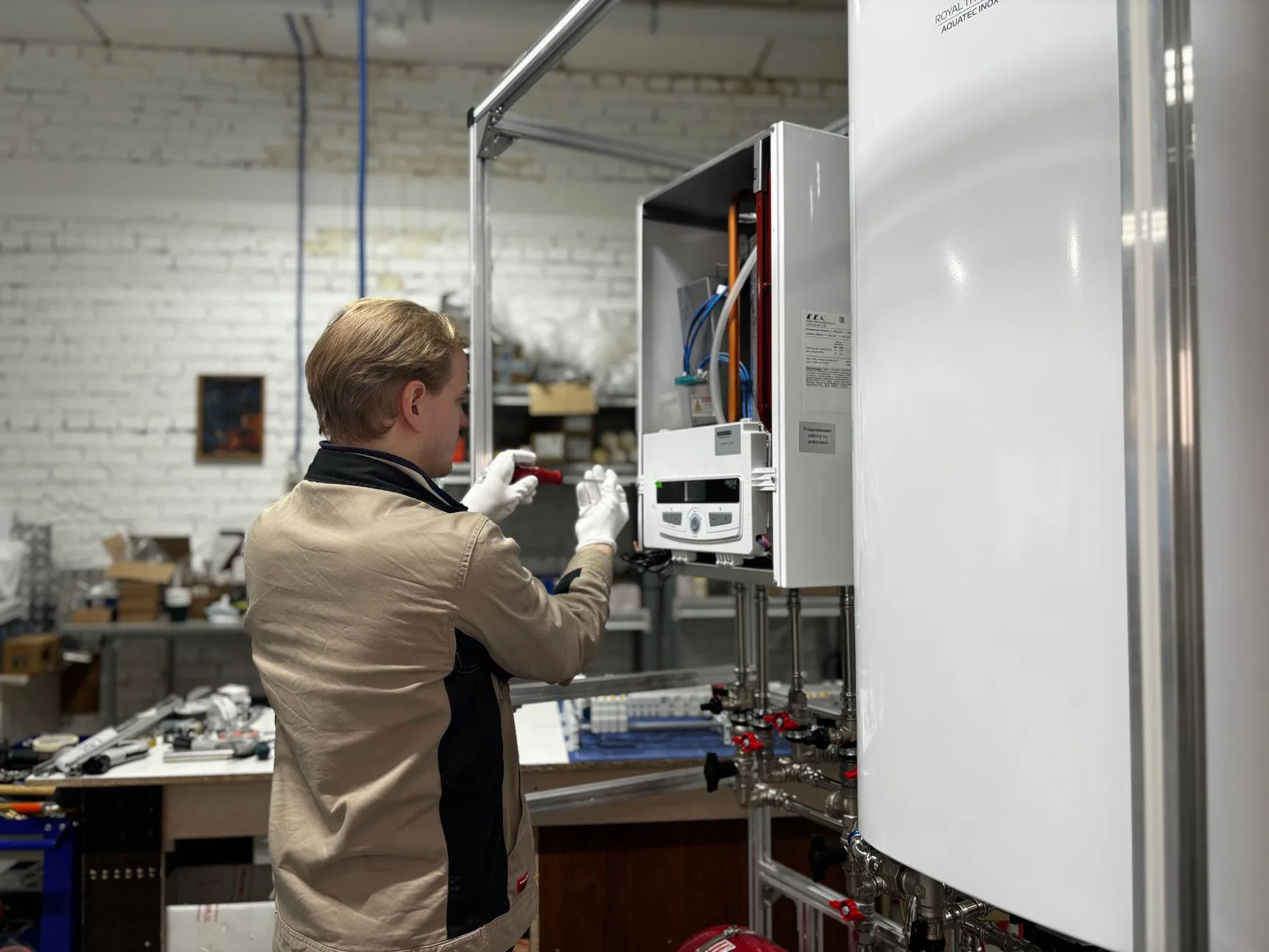
In England, rented homes need a carbon monoxide alarm in any room used as living accommodation that contains a fixed combustion appliance, excluding gas cookers. The government landlord guidance also says faulty required alarms must be repaired or replaced once the landlord is told. Owner-occupiers do not need to treat that as the bare minimum; it is a sensible baseline.
For most UK homes, start with the rooms that contain fuel-burning appliances, then cover sleeping areas and any space where an alarm might otherwise be too far away to wake you. A three-bed house with a gas boiler in the kitchen, a gas fire in the lounge, and bedrooms upstairs usually wants more than one alarm.
Priority rooms
Put alarms in or near:
- Rooms with boilers: kitchens, utility rooms, airing cupboards, garage conversions or boiler cupboards.
- Rooms with open fires or stoves: living rooms, snug rooms, dining rooms with fireplaces, and garden rooms with burners.
- Sleeping areas: upstairs landings and bedroom corridors, especially if the appliance is downstairs.
- Attached garages or workshops: only if there is a combustion risk and the alarm manufacturer allows that environment.
- Holiday lets and spare rooms: anywhere guests may not know the appliance layout.
I would rather see two basic £25 alarms placed well than one smart £110 unit sitting proudly in the wrong room. Coverage beats cleverness.
Flats and rented homes
Flats need a bit of thought because the boiler may be in a cupboard, kitchen, bedroom cupboard or communal plant arrangement. If you rent, test the alarm when you move in and report faults in writing. If you own the flat, do the same checks yourself because management-company responsibility can be a grey fog when everyone assumes someone else has checked it.
For related ventilation habits, the general principles in our home ventilation guide still help with stale air and condensation, but ventilation is not a substitute for a working CO alarm.
Placement Rules: Height, Distance and Rooms to Avoid
The safest placement rule is boring but reliable: follow the alarm manufacturer’s instructions for that exact model. Some are wall-mounted, some can sit on a shelf, some allow ceiling mounting, and some plug-in models are constrained by socket position.
As a practical default, place the alarm in the same room as the fuel-burning appliance, between 1 metre and 3 metres horizontally from it, and away from dead air spaces. Wall-mounted units are often placed around breathing height, roughly head height when sitting or standing depending on the room. Ceiling-mounted units need clearance from walls and corners. The manual wins if it gives a different figure.
Keep it close, but not too close
Do not tuck the alarm right above a boiler, immediately beside a stove flue, or directly over an open fire. Heat, steam, grease and short bursts of combustion by-products can shorten sensor life or cause nuisance alarms. The point is to catch dangerous CO in the room, not punish the alarm with every blast of warm air.
For a kitchen boiler, a good position is often on a nearby wall away from the hob, not buried above the wall cupboard. For a wood burner, think room coverage rather than sticking it over the stove pipe. For a bedroom with a boiler cupboard, fit it where a sleeper can hear it and where the sensor is not sealed inside the cupboard.
Avoid poor locations
Avoid:
- Behind curtains or furniture: air must reach the sensor.
- Inside cupboards: unless the manual explicitly says that is acceptable for the model.
- Beside extractor fans or vents: strong airflow can delay detection.
- Very damp rooms: bathrooms and wet utility spaces can damage many alarms.
- Close to cooking steam or grease: nuisance alarms make people remove batteries, which is worse.
If you have a damp problem near the appliance room, deal with that separately. Our guide to reducing damp and mould in UK homes is useful, but a dehumidifier is not a CO safety device.
Which Carbon Monoxide Detector to Buy
For most homes, I would buy a sealed 10-year battery carbon monoxide alarm from FireAngel, Kidde or Aico/Ei Electronics. They are simple, hard to disable accidentally, and usually cost less than a takeaway for two. Plug-in alarms can be fine, but I do not like relying on socket placement for something this important.
Check for BS EN 50291 compliance on the product listing or packaging. That is the domestic CO alarm standard you want to see. If a cheap marketplace listing has vague wording, odd branding, no clear standard, and a price that looks too good to be true, skip it.
Sensible UK price bands
Current UK street prices are roughly:
- Budget standalone alarm: £15-£22 from Amazon UK, Toolstation or B&Q. Fine for spare coverage if it shows the right standard.
- Best everyday choice: £25-£35 for a FireAngel or Kidde sealed 10-year battery alarm from Screwfix, B&Q, Wickes or Amazon UK.
- Digital display model: £30-£45 if you want peak-level memory or a visible readout.
- Smart or interlinked alarm: £60-£120 per unit, useful in larger homes where a downstairs alarm may not wake upstairs sleepers.
- Combined smoke and CO alarm: about £35-£55, handy in the right spot but not always ideal because smoke and CO placement rules can differ.
The FireAngel FA3820-style sealed battery alarms are often around £25-£30 at Screwfix, with twin packs near £50 when on offer. Kidde 10-year models usually sit in a similar bracket. Aico/Ei Electronics units cost more, often £45-£80, but they are the ones I would look at for interlinked setups.
My pick
For a normal UK home, my pick is a 10-year sealed standalone FireAngel or Kidde alarm at about £25-£35, one per risk room plus one near bedrooms. If you have a larger house, a loft conversion, or a boiler at one end of the property, interlinked Aico-style alarms start to make more sense because the alarm that detects the problem can wake the people furthest away.
Smart alerts are a bonus, not the safety case. The alarm must be loud enough in the building without your phone, Wi-Fi or app account behaving itself.
How to Install and Set Up the Alarm
Most battery carbon monoxide alarms are DIY-friendly. Read the leaflet first, then choose the location, mark the fixing points, drill carefully, insert wall plugs if needed, and clip the alarm onto its backplate. Freestanding models can sit on a shelf if the instructions allow it, but avoid the wobbly top of a fridge or a greasy kitchen cupboard.
Basic installation steps
- Read the model instructions: check allowed height, distance from appliances, and whether wall, ceiling or shelf mounting is approved.
- Choose the room: start with the appliance room, then add sleeping-area coverage if needed.
- Mark the position: keep it visible and reachable for testing, not hidden behind furniture.
- Fix the backplate: use the supplied screws and plugs, or suitable plasterboard fixings if the wall needs them.
- Activate the alarm: remove the tab or switch it on, then press the test button.
- Label the replacement date: write the install month and expiry year on the side or in your home-maintenance notes.
A cheap 6 mm masonry bit and wall plugs are usually enough for a solid wall. If you are renting, ask before drilling unless the landlord has already supplied a fixing position. Freestanding placement is better than doing nothing while you wait.
Interlinked and smart alarms
Interlinked alarms need more care. Some use radio links, some need mains power with battery backup, and some sit within a wider smoke/heat alarm system. If you are already fitting interlinked fire alarms during a renovation, it is worth asking the electrician about adding CO coverage in the same ecosystem.
Budget for the system, not just the alarm. A single smart CO alarm at £90 may look neat, but three reliable standalone alarms at £30 each may protect the actual house better.
Testing, Batteries and Replacement Dates
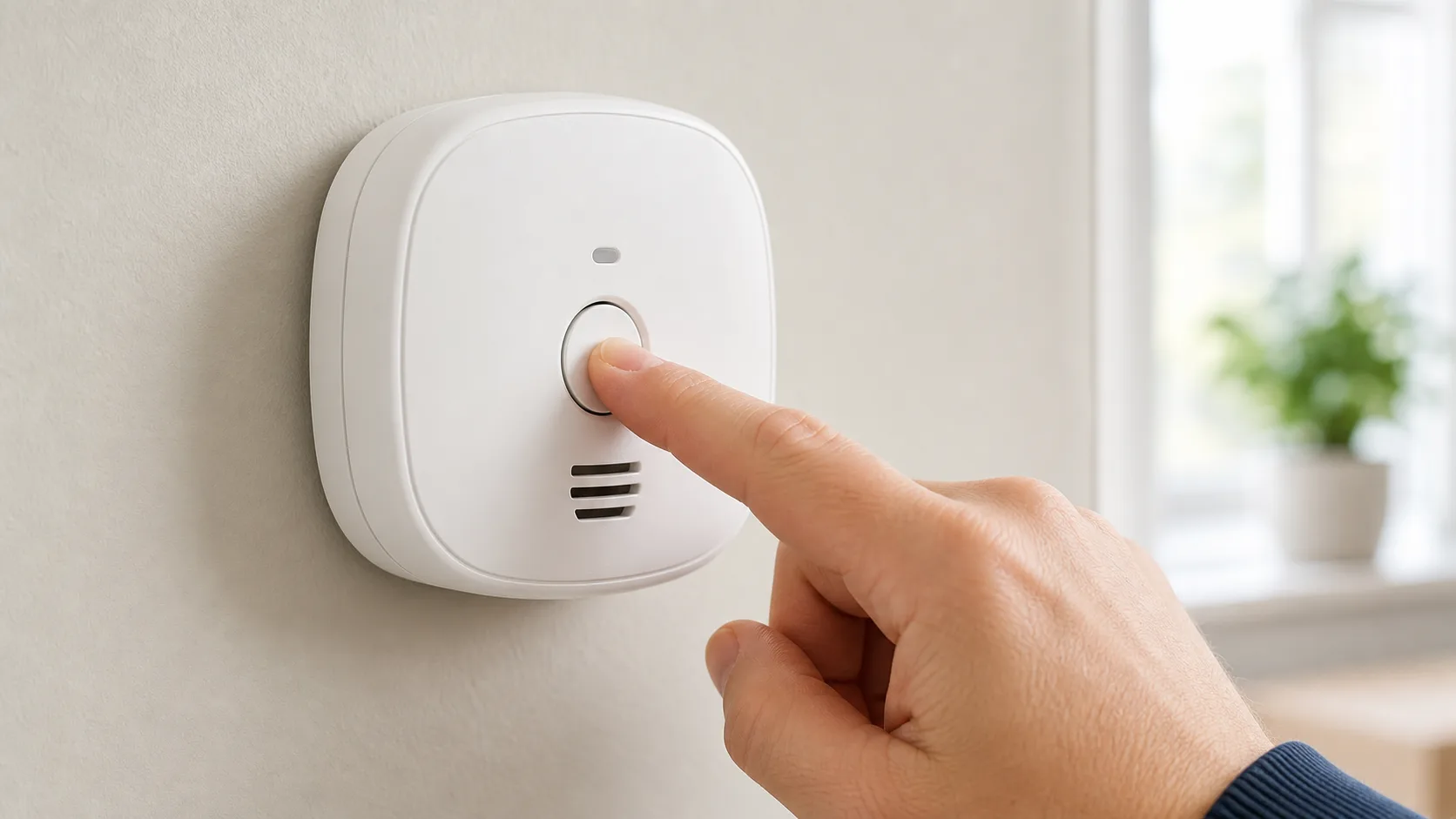
Test carbon monoxide alarms monthly. Press the test button until the alarm sounds, warn anyone nearby first, and do not hold it next to your ear unless you enjoy regretting small choices. The button checks the sounder and electronics; it does not prove your boiler is safe, so keep annual servicing separate.
The HSE carbon monoxide advice is blunt about the practical response to suspected CO: switch off the appliance if safe, ventilate, get people into fresh air, and call the National Gas Emergency Service on 0800 111 999 for gas appliances. Keep that number somewhere obvious if you have older relatives, lodgers or guests using the home.
Maintenance routine
Use this routine:
- Monthly: press the test button and check the alarm is still in place.
- Every six months: vacuum dust gently from the vents using a soft brush attachment.
- After decorating: check the sensor vents are not clogged with plaster dust or paint mist.
- After a battery chirp: replace the battery if removable, or replace the alarm if sealed and end-of-life.
- At the expiry date: replace the whole alarm. The sensor does not last for ever.
Most modern sealed alarms last seven to ten years. Do not treat a quiet alarm as proof it is still good after the expiry date. The sensor chemistry ages whether the alarm has had an exciting life or sat peacefully above the utility-room door.
Battery types
Replaceable-battery alarms are cheaper up front, often £15-£25, but they rely on someone fitting the right battery and not borrowing it for a toy. Sealed lithium alarms cost more, usually £25-£35, but remove that temptation. In a rental, holiday let, student room or busy family home, sealed is the better choice.
What to Do If the Alarm Sounds
Treat a carbon monoxide alarm as real until proven otherwise. Do not stand there debating whether the beeping pattern sounds “serious”. Get people out, ventilate if it is safe to do so on the way, and do not go back in to investigate.
Immediate action
- Get everyone into fresh air: leave the property calmly and quickly.
- Open doors and windows if safe: do this only if it does not delay leaving.
- Switch off appliances if safe: do not take risks reaching a boiler, fire or meter.
- Call for help: for gas appliances, call the National Gas Emergency Service on 0800 111 999. Call 999 if anyone is unwell.
- Do not re-enter: wait for professional advice before going back inside.
Symptoms can include headache, dizziness, nausea, weakness, confusion, chest pain or breathlessness. If several people feel unwell indoors and improve outside, that is a serious clue. Pets becoming drowsy or ill can also be a warning sign.
Afterwards, get the appliance checked by a Gas Safe registered engineer or the relevant qualified professional for oil, solid fuel or LPG. Replacing the alarm without fixing the cause is the wrong way round.
Common Placement and Maintenance Mistakes
The biggest mistake is buying an alarm and then treating the job as finished. Carbon monoxide safety is a small system: right alarm, right room, right placement, regular testing, appliance servicing, and a clear plan when it sounds.
Mistakes I see often
- One alarm for the whole house: it may not be near the source or loud enough by the bedrooms.
- Putting it beside the cooker: gas cookers can cause nuisance triggers and dirty the sensor area.
- Hiding it for looks: alarms behind curtains, books or cupboards cannot sample room air properly.
- Ignoring the expiry date: a ten-year battery does not mean a fifteen-year alarm is fine.
- Confusing CO and CO2: similar initials, very different risks.
- Buying unbranded bargains: saving £10 is not clever if the standard and support are unclear.
If you are already improving air quality with better indoor-air habits or checking pollutants with a home air-quality test, add carbon monoxide alarms as the safety layer those tools cannot provide.
The simple setup I would use
In a typical UK house with a gas boiler and bedrooms upstairs, I would fit a sealed 10-year CO alarm in the boiler room, another near any open fire or stove, and one on the landing near bedrooms if the risk room is downstairs or distant. I would test them monthly, replace them at expiry, and keep appliance servicing booked rather than relying on the alarm to catch bad maintenance.
That setup is not glamorous. It is also usually under £100 for a house with two or three risk points. Given what it protects, that is one of the easier home-safety purchases to justify.
Frequently Asked Questions
How many carbon monoxide detectors do I need in a UK house? Fit one in each room with a fuel-burning appliance, then add coverage near sleeping areas if the alarm might not wake people. Many three-bed homes need two or three alarms, not one.
Where is the best place to put a carbon monoxide detector? Follow the manufacturer’s instructions first. As a practical rule, place it in the same room as the appliance, usually 1-3 metres away, visible, reachable and away from vents, corners, steam and grease.
Do I need a carbon monoxide alarm for a gas cooker? English rented-home rules exclude gas cookers from the fixed-combustion-appliance requirement, but you may still choose extra coverage if the room layout or appliance condition worries you. A gas boiler, gas fire, stove or open fire is the higher priority.
How often should I test a carbon monoxide detector? Test it monthly using the test button. Also check it after decorating, after a long holiday, and whenever it has been knocked, moved or chirping.
How long does a carbon monoxide detector last? Most domestic CO alarms last seven to ten years. Check the date on the unit or manual, then replace the whole alarm at expiry because the sensor ages.
Are smart carbon monoxide alarms worth it? Smart alarms can be useful in larger homes because phone alerts and interlinking add reach, but they are not essential. A well-placed £25-£35 sealed battery alarm is better than a smart unit in the wrong room.