Every air purifier review talks about HEPA filters, CADR ratings and app controls, but placement is where a decent unit either does useful work or quietly wastes electricity. Air purifiers behave very differently in bedrooms, open-plan rooms and awkward rental flats, but the same rule keeps coming back: the best purifier in the wrong spot performs like a smaller, cheaper one. This guide explains where to place your air purifier for the best results in a normal UK home, including bedrooms, living rooms, pet areas, kitchens and rooms with damp or pollen problems.
In This Article
- Quick Answer
- How Air Purifier Placement Affects Performance
- The Best Room to Start With
- Where to Place an Air Purifier in a Bedroom
- Where to Place an Air Purifier in a Living Room
- Placement for Pollen, Dust, Pets and Smoke
- Mistakes That Reduce Airflow
- How to Test Whether the Position Is Working
- Placement by Purifier Shape
- Seasonal Placement Adjustments
- Frequently Asked Questions
- The Verdict
Quick Answer
Place your air purifier in the room where the problem and your exposure overlap. For sleep, that usually means the bedroom, 30-60cm away from walls, curtains and furniture, with the clean-air outlet pointing into open space. For daytime use, put it in the living room or home office near the source of particles, but not so close that airflow is blocked. If you have a pollen issue, keep it near the window side of the room with windows closed. If pets are the issue, place it near the pet’s main resting area, then clean soft furnishings as well. For a broader buying decision, our guide to the best air purifiers for UK homes covers unit choice; this page is about getting more from the one you already own.
How Air Purifier Placement Affects Performance
An air purifier is not a magic box that cleans the whole house just because it is switched on. It pulls room air through an intake, passes it through filters, then pushes cleaner air back out. Placement controls how much air reaches the intake, how clean air mixes across the room, and whether the unit keeps recirculating the same small pocket of air.
Airflow Needs Space
Most domestic purifiers need clear space on at least two sides. Some draw air from the back, some from the sides, and cylindrical models often pull from all around the lower body. If you push the intake against a wall, curtain or sofa, you reduce the effective Clean Air Delivery Rate even if the fan sounds normal. In my experience, a purifier moved from a tight corner to open floor space often produces a bigger practical improvement than changing from medium to high fan speed.
Good placement usually means:
- At least 30cm clearance around the intake vents
- A clear path from the outlet into the room
- No curtains, bedding or sofa arms touching the unit
- Easy access for filter changes and pre-filter cleaning
Air Mixing Matters More Than Symmetry
People often put a purifier where it looks neat, such as centred against a wall. That is not always wrong, but symmetry is less important than air mixing. A unit beside a doorway, near a window, or close to a pet bed may perform better than a perfectly centred unit if that is where particles enter or build up.
CADR Assumes a Sensible Position
CADR ratings are tested under controlled conditions. A purifier rated for 300 m3/h will not deliver that result if it is boxed in behind a chair. The Association of Home Appliance Manufacturers explains CADR as a measure of tobacco smoke, pollen and dust removal under test conditions; at home, furniture layout and fan setting change the result.
The Best Room to Start With
If you only have one purifier, start with the room where exposure is longest or symptoms are worst. Do not try to clean the whole home with one portable unit unless you are moving it deliberately between rooms.
Bedroom First for Allergies and Sleep
For hay fever, dust mite sensitivity, pet dander and night-time congestion, the bedroom is usually the highest-value room. You spend seven or eight hours there with your face close to pillows, fabrics and settled dust. I recommend running the purifier for at least an hour before bed and then overnight on a quiet setting if the noise is tolerable.
Living Room for Pets and Open-Plan Homes
If pets spend most of the day in the living room, that room may deserve the purifier before the bedroom. Pet dander floats, settles and re-suspends when people sit down, open doors or brush against furniture. A purifier near the pet’s favoured sofa or bed can reduce the airborne load, but it cannot remove dander already embedded in fabric.
Home Office for Daytime Symptoms
A purifier in a home office makes sense if you sit there for long blocks of time. Place it near the desk but not directly blasting air at your face. A cross-room position, where clean air flows past the desk area, is usually more comfortable.
Where to Place an Air Purifier in a Bedroom
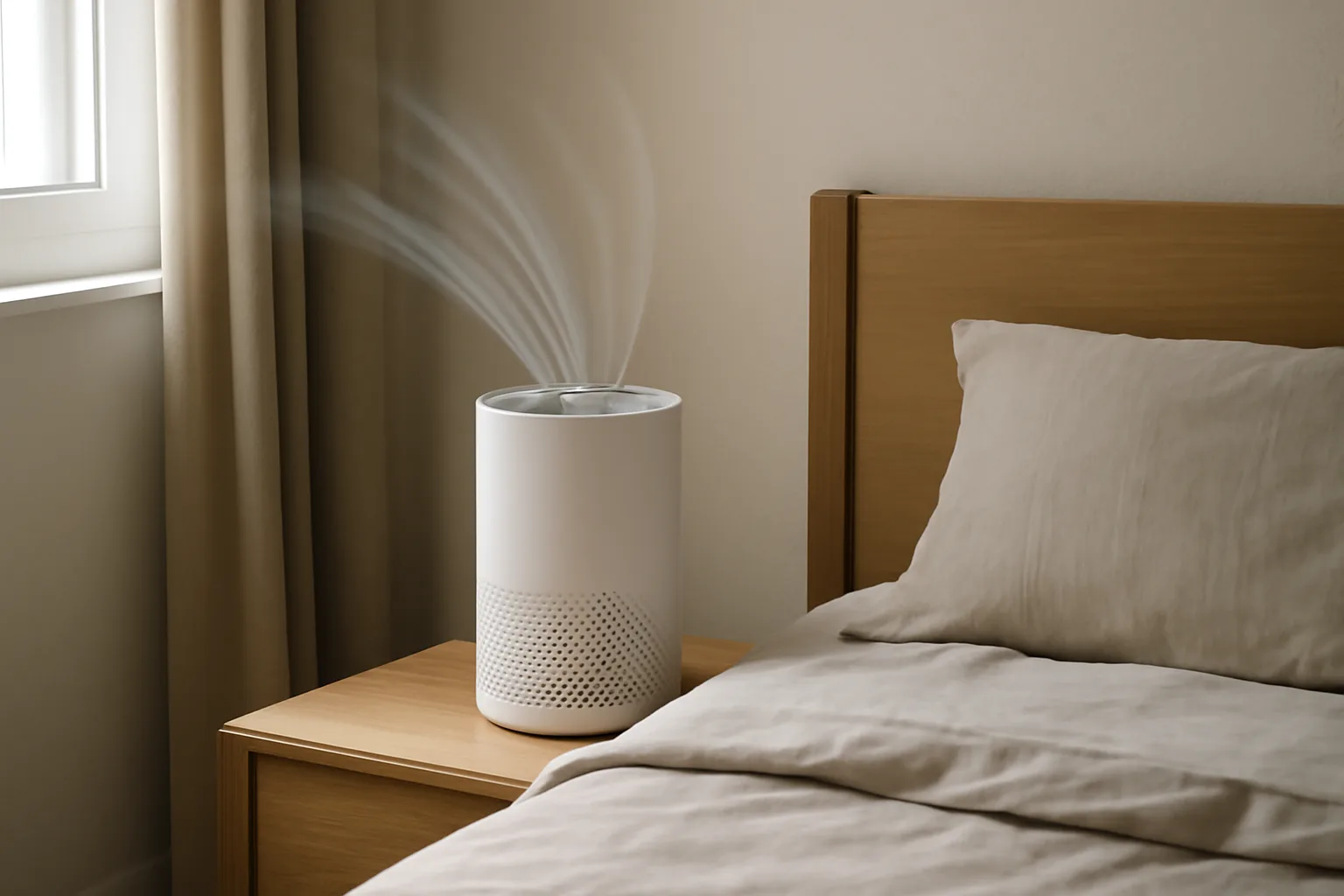
Bedroom placement is about balancing airflow, noise and distance from the bed.
Best Bedroom Position
The best all-round position is usually beside the bed but not trapped between the bed and wall. Aim for a spot 1-2 metres from your head, with the outlet pointing towards open room space rather than straight into a pillow, wardrobe or curtain.
Use this bedroom checklist:
- Keep the purifier away from loose bedding and curtains
- Do not tuck it under a bedside table
- Keep the intake clear of carpet edges and laundry piles
- Use sleep mode only if airflow remains useful
- Run a higher fan speed before bed, then lower it overnight
Floor or Bedside Table?
For compact purifiers, a bedside table or low chest can work well because the intake sits closer to breathing height and away from carpet dust. For heavier tower purifiers, the floor is fine, provided there is clear space around the base. I prefer elevated placement for small bedroom units, especially in carpeted rooms.
What to Avoid in Bedrooms
Do not put the purifier behind a headboard, inside a wardrobe alcove, under a desk, or right beside a radiator. Heat plumes and blocked vents disturb airflow. Avoid placing it directly next to a humidifier as well; moisture can shorten filter life and encourage musty smells if the room is already damp. If humidity is part of the issue, read our guide on how to measure humidity at home before adding more appliances.
Where to Place an Air Purifier in a Living Room
Living rooms are trickier because they are larger, busier and more likely to be open-plan.
Near the Source, But Not Touching It
For pet dander, place the purifier near the pet’s main resting area, but not directly against the bed, blanket or sofa. For pollen, place it closer to the window side of the room. For smoke from a neighbouring flat, hallway or street-facing window, position the unit between the source and where people sit.
Open-Plan Rooms Need More Airflow
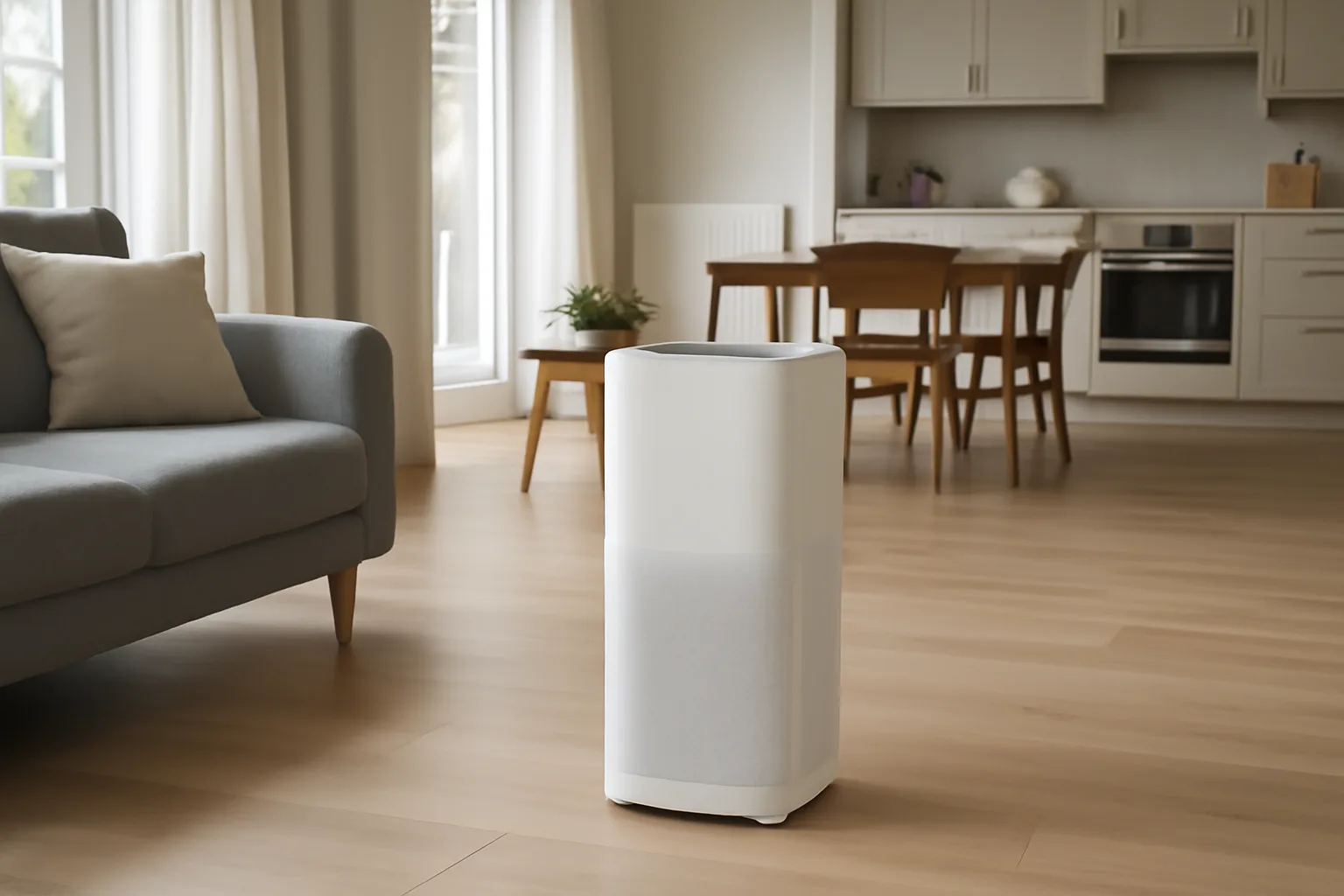
A purifier that works in a 12m2 bedroom may struggle in a 35m2 kitchen-diner. In an open-plan room, place it where air can circulate through the main seating zone. If the kitchen is part of the same space, do not put the purifier right next to the hob; grease and cooking aerosols can load filters quickly. Extract cooking fumes first, then run the purifier afterwards.
Keep It Visible Enough to Maintain
This sounds basic, but hidden purifiers get neglected. If the unit is behind a sofa, you are less likely to vacuum the pre-filter, check the indicator or replace the HEPA filter. A visible but unobtrusive spot is usually better than a perfect-looking hidden one.
Placement for Pollen, Dust, Pets and Smoke
Different air problems call for slightly different placement.
Pollen
For hay fever, keep windows closed on high-pollen days and place the purifier in the bedroom or the room with the most outdoor-air entry. The NHS hay fever guidance recommends reducing pollen exposure by keeping windows and doors shut where possible; a purifier then helps clean the air already inside. If you open windows for ventilation, run the purifier afterwards rather than expecting it to beat a constant stream of incoming pollen.
Dust
For dust, avoid putting the purifier where the intake sits directly in carpet pile or beside a dusty bookshelf. Purifiers help with airborne dust, but the bigger win is reducing dust sources: vacuuming with a HEPA-filtered vacuum, washing bedding, and keeping clutter down. Our HEPA filter explainer covers why fine particles are captured more reliably than visible fluff.
Pet Dander
For pet dander, place the purifier in the pet’s main room and run it continuously. If your pet sleeps in the bedroom, placement beside the bed is less valuable than stopping the pet sleeping there in the first place. That is not always emotionally popular, but it is usually more effective.
Smoke and Cooking Particles
For smoke, place the purifier between the source and the occupied area if possible. For cooking particles, use the extractor or open a window first, then purify the room afterwards. Do not place a HEPA purifier so close to a hob that grease mist loads the filter.
Mistakes That Reduce Airflow
Most placement mistakes are mundane, but they add up.
Putting It in a Tight Corner
A corner position often looks tidy, but it blocks air movement on two sides. If the unit has rear or side intakes, this can be a serious performance hit. Move it forward into the room, even if only by half a metre.
Hiding It Behind Furniture
A purifier behind a sofa mostly cleans the air behind the sofa. The same applies under desks, between wardrobes or inside shelving units. If you cannot see the intake from normal room space, airflow is probably restricted.
Moving It Too Often
Portable does not mean random. Moving a purifier from bedroom to kitchen to lounge throughout the day can work, but only if each move is deliberate and the unit runs long enough to clean that room. Ten minutes in each room is rarely useful.
Trusting Auto Mode Too Much
Auto mode responds to what the sensor detects. Many budget sensors focus on PM2.5 and may not respond strongly to pollen or larger dust particles. For allergy use, I prefer manual medium speed during problem periods, especially before bed.
How to Test Whether the Position Is Working
For a more measured approach, pair placement changes with our best air quality monitors UK guide so you can watch PM2.5, VOC and humidity trends instead of trusting one noisy reading. Asthma + Lung UK also has practical background on indoor air pollution and the everyday sources that affect UK homes.
You do not need lab equipment to improve placement, but some simple checks help.
The Tissue Test
Hold a lightweight tissue near the intake and outlet. You should feel clear pull at the intake and clear movement from the outlet. If furniture blocks either side, reposition the unit.
The Symptom Test
For allergies, keep a simple note for a week: room, purifier position, fan setting, sleep quality and morning symptoms. This is not clinical research, but it avoids guessing. Bedrooms often show the clearest pattern within three to five nights.
The Monitor Test
If you own an air quality monitor, place it across the room from the purifier rather than beside it. Readings beside the outlet can look good while the rest of the room remains unchanged. Our guide to air quality monitors explains what PM2.5 and VOC readings can and cannot tell you.
Placement by Purifier Shape
The right spot also depends on the physical design of the purifier. Two models with the same CADR can need different positions because their vents are arranged differently.
Cylindrical Purifiers
Cylindrical purifiers usually draw air from all around the lower body and push clean air upwards. These are forgiving if they sit in open space, but poor if they are wedged between furniture. They work well beside a bed, near a sofa, or in the middle third of a room. I would not put one tight against a wall unless the manual specifically says rear clearance is unimportant.
Tower Purifiers
Tower purifiers often have front, side or rear intakes and a directional outlet. Check the vent layout before choosing the spot. If the intake is at the back, the unit needs more wall clearance than you might expect. If the outlet fires forward, angle it so clean air moves into the room rather than straight into a chair back.
Small Desktop Units
Small desktop units can help in a home office or small bedroom, but only over a limited area. They are not whole-room machines unless the room is tiny. Put one on the desk or bedside table with the outlet unobstructed, and avoid placing it directly beside a laptop fan, candle, diffuser or dusty shelf.
Seasonal Placement Adjustments
Once the purifier has a sensible position, check the ongoing cost as well as the reading on the display. Our air purifier running costs guide explains how fan speed, filter price and daily use change the real cost of leaving a unit on for pollen season.
The best position can change through the year. A placement that works in January condensation season may not be ideal in June pollen season.
Spring and Summer Pollen
During hay fever season, prioritise bedrooms and window-side placement. Run the purifier before bed, keep windows closed during high-pollen periods, and avoid placing the unit near a door that is constantly opening to the garden.
Autumn Mould Spores
In autumn, mould spores and damp rooms become more relevant. Place the purifier in the room where symptoms are strongest, but do not use it as a substitute for fixing moisture. If a room smells musty, ventilation and humidity control need attention as well as filtration.
Winter Closed-Window Homes
In winter, UK homes can become stale because windows stay closed and heating runs longer. A purifier in the main living space can help with dust, cooking particles and general indoor-air load, but it still needs occasional ventilation. Clean first, ventilate briefly, then run the purifier to polish the room air.
Frequently Asked Questions
Where is the best place to put an air purifier? The best place is the room where you spend the most time and where the air problem is strongest. Keep it 30-60cm from walls and furniture with the outlet facing open space.
Should an air purifier go on the floor or a table? Either can work, but table height is often better for small units in bedrooms and living rooms because it keeps the inlet closer to the breathing zone and away from carpet dust.
Can I put an air purifier in a corner? Avoid tight corners unless the manufacturer specifically allows it. Corners restrict airflow and can make the purifier recirculate a smaller pocket of air instead of the whole room.
Should windows be open when using an air purifier? For pollen, pollution or smoke, keep windows closed while the purifier is running. For damp or stale air, ventilate first, then run the purifier to clean the remaining indoor air.
How far should an air purifier be from a wall? A practical minimum is 30cm, but 50cm or more is better for larger units. Always check where the inlet and outlet vents are before placing it.
The Verdict
The right place for an air purifier is rarely the neatest corner of the room. Start with the room where exposure is highest, keep the intake and outlet clear, and place the unit near the source without blocking airflow. For most UK homes, that means bedroom first for allergies, living room first for pets, and open space over hidden placement every time.