Research shows we spend roughly 90% of our time indoors, yet most of us never think about the quality of the air we’re breathing inside our homes. Here’s the uncomfortable truth: indoor air in UK homes is often 2-5 times more polluted than outdoor air. Cooking fumes, cleaning products, mould spores, dust mites, VOCs from furniture, and poor ventilation all contribute to air quality that’s worse than you’d probably guess. This guide covers the practical steps you can take to genuinely improve the air in your home — from free habit changes to strategic investments that make a measurable difference.
What’s Actually in Your Indoor Air?

Before you can fix the problem, it helps to understand what you’re dealing with. UK indoor air typically contains a mix of pollutants from several sources:
- Particulate matter (PM2.5 and PM10) — tiny particles from cooking (especially frying and grilling), candles, wood burners, and outdoor pollution infiltrating through windows and vents. These particles penetrate deep into the lungs and are linked to respiratory and cardiovascular problems
- Volatile organic compounds (VOCs) — gases released from paints, varnishes, cleaning products, air fresheners, new furniture, and carpets. Formaldehyde is the most common and concerning VOC in UK homes. Symptoms include headaches, eye irritation, and respiratory discomfort
- Carbon dioxide (CO2) — exhaled by every person in the room. In poorly ventilated spaces, CO2 levels rise quickly and cause drowsiness, poor concentration, and headaches. A well-ventilated room has CO2 below 1,000 ppm; a poorly ventilated bedroom can exceed 2,500 ppm overnight
- Biological pollutants — mould spores, dust mite allergens, pet dander, and pollen. These are the primary triggers for allergies and asthma, and UK homes are particularly susceptible to mould due to our damp climate
- Nitrogen dioxide (NO2) — produced by gas cookers and boilers. Studies have shown that homes with gas hobs have notably higher NO2 levels than those with electric or induction cooking
- Carbon monoxide (CO) — from gas appliances that aren’t properly maintained or ventilated. Every UK home with gas appliances should have a working CO alarm (this is a legal requirement in rented properties)
Ventilation: The Foundation of Good Indoor Air
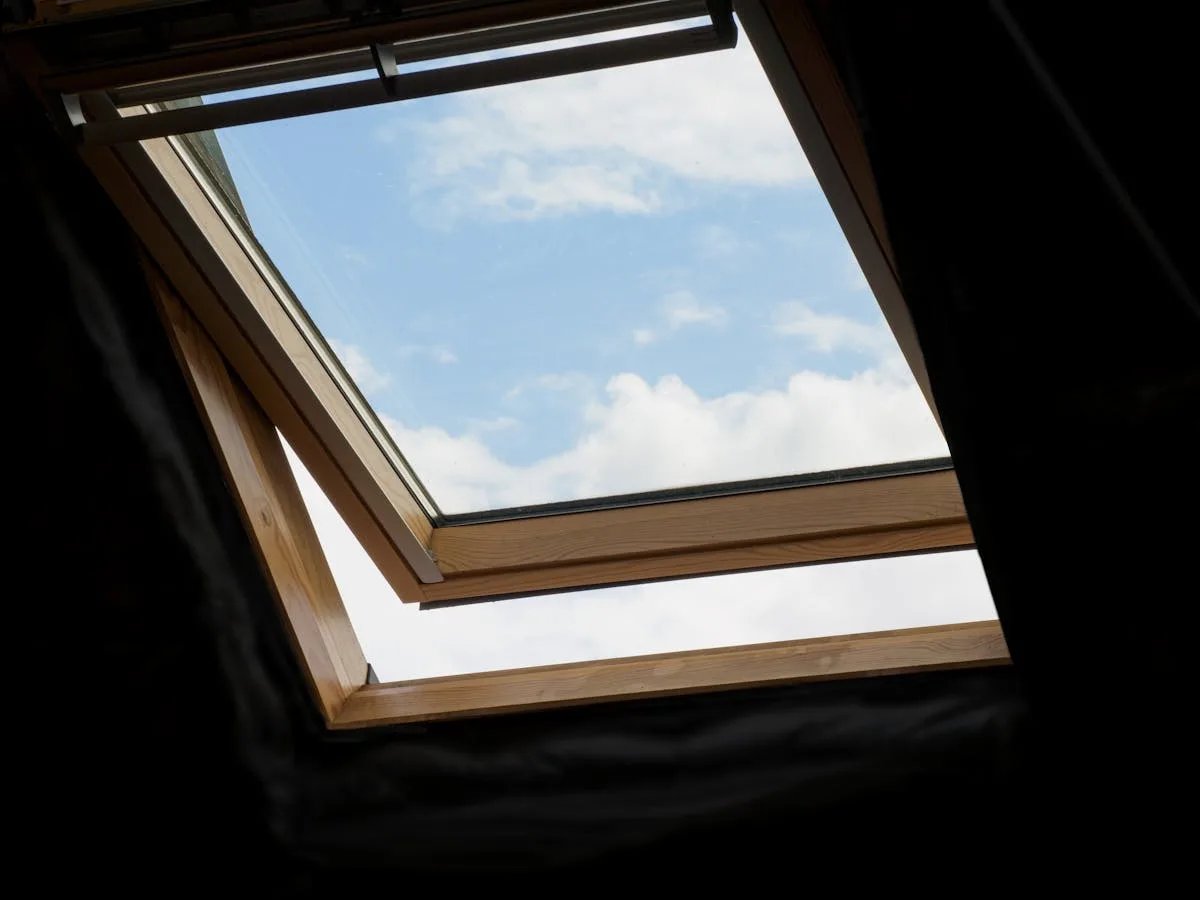
Ventilation is the single most important factor in indoor air quality, and it’s where most UK homes fall short. Modern homes are built increasingly airtight for energy efficiency, which is great for heating bills but terrible for air quality. Older homes are often better ventilated simply because they’re draughty — though that comes with its own comfort and energy costs.
Practical ventilation strategies:
- Open windows for 10-15 minutes at least twice daily — this is the simplest and most effective way to flush stale air and bring in fresh air. Even in winter, a short burst of ventilation is better than keeping windows sealed all day. The energy cost of briefly cooling the room is minimal compared to the air quality benefit
- Cross-ventilate when possible — opening windows on opposite sides of the house creates a through-draft that exchanges air much faster than opening a single window
- Use extractor fans in kitchens and bathrooms — always run the kitchen extractor while cooking and for 15-20 minutes afterwards. In bathrooms, run the fan during and after showers until condensation clears. If your extractor fan is noisy or ineffective, replacing it with a modern, quieter model (from about £30-50) is one of the best air quality investments you can make
- Don’t block trickle vents — those small vents above modern windows are designed to provide continuous background ventilation. Many people close them to reduce draughts, but they serve an important purpose. Keep them open, especially in bedrooms
- Consider a Positive Input Ventilation (PIV) system — for UK homes with persistent damp or condensation problems, a PIV unit (around £200-400 installed) gently pushes filtered air into the home from the loft space, creating positive pressure that prevents moist air from settling. Brands like Nuaire and EnviroVent are well-established in the UK market. PIV is particularly effective in older properties where retrofitting mechanical ventilation is otherwise difficult
Tackle Moisture and Mould
Excess moisture is arguably the UK’s biggest indoor air quality problem. Our climate is naturally damp, and everyday activities — cooking, showering, drying clothes, even breathing — add significant moisture to indoor air. When this moisture can’t escape (because of poor ventilation), it condenses on cold surfaces and leads to mould growth.
Mould isn’t just unsightly — it releases spores into the air that cause allergic reactions, worsen asthma, and can lead to respiratory infections with prolonged exposure. The NHS has clear guidance that mould in the home is a health concern, not just a cosmetic issue.
Moisture management strategies:
- Dry clothes outdoors or in a well-ventilated room — drying a single load of washing indoors releases about 5 litres of water into the air. If you must dry indoors, do it in a room with the window open or with a dehumidifier running. Never drape washing over radiators in an unventilated room
- Use a dehumidifier — maintain indoor relative humidity between 40-60%. Below 40% and air becomes uncomfortably dry; above 60% and dust mites and mould thrive. A basic dehumidifier (£100-200) with a built-in hygrometer makes this easy to manage. The Meaco 12L Low Energy is a popular UK choice for bedrooms, while the MeacoDry Arete 20L handles whole-house dehumidification
- Always use lids on saucepans — this sounds trivial but considerably reduces the moisture released during cooking
- Close kitchen and bathroom doors — prevent moisture from spreading to the rest of the house. Extract it at source with fans instead
- Address condensation on windows — persistent condensation indicates poor ventilation or excess humidity. Wipe it away daily to prevent mould growth on frames and seals, and improve ventilation to address the root cause
- Fix leaks and rising damp promptly — structural moisture issues won’t be solved by ventilation alone. If you have persistent damp patches, water ingress, or rising damp, get them professionally assessed
Reduce Chemical Pollutants (VOCs)
Your home is full of products that quietly release volatile organic compounds into the air. Most of these are at low concentrations, but cumulative exposure — particularly in poorly ventilated homes — can cause irritation and health effects.
Practical steps to reduce VOC exposure:
- Switch to fragrance-free cleaning products — fragranced cleaners, including “natural” ones, release VOCs. Brands like Ecover Zero, Method Free+Clear, and Smol offer effective fragrance-free options widely available in UK supermarkets
- Stop using plug-in air fresheners and aerosol sprays — these are among the biggest sources of indoor VOCs. They mask odours by adding more chemicals rather than removing the source. Open a window instead
- Ventilate after painting or bringing in new furniture — new paint, flooring, and furniture off-gas most heavily in the first few weeks. Ventilate rooms well during this period. Choose low-VOC paints when decorating (most major UK brands now offer these)
- Be cautious with candles and incense — burning candles releases soot particles and VOCs. Occasional use is fine, but burning candles daily in a poorly ventilated room meaningfully worsens air quality. If you love candles, ensure good ventilation during and after burning
- Avoid dry cleaning fumes — conventionally dry-cleaned clothes release perchloroethylene. Air them outdoors or in a well-ventilated area before hanging in wardrobes
Cooking: A Major Source of Indoor Pollution
Cooking is one of the biggest contributors to poor indoor air quality, and it’s something most people don’t think about. Frying, grilling, and high-heat cooking produce significant quantities of PM2.5 particles and VOCs. Gas hobs add NO2 to the mix. Studies have shown that cooking a Sunday roast can elevate PM2.5 levels in a kitchen to levels comparable to a busy roadside.
Steps to reduce cooking-related air pollution:
- Always use your extractor hood — and make sure it’s set to an adequate speed. Many people run it on the lowest setting to reduce noise (our noise levels guide explains what to expect), but from our testing with particle counters, a higher setting makes a substantial difference to pollutant capture
- Check your extractor actually vents outside — some extractors are “recirculating” — they filter air through a carbon filter and blow it back into the room. These are much less effective than ducted extractors that vent air outside. If yours recirculates, replacing the carbon filter regularly (every 3-6 months) is essential
- Open a window when cooking — even a small opening provides makeup air and helps the extractor work more effectively
- Consider switching from gas to induction — gas hobs produce NO2, CO, and formaldehyde during combustion. Induction hobs produce none of these. If you’re renovating a kitchen, the air quality argument for induction is strong (alongside the energy efficiency benefits). Portable induction hobs from around £40-60 let you try induction before committing to a full installation
- Keep the extractor running for 15-20 minutes after cooking — pollutant levels remain elevated after cooking finishes. Continued extraction during this period makes a significant difference
Dust and Allergen Management
Dust isn’t just dead skin cells — it’s a cocktail of dust mite droppings, pet dander, pollen, textile fibres, and outdoor particulates. For allergy sufferers, reducing dust levels can meaningfully improve symptoms.
- Vacuum at least twice a week with a HEPA-filter vacuum — standard vacuums without HEPA filters blow fine particles straight back into the air. Dyson, Shark, and Henry (the HVR200A has a HEPA filter option) are popular UK choices
- Damp-dust surfaces — dry dusting and feather dusters just redistribute dust into the air. A damp microfibre cloth captures and removes dust
- Wash bedding weekly at 60°C — this temperature kills dust mites. Lower temperatures clean the fabric but leave mites alive
- Consider hard floors over carpet — carpets trap allergens that are released back into the air when walked on. Hard floors are easier to clean thoroughly. If you have carpet, regular deep vacuuming is essential
- Use allergen-barrier bedding covers — encasing mattresses, duvets, and pillows in anti-allergen covers prevents dust mites from colonising and reduces allergen levels substantially. Widely available from Asthma + Lung UK (formerly Asthma UK), John Lewis, and online retailers
Monitoring Your Air Quality
You can’t manage what you can’t measure. Indoor air quality monitors let you see exactly what’s happening in your home and track whether your improvements are working.
- CO2 monitors (from £30-60) — the simplest and most useful monitor for most homes. High CO2 indicates poor ventilation and acts as a proxy for overall air quality. The Aranet4 (around £180) is the gold standard but expensive; budget CO2 monitors from Amazon (£30-50) are less accurate but give useful relative readings
- PM2.5 monitors (from £40-80) — measure fine particulate levels. Useful for seeing the impact of cooking, candles, and outdoor pollution infiltration. The IKEA VINDSTYRKA (around £35) is an affordable option with decent accuracy
- Humidity monitors (hygrometers, from £8-15) — essential for managing moisture levels. The ThermoPro TP50 (under £10) provides accurate temperature and humidity readings and can sit in any room
- Multi-parameter monitors (from £80-200) — devices like the Airthings View Plus measure CO2, PM2.5, humidity, temperature, VOCs, and radon. More expensive but provide a thorough picture of your indoor environment
Even a simple £10 hygrometer tells you whether your bedroom humidity is in the healthy range — and that single datapoint can guide decisions about ventilation and dehumidification.
Houseplants: The Honest Truth
You’ve probably seen claims that houseplants purify indoor air. This idea largely stems from a 1989 NASA study that showed certain plants could remove VOCs from sealed chambers. Unfortunately, subsequent research has been less encouraging. In real-world conditions (not sealed laboratory chambers), the air-purifying effect of houseplants is negligible. You’d need hundreds of plants per room to make a measurable difference to air quality.
That said, houseplants have genuine benefits for wellbeing — they improve mood, reduce stress, and make spaces feel more pleasant. Some plants also help regulate humidity through transpiration. By all means have houseplants, but don’t buy them expecting them to clean your air. A £30 HEPA air purifier will do more for air quality than a room full of peace lilies — see our best air purifiers 2026 roundup for tested recommendations.
Radon: The Hidden UK Risk
Radon is a naturally occurring radioactive gas that seeps into buildings from the ground. It’s the second biggest cause of lung cancer in the UK after smoking, and many people in affected areas have no idea they’re exposed. Certain parts of the UK — particularly Cornwall, Devon, Somerset, Northamptonshire, and parts of the Peak District — have naturally high radon levels.
You can check whether your area is affected using the UK Radon Map (available from UK Health Security Agency). If you’re in an affected area, radon testing kits are available for about £40-50 from approved suppliers. Testing involves placing small detectors in your home for three months and sending them for analysis. If levels are above the UK action level of 200 Bq/m³, remediation measures (typically improved sub-floor ventilation or a radon sump) can reduce levels effectively.
Room-by-Room Quick Wins
Here’s a summary of the highest-impact actions for each room:
Bedroom:
- Open trickle vents or crack a window for ventilation
- Wash bedding weekly at 60°C
- Use allergen-barrier covers on mattress and pillows
- Consider an air purifier for allergy sufferers
- Keep humidity below 60% — use a dehumidifier if needed
Kitchen:
- Always use the extractor when cooking
- Open a window during and after cooking
- Use lids on saucepans
- Consider induction over gas for air quality
Bathroom:
- Run the extractor fan during and after showers
- Wipe down wet surfaces to reduce moisture
- Keep the door closed during showers to contain steam
- Treat any mould promptly with appropriate products
Living room:
- Vacuum regularly with a HEPA vacuum
- Limit candle and incense use
- Remove plug-in air fresheners
- Ventilate daily
The Bottom Line
Improving indoor air quality isn’t about buying expensive gadgets — it’s primarily about ventilation, moisture management, and reducing pollutant sources. Opening windows, using extractor fans properly, managing humidity, and swapping fragranced products for fragrance-free alternatives will make a bigger collective difference than any single purchase.
Where investments make sense, prioritise in this order: a dehumidifier if you have condensation or mould issues (£100-200), a HEPA air purifier for bedrooms if you have allergies (£60-200), and an air quality monitor to understand your specific issues (£10-200). These are practical, evidence-based improvements that really work — not marketing gimmicks.
The air in your home doesn’t have to be perfect. But with a few consistent habits and perhaps one or two targeted purchases, it can be notably better than it is now. Your lungs, your sleep, and your general wellbeing will all benefit — quietly, consistently, every day.
If you are solving the same room problem, compare this with How to Improve Air Quality in a Rented Flat, How to Improve Air Quality in Your Child’s Bedroom, How to Test Indoor Air Quality at Home, Best CO2 Monitors 2026 UK: Track Indoor Air Quality.
Frequently Asked Questions
What is the first check for How to Improve Indoor Air Quality: The Complete UK Guide? Start with the room problem: dust, pollen, humidity, mould, odour, ventilation or plant care. The right product depends on the problem, not just the headline specification.
Does How to Improve Indoor Air Quality: The Complete UK Guide matter in UK homes? Yes, especially in smaller, colder or less ventilated rooms. The benefit is strongest when the product is matched to room size and used alongside sensible ventilation and cleaning.
What should you avoid when choosing How to Improve Indoor Air Quality: The Complete UK Guide? Avoid buying on claimed coverage alone. Check room size, running costs, filter or maintenance requirements and whether the device suits the way the room is actually used.
What should I check first with How to Improve Indoor Air Quality: The Complete Guide? Start with the real use case, then check size, compatibility, running costs and maintenance. A product that looks good on paper can still be the wrong fit if it does not suit the room, routine or budget.
How do I avoid wasting money on How to Improve Indoor Air Quality: The Complete Guide? Avoid buying on one headline feature alone. Compare the practical details, read the warranty or returns terms, and choose the option that solves your main problem rather than the one with the longest specification list.