You pulled the filter out of your air purifier last week and couldn’t tell if it was grey from trapped particles or grey because that’s just what HEPA filters look like. You held it up to the light, gave it an optimistic sniff, and slid it back in — telling yourself you’d deal with it next month. Sound familiar?
In This Article
- How Often Should You Change Air Purifier Filters?
- Signs Your Filter Needs Replacing
- HEPA Filter Replacement Frequency
- Activated Carbon Filter Lifespan
- Pre-Filter Maintenance
- Why Running a Dirty Filter Is Worse Than You Think
- How to Check Your Filter Condition
- Step-by-Step: How to Replace an Air Purifier Filter
- Where to Buy Replacement Filters in the UK
- How to Reduce Filter Replacement Costs
- Filter Replacement Schedules by Brand
- Frequently Asked Questions
How Often Should You Change Air Purifier Filters?
The short answer: most HEPA filters last between 6 and 12 months. But that range is so wide it’s almost useless, so here’s what actually determines where your filter falls on that spectrum.
Usage Hours Matter More Than Calendar Months
A filter in a purifier running 24/7 in a busy kitchen will clog far faster than one running overnight in a spare bedroom. Most manufacturers base their replacement estimates on roughly 8-12 hours of daily use. If you’re running yours round the clock — and plenty of allergy sufferers do — halve the recommended timeframe.
Your Environment Changes Everything
Living near a main road in central London is a completely different proposition to a cottage in rural Devon. Higher pollution, pet hair, cooking fumes, nearby construction — all of these accelerate filter degradation. I’ve seen filters from homes with two dogs that look completely wrecked after four months, while a filter in a low-traffic bedroom can go the full year without trouble.
Room Size and Purifier Capacity
An undersized purifier working overtime to clean a room it wasn’t designed for will burn through filters much faster. If your unit is rated for 20m² but you’ve put it in a 35m² living room, the fan runs harder and pulls more air through, loading the filter faster. Match your purifier to your room size and filters last longer — simple as that.
Signs Your Filter Needs Replacing
Don’t rely solely on the manufacturer’s timer. These indicators tell you what’s actually happening inside your unit.
Reduced Airflow
Put your hand near the output vent. If the airflow feels noticeably weaker than when the filter was new — even on the highest setting — that’s clogging. A saturated filter restricts airflow, which means the motor works harder while cleaning less effectively. After six months with our Levoit in a flat with two cats, the difference in airflow was obvious even from across the room.
Persistent Odours
If your purifier has an activated carbon filter and you’re starting to notice cooking smells or musty odours lingering when they didn’t before, the carbon is saturated. Once activated carbon has absorbed all it can, it stops working entirely — there’s no gradual decline, it just hits a wall.
Visible Discolouration
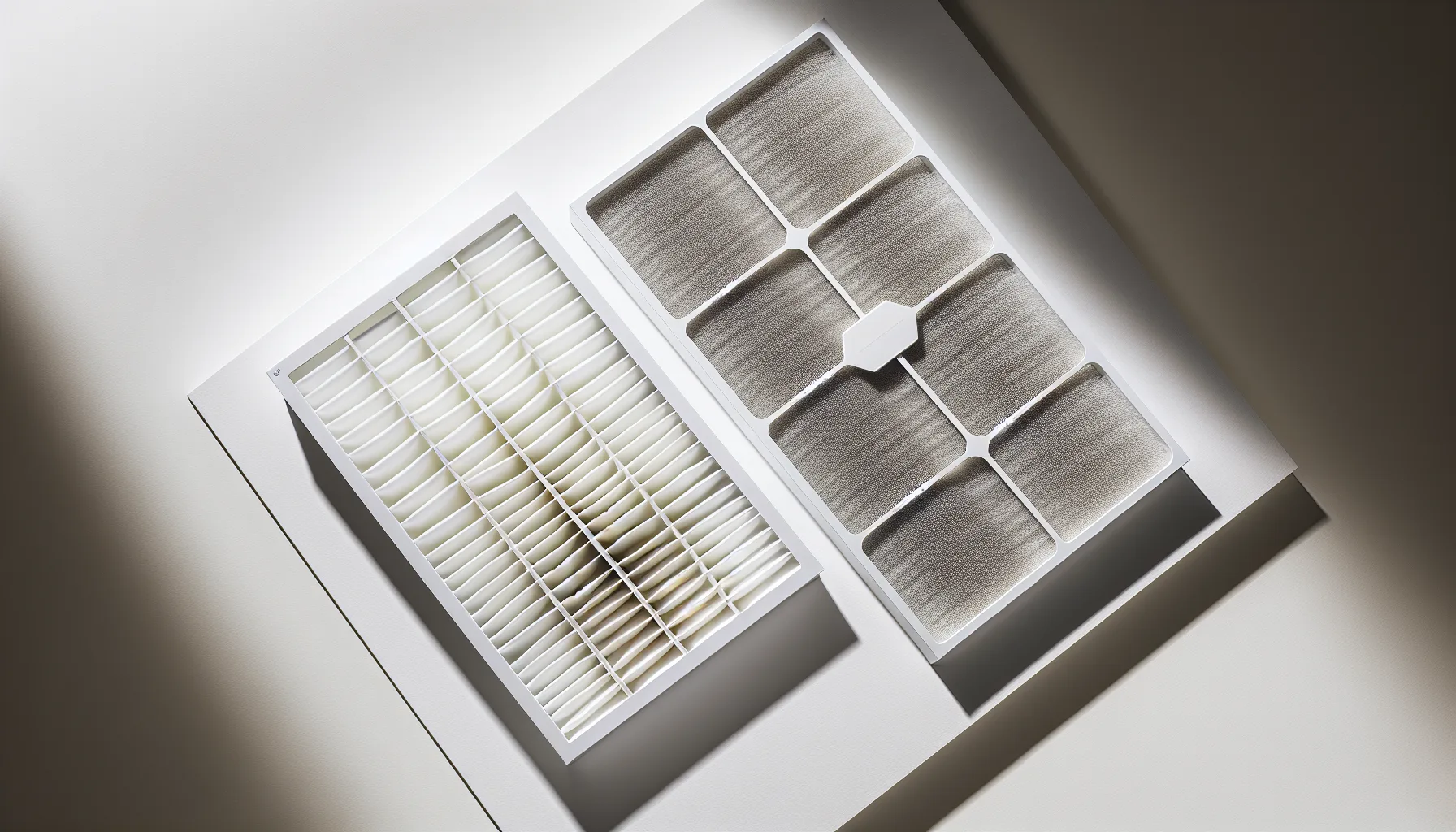
Pull your HEPA filter out and look at it. A new HEPA filter is bright white. After months of use, it turns grey, and eventually dark grey or even brownish. If yours looks like it’s been used as a doormat, it’s past its best. Some filters collect enough visible dust and hair that you can actually see the build-up on the pleats.
Allergy Symptoms Returning
This one’s subtle but important. If you noticed your hay fever or dust allergies improved when you first got the purifier, and those symptoms are creeping back despite the unit running, a spent filter is the most likely culprit. The NHS advises reducing allergen exposure for managing symptoms, and a clogged filter simply can’t do that job anymore.
The Indicator Light
Most modern purifiers have a filter replacement indicator — usually a light that turns red or an app notification. These are timer-based rather than condition-based, so treat them as a prompt to check rather than a definitive verdict. They’re useful as a nudge but not gospel.
HEPA Filter Replacement Frequency
HEPA filters are the workhorses of air purification, trapping 99.97% of particles down to 0.3 microns. Here’s what determines their lifespan.
Standard Homes: 9-12 Months
In a typical UK home without pets, moderate pollution, and the purifier running 8-10 hours daily, expect a good HEPA filter to last around 9-12 months. This covers most suburban homes and flats away from major roads. You’ll probably notice slight airflow reduction around the 8-month mark, which is your cue to start shopping for a replacement.
High-Pollution or Pet Homes: 6-8 Months
Homes with pets, smokers, or in urban areas with heavy traffic will load filters faster. If you have a dog or cat, the combination of dander and hair can halve the filter’s useful life. Running the purifier near the kitchen also exposes it to cooking particles that accelerate clogging. Based on what UK owners consistently report, the 6-month mark is when you should start checking.
Allergy and Asthma Households: Check Monthly
If anyone in your household has asthma or severe allergies, the stakes are higher. A filter running at 70% efficiency is far worse than useless — it gives you false confidence. Check monthly by pulling the filter out and inspecting the pleats. A quick visual check takes 30 seconds and could save you weeks of worsened symptoms.
Activated Carbon Filter Lifespan
Carbon filters work differently from HEPA — they adsorb gases and odours rather than trapping particles. That changes how and when they need replacing.
Typical Lifespan: 3-6 Months
Carbon filters generally last 3-6 months, which is shorter than HEPA because the activated carbon has a finite adsorption capacity. Once every pore is filled with trapped molecules, the filter is done. There’s no cleaning or regenerating it at home — that requires industrial temperatures.
Odour-Heavy Environments Burn Through Carbon Fast
If you’re running your purifier primarily for odour control — cooking smells, pet odours, or VOCs from new furniture — the carbon filter will saturate faster. In homes where I’ve tracked filter changes, kitchens and rooms with new carpeting or paint tend to exhaust carbon filters in about three months.
Combination Filters: Replace Together or Separately?
Some purifiers combine HEPA and carbon into a single filter unit. This simplifies replacement but means you’re replacing the still-functional HEPA element when the carbon dies, or running spent carbon until the HEPA needs changing. If your unit has separate filters, replace them independently based on condition. If it’s a combo unit, lean toward the shorter carbon timeline — running a saturated carbon filter defeats the purpose of having it.
Pre-Filter Maintenance
The pre-filter is your first line of defence, catching large particles like hair and dust before they reach the HEPA and carbon stages.
Washable Pre-Filters: Clean Monthly
Most pre-filters are washable mesh or foam. Remove them once a month, rinse under lukewarm water, and let them dry completely before reinstalling. This simple habit extends the life of your main filters notably — think of it as protecting your investment. A clogged pre-filter forces everything downstream to work harder.
Non-Washable Pre-Filters: Vacuum Fortnightly
Some units have non-washable pre-filters that you vacuum instead. Use a brush attachment on low suction. Be gentle — you’re removing surface dust, not deep-cleaning. Replace these every 3-4 months or when they start looking tatty despite vacuuming.
Why Running a Dirty Filter Is Worse Than You Think
Plenty of people put off filter changes because the purifier is still running and “doing something.” Here’s why that reasoning falls apart.
Reduced Efficiency Isn’t Gradual — It Drops Off a Cliff
A HEPA filter doesn’t slowly decline from 99.97% to 95% to 90%. It maintains high efficiency until clogging reaches a tipping point, then airflow drops noticeably and particles start bypassing the filter media entirely. You might not notice the transition happening, which is the dangerous part.
Motor Strain and Energy Costs
A clogged filter forces the fan motor to work harder, drawing more electricity and generating more heat. Over months, this increases your energy bill and shortens the motor’s lifespan. We’re talking a meaningful increase in running costs — some UK users report their purifiers drawing 20-30% more power with an overdue filter, which adds up given electricity prices.
Bacteria and Mould Growth
A damp, particle-laden filter is a breeding ground for bacteria and mould. In humid UK conditions — especially in bathrooms or kitchens — an old filter can actually release microorganisms back into the air. You end up with a purifier making air quality worse, not better. The irony isn’t lost on anyone who’s experienced it.
How to Check Your Filter Condition
The Visual Inspection
Remove the filter and compare it to a new one if you have a spare, or to photos of a new filter from the manufacturer’s website. Look at the colour of the pleats, the amount of visible debris, and whether the filter material has started to sag or deform.
The Airflow Test
With the old filter installed, hold a tissue near the air outlet on the highest setting. Note how strongly it flutters. Now compare this to how it behaved when the filter was new. If you didn’t check when new, at least note the difference after installing a fresh filter — that gives you a baseline for next time.
The Smell Test
Hold the filter close to your nose. A healthy filter should smell slightly dusty but not unpleasant. If it smells musty, sour, or like mildew, replace it immediately regardless of how it looks. That smell means biological growth, and no amount of continued use will fix it.
Step-by-Step: How to Replace an Air Purifier Filter
Before You Start
- Unplug the purifier — not just turn it off, actually disconnect from the mains
- Work on a surface you can wipe down — old filters shed dust when handled
- Have a bin bag ready — bag the old filter immediately to avoid spreading trapped particles
- Wash your hands after — especially if anyone in the household has dust allergies
The Replacement Process
- Open the filter panel — usually clips or a twist-lock on the back or side of the unit
- Remove the old filter — slide it straight out, keeping it level to avoid spilling trapped dust
- Bag it immediately — tie off the bag and put it in the outside bin
- Clean the filter housing — wipe the inside of the compartment with a dry microfibre cloth
- Unwrap the new filter — remove all plastic packaging (a surprising number of people install filters with the plastic still on)
- Check the orientation — most filters have an airflow direction arrow printed on the frame
- Slide in and secure — it should fit snugly without forcing
- Reset the filter indicator — check your manual for the reset button or app setting
After Installation
Run the purifier on high for 20-30 minutes after installing a new filter. New HEPA filters sometimes have a faint chemical smell from manufacturing — this is normal and dissipates within a few hours. If the smell persists beyond 24 hours, the filter may be defective.
Where to Buy Replacement Filters in the UK
Genuine vs Third-Party Filters
Genuine manufacturer filters cost more but guarantee compatibility and performance. Third-party filters — widely available on Amazon UK — can be 30-50% cheaper. Some perform nearly as well as genuine; others are noticeably thinner with fewer pleats. For allergy sufferers, I’d stick with genuine. For general use, reputable third-party options from brands like Fil-Fresh or Flintar are usually fine.
Where to Shop
- Amazon UK — widest range, both genuine and third-party, often with Subscribe & Save discounts of 5-15%
- Manufacturer direct — Philips, Dyson, Blueair, and Levoit all sell replacement filters through their own websites
- Argos and Currys — stock genuine filters for the bigger brands, handy for same-day pickup
- John Lewis — carries premium brand filters with their standard returns policy
What to Expect to Pay
HEPA replacement filters for popular UK models typically run between £20 and £60. Dyson filters sit at the premium end (£50-65), while Levoit and Pro Breeze replacements cost £15-30. Carbon filters, where sold separately, are usually £10-25. Budget about £40-80 per year on filter replacements depending on your unit and environment.
How to Reduce Filter Replacement Costs
Clean Pre-Filters Regularly
This is the single most effective way to extend HEPA filter life. A clean pre-filter catches the big stuff before it reaches your main filter. Monthly cleaning can add 2-3 months to your HEPA filter’s useful life — that’s real money saved over a year.
Position Your Purifier Wisely
Keep it away from dusty corners, pet beds, and kitchen hobs. Placing it where air circulates freely rather than in a dust trap reduces the particle load the filter has to handle. Against a wall with 15-20cm clearance on the intake side is usually ideal.
Subscribe and Save
If you’re buying from Amazon UK, the Subscribe & Save option knocks 5-15% off filter costs and reminds you when it’s time to reorder. Philips and Dyson also offer subscription services through their apps. It’s not glamorous, but it’s free money on a recurring expense you can’t avoid.
Consider Washable HEPA Models
Some purifiers — like certain Dyson models — have washable HEPA filters that you rinse rather than replace. The upfront cost is higher, but you save considerably on replacements over the unit’s lifetime. After a year of use, the maths start working firmly in your favour.
Filter Replacement Schedules by Brand
Here’s what the major brands recommend for their most popular UK models:
- Dyson (Pure Cool, Purifier Hot+Cool) — 12 months for combined HEPA+carbon filter. Dyson’s app tracks usage hours and reminds you.
- Philips (800, 2000, 3000 series) — HEPA: 12 months. Carbon: 12 months. Pre-filter: wash monthly. Indicator light tracks both separately.
- Levoit (Core 300, 400, 600) — 6-8 months for the 3-stage combo filter. Shorter lifespan but much cheaper filters.
- Blueair (Blue 3210, Classic series) — 6 months. Blueair uses HEPASilent technology which combines mechanical and electrostatic filtration.
- Pro Breeze — 6-8 months for HEPA, 3-4 months for carbon. Budget-friendly replacement costs at £15-20 per filter.
- Meaco (Clean CA-HEPA) — 12 months for HEPA, 6 months for carbon. A popular UK brand with reasonable replacement costs.
These are manufacturer estimates based on average use. Adjust based on your specific circumstances — more pets, more pollution, more hours means shorter intervals.
Frequently Asked Questions
Can you wash and reuse a HEPA filter? Standard HEPA filters cannot be washed — water damages the tightly woven fibres and destroys their ability to trap fine particles. Some purifiers have specifically designed washable HEPA filters (like certain Dyson models), but these are the exception. If your manual doesn’t explicitly say the HEPA filter is washable, assume it isn’t.
What happens if you don’t change your air purifier filter? A clogged filter reduces airflow, forces the motor to work harder (increasing energy costs), and eventually allows particles to bypass the filter entirely. In humid conditions, old filters can harbour mould and bacteria, potentially making air quality worse than having no purifier at all.
How do I know which replacement filter to buy? Check your purifier’s model number — it’s usually on a sticker on the base or back of the unit. Search that model number on Amazon UK or the manufacturer’s website. Avoid buying filters that say “compatible with” without specifying exactly which models they fit, as sizing can vary between similar-looking units.
Do air purifier filters expire if unused? Sealed filters stored in their original packaging last indefinitely. Once opened and exposed to air, the activated carbon component begins adsorbing ambient gases even without the purifier running. If you’ve opened a filter but not installed it, use it within a few weeks for best performance.
Is it worth buying a purifier with a permanent filter? Permanent or washable filters eliminate ongoing replacement costs but typically don’t match true HEPA efficiency for very fine particles. For general dust and allergen reduction they’re fine and cost-effective. For severe allergies or asthma management, replaceable true HEPA filters remain the gold standard.
If you are solving the same room problem, compare this with Carbon Filters Explained: What Do They Remove?, Air Purifier Noise Levels: How Loud Is Too Loud for Sleep?, Best Air Purifiers for Bedrooms 2026: Quiet & Effective, Air Purifier Running Costs: How Much Do They Cost to Run?.