If a bathroom extractor fan is running while steam lingers, start with what happens after the shower: does the mirror clear, and do walls and windows dry? Check the visible intake, any safely visible outside outlet, the path for replacement air and how long the fan runs. These clues can point to a fault; a registered electrician or ventilation specialist can measure the installed airflow before you decide whether the fan needs repair or replacement.
Quick symptom check: observe only. Leave the electrical installation and ductwork alone.
- Steam lingers and surfaces stay wet.
Possible cause: Restricted intake or outside outlet.
Safe next step: Check accessible grilles from a safe position. Clean only the outer surface if the model instructions allow it, with the fan isolated as directed. - The room clears better with the door slightly ajar.
Possible cause: Too little replacement air.
Safe next step: Compare similar showers and tell the specialist. Leave door seals and ventilation openings unchanged. - The fan stops early or sounds different.
Possible cause: A control or fan fault.
Safe next step: Note the run-on time and check user-facing settings. If you notice heat, a burning smell, crackling or repeated breaker trips, switch it off and call a registered electrician.
In This Article
- Bathroom extractor fan running: the quick diagnosis
- Look for a blocked intake or outside outlet
- Make sure replacement air can reach the bathroom
- Check the controls and running time
- Read the steam and condensation pattern
- What a professional should test
- Repair, replace or improve the ventilation system
- Manage moisture safely while the fault is fixed
- Frequently Asked Questions
Bathroom extractor fan running: the quick diagnosis
Sound, airflow and moisture are different clues
Hearing the motor confirms that the fan runs; it cannot tell you how much air reaches outdoors. Extraction also depends on the grille, duct, outlet and incoming-air path. Brief mirror mist after a hot shower can happen with useful extraction. Persistent damp, or a sudden change in drying, gives you a stronger reason to investigate.
The checks below stay outside the electrical installation. Do not remove a cover, reach into a fan, open an electrical fitting, disconnect ducting or climb to a roof outlet to investigate. Electrical Safety First’s extractor-fan advice recommends a registered electrician for selecting, fitting and replacing a fan, and says cleaning should follow the model’s instructions. That is the right boundary for a wet room.
For everyday airflow beyond this bathroom fault, see our guide to airing a home.
Look for a blocked intake or outside outlet
The grille you can see
Dust and fluff collect where air enters the fan. A clogged outer grille can reduce extraction even while the motor runs. Check it from the floor or another safe standing position. If your model’s instructions permit cleaning the accessible outer surface, isolate it exactly as directed and wipe or vacuum only that surface. Keep water and spray cleaner away from the electrical unit. Covers that require tools or expose internal parts belong with a competent person.
If a grille looks clear but little air appears to move, the obstruction could be farther along the route. The important distinction is between a visible surface-cleaning task and dismantling a fixed electrical or ventilation system. Do not put fingers, tissue, cotton buds or a vacuum nozzle into the impeller opening to “test” suction. A tissue sticking to the grille can be influenced by grille shape and tells you nothing reliable about the installed flow rate.
The outside end of the route
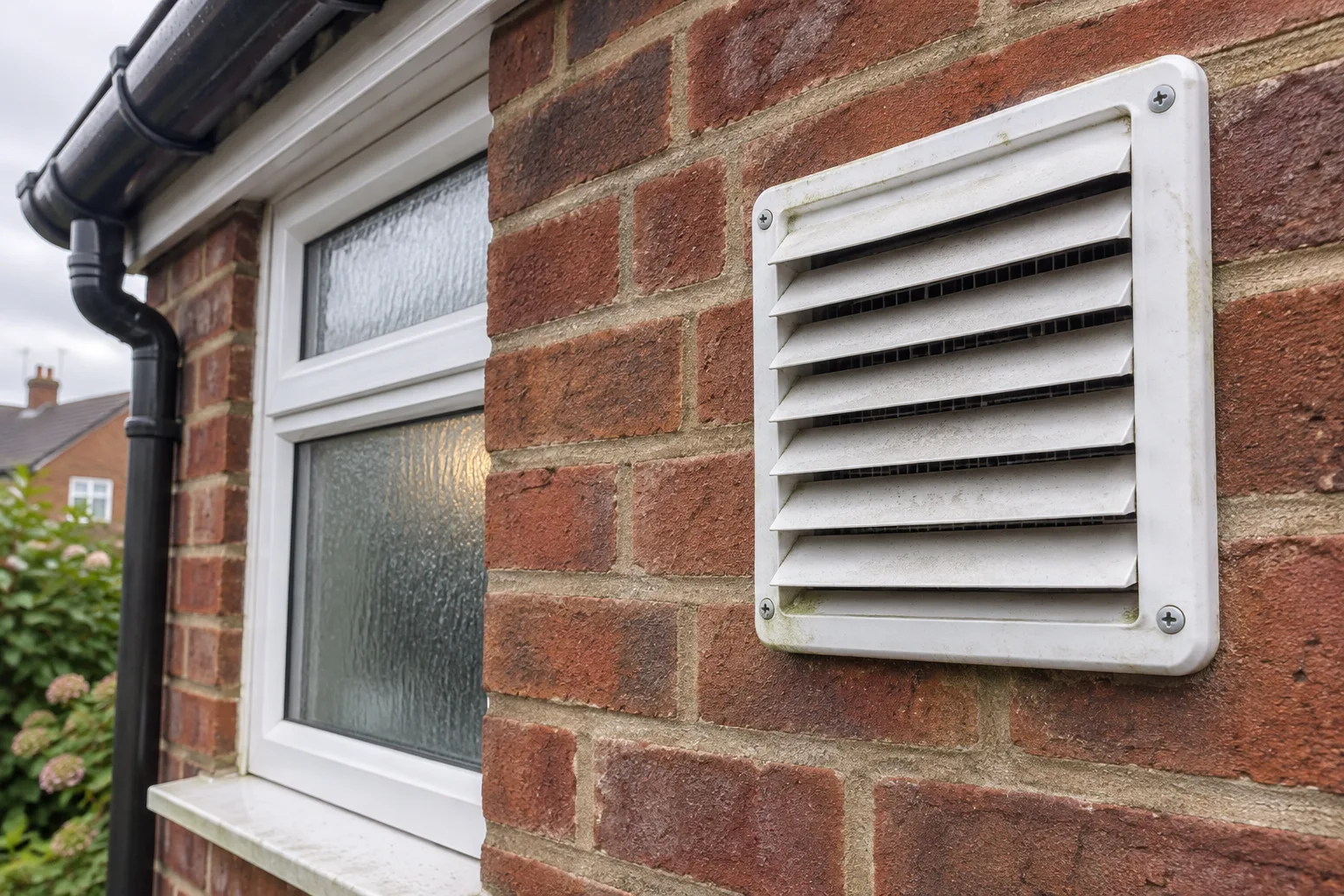
If the discharge point is visible at ground level, look for an obviously blocked external louvre or a flap that cannot open freely. Avoid touching a high-level grille or leaning out of a window. A fan may run normally in the bathroom yet move little air if its outlet is obstructed. A flap may also move differently in wind, so one glance is only a clue. A professional can inspect the full route and decide whether cleaning, duct repair or another fault is responsible.
The direction matters: bathroom moisture should be taken outside, not merely moved into a loft or another room. If you cannot identify where the duct terminates, tell the electrician or ventilation specialist. Do not pull apart ceiling panels or insulation to find it. Our bathroom mould-prevention guide deals with the damp consequences; a blocked discharge needs its own inspection.
A newly noisy fan deserves particular attention. Electrical Safety First notes that dust can obstruct an intake and that unusual noises, burning smells, crackling or repeated breaker trips warrant switching the fan off and contacting a registered electrician. Burning smell, heat or electrical fault signs are a stop-using-it signal, not an invitation to clean a running fan.
Make sure replacement air can reach the bathroom
Extraction needs an incoming air path
A fan needs replacement air entering the room as it extracts moist air. In many bathrooms that air comes through a door undercut or another designed opening. A new thick carpet, draught seal or replacement door can close the gap while the fan sounds unchanged. Check the air path before considering a larger motor.
Compare the bathroom’s usual closed-door arrangement with the door slightly ajar after a similar shower, keeping steam from spreading through the rest of the home. If it clears noticeably faster, tell the professional assessing the installation; that comparison is a clue, not an airflow measurement. Leave fire-rated door seals and ventilation openings unchanged until the correct arrangement has been checked for the building.
An open window also changes airflow, but wind, outdoor humidity and room temperature can alter the result. If the intended replacement-air path is through an internal door gap, a large open window may change the flow pattern rather than fix the original problem. Use the comparison to describe what happens to the professional.
Our dehumidifier-versus-opening-windows comparison explains how those moisture-control approaches differ. For this problem, the first priority remains checking that the installed fan has a usable path from room to outdoors. A portable appliance can collect residual water vapour but does not repair a missing air path.
Changes elsewhere can affect the fan
Think back to any work just before the problem started: a new bathroom door, loft insulation, a boxed-in duct, an external wall repair or a replacement window. The timing will not prove causation, but it gives a specialist something specific to investigate. If several rooms have changed at once, assess the home’s wider ventilation instead of treating the bathroom fan as an isolated gadget.
Check the controls and running time
Is it running at the right time?
Some fans switch on with the light; others have a separate control, a run-on timer, a humidity sensor or a continuous low-speed mode. A quiet fan may be on but not in its higher extraction mode. Check the user-facing instructions for the exact model and note what happens with the light on, with the light off and after the shower. Do not open a switch, change wiring or adjust hidden controls to experiment.
The control pattern gives a useful clue:
- Light-linked only: if the fan stops when the light goes off, it may leave residual shower moisture behind.
- Timer overrun: note how long it actually continues after the light is switched off.
- Humidity sensing: compare when it starts with the room’s moisture pattern; a sensor setting cannot overcome a blocked duct.
If this behaviour has changed suddenly, a control fault belongs on the professional’s checklist.
The useful run-on time depends on room size, shower use, incoming air and system design. In England, the current Approved Document F guidance for dwellings describes ventilation performance and installation; its bathroom intermittent-extract figure is 15 litres per second. That is a design and commissioning reference, not a flow rate you can confirm by hearing the fan. Scotland, Wales and Northern Ireland have their own rules and guidance, and an existing room cannot be diagnosed from a product-box rating alone.
If you rent, record the control behaviour and the damp symptoms and report them to the landlord or managing agent. Avoid making changes to a fixed fan yourself. The owner can arrange a competent inspection and receive a measured explanation of the problem.
Read the steam and condensation pattern
Brief mist is not the same as persistent damp
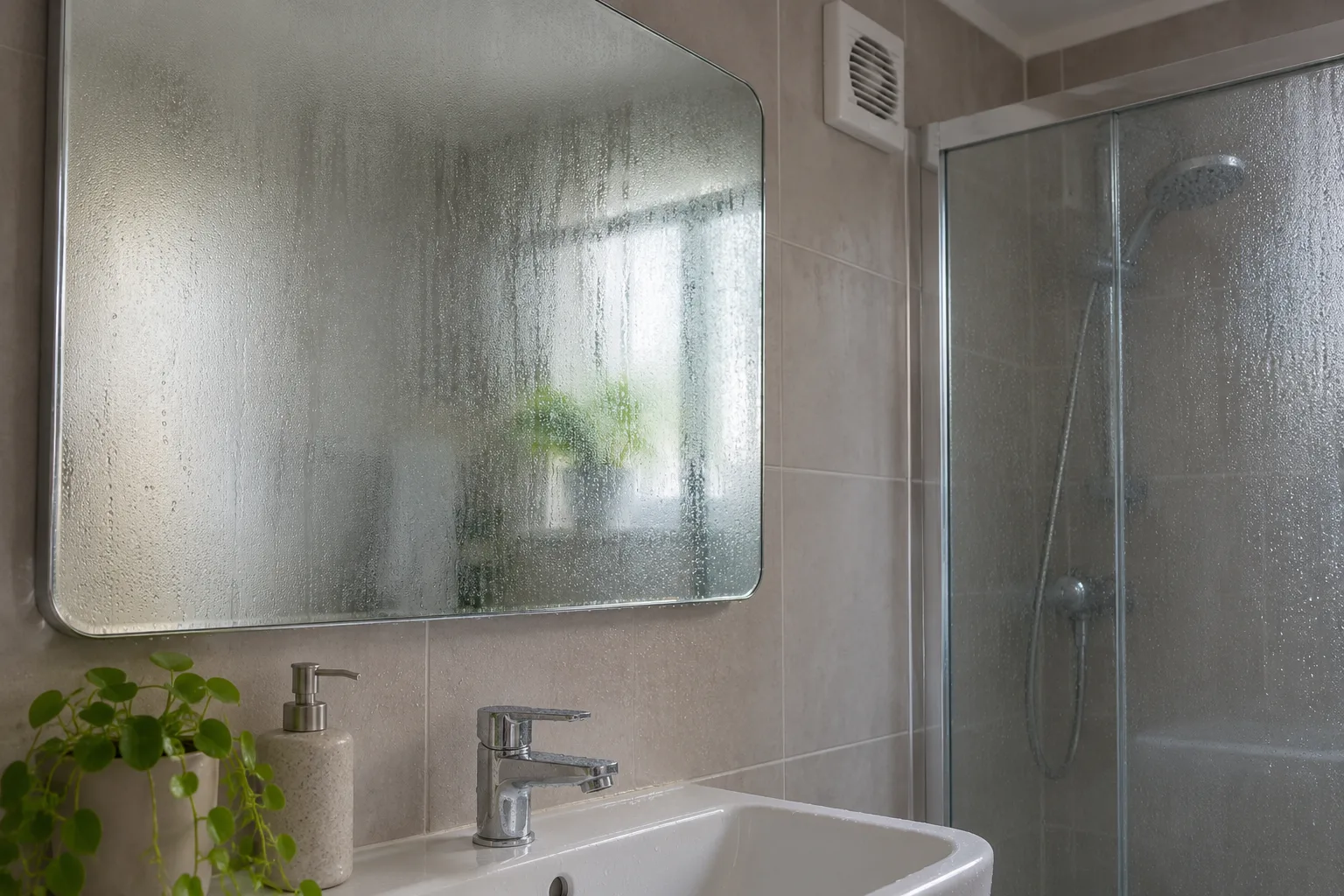
A hot shower puts warm, wet air into a room faster than many modest extract systems can remove it at that instant. A mirror may fog even when the fan is useful. What matters is whether the air and surfaces recover afterwards. Mirror mist that clears soon, with dry walls and towels later, is a different problem from droplets running down a window, damp paint or mould returning in the same spot. Treat the latter as a moisture-control fault to investigate.
Compare like with like rather than changing several conditions together:
- Shower: keep duration and water temperature broadly similar.
- Fan and door: record the setting and usual door position.
- Afterwards: observe the mirror, window and towels at comparable times.
Outdoor conditions affect the comparison, so look for a trend rather than a single perfect reading. A small hygrometer can track the rise and fall in relative humidity, but an inexpensive room meter may lag behind rapid changes and cannot measure airflow. Our home humidity-measurement guide explains where a reading helps and where it does not.
Cold surfaces can keep looking wet
A cold mirror, window or outside wall can collect condensation from warm air even while extraction works. Wipe a surface dry and watch whether it becomes wet again to distinguish leftover shower water from fresh condensation. A cold surface or a plumbing leak can also keep one patch wet while the rest of the bathroom dries. Judge the pattern across the room and over time, rather than a single foggy mirror.
The guide to reducing damp and mould in UK homes covers wider causes. If moisture appears on walls without shower use, or paint and plaster stay wet, the investigation should include leaks, cold bridging and the building fabric. A replacement fan alone would be a costly guess.
What a professional should test
Ask for installed airflow, not just a model number
Ask a competent installer or ventilation specialist to measure airflow at the installed terminal, rather than rely on the fan’s catalogue rating. They can check the fan and controls, inspect accessible duct and outlet sections, and compare the measured result with the design and applicable guidance. Bends, long ducts and restrictions can reduce flow after installation. Ask for the measured figure and what was checked; hearing the motor is only the starting clue.
The professional should also confirm that the discharge reaches outdoors and that replacement air can enter the room. If the electrical side is suspect, use a registered electrician. Electrical Safety First advises that fixed-fan selection and replacement are electrician work. Leave live-circuit access and bathroom-zone installation to that professional.
Repair, replace or improve the ventilation system
Match the remedy to the measured fault
If an accessible grille was clogged and cleaning under the manual restores normal operation, continue to monitor drying after showers. If a specialist finds a blocked outlet or damaged duct, repairing that route may matter more than changing the fan. If the motor or controls have failed, replacement may be sensible, but the new unit must suit the duct route, location, electrical installation and applicable requirements. The cheapest box marked “bathroom fan” is not automatically a suitable swap.
Ask the installer to explain the proposed airflow and how the completed system will be checked. A larger fan on an unsuitable duct may be louder without solving the bottleneck. Diagnose the existing air path before buying a replacement.
Manage moisture safely while the fault is fixed
Reduce the load, then arrange the repair
Wipe standing water from the screen, tiles and sill after bathing; spread towels where they can dry; and use an openable window when safe and practical. Keep shower steam from drifting into bedrooms or the landing. If an electrical fault sign is present, leave the fan off and arrange inspection promptly rather than relying on it while waiting.
For residual moisture after the extraction problem is assessed, a dehumidifier may help from a dry, suitable adjoining location. It does not substitute for ventilation or make a plug-in appliance automatically safe beside a bath or shower. Our bathroom dehumidifier guide explains that placement decision. Arrange the installed-fan and air-path diagnosis before spending on another appliance.
Frequently Asked Questions
Why is my bathroom extractor fan spinning but the mirror stays foggy? A hot shower can fog a cold mirror even with useful extraction. Check whether the mirror and other surfaces dry afterwards. If they stay wet, look for an obstructed visible grille, poor replacement air, short run time or a duct problem, then request a measured check.
Can I clean a bathroom extractor fan myself? Clean only accessible parts in the manner allowed by your exact model’s instructions, with the fan isolated as directed. Do not reach into the mechanism, open wiring or spray liquid into the unit. A damaged or unusually noisy fan needs professional attention.
Will leaving the bathroom door open make the fan work better? A fan needs replacement air, so the door position can change airflow. Compare conditions carefully, but do not spread shower steam through the home or alter fire-rated seals. A specialist can identify the correct permanent air path.
Should I buy a more powerful extractor fan? Not until the installed airflow, outlet, duct and controls have been checked. A new fan cannot compensate for every blocked outlet or unsuitable duct run. Ask the installer to explain and test the complete system.
Does a dehumidifier replace a bathroom extractor fan? No. It collects moisture from air but does not provide the same source extraction or fresh-air route. Use one only where its instructions allow safe placement, usually in a dry adjoining space, while the ventilation fault is investigated.