A dehumidifier usually costs between 4p and 18p per hour to run in the UK, depending on its wattage, room temperature and how hard it is working. A typical 12L compressor model using around 200W costs about 5p per hour at the July-September 2026 Ofgem electricity rate, while a 650W desiccant model can cost about 17p per hour. The real monthly bill depends less on the label and more on whether you run it for two hours after showers or leave it fighting damp walls all day.
In This Article
- Quick Answer
- The UK Electricity Rate Used in These Examples
- Dehumidifier Running Cost UK Examples
- Compressor vs Desiccant Running Costs
- Real-World Scenarios
- When the Cost Is Worth Paying
- How to Cut Running Costs
- Frequently Asked Questions
Quick Answer
For most UK homes, a dehumidifier costs less to run than people fear. A modern compressor dehumidifier rated at 180-300W costs roughly 5p-8p per hour at the current price-cap electricity rate. Run it for four hours a day and you are looking at about £6-£10 per month.
Desiccant dehumidifiers are dearer to run because many use 550-700W. At 650W, the cost is about 17p per hour, or roughly £20 per month if used four hours every day. That sounds worse, but desiccant models work better in cold rooms where compressor units slow down.
Here is the quick maths:
- Small 10L compressor, 180W: about 4.7p per hour.
- Typical 12L compressor, 200W: about 5.2p per hour.
- Larger 20L compressor, 300W: about 7.8p per hour.
- Desiccant dehumidifier, 650W: about 17p per hour.
If the machine has a humidistat, it will not draw full power constantly once the room is under control. That is why a damp bedroom on day one costs more than the same bedroom a week later.
The UK Electricity Rate Used in These Examples
The fairest way to calculate a dehumidifier running cost UK readers can use is to work from pence per kilowatt hour. Ofgem lists the average electricity unit rate for the 1 July to 30 September 2026 price cap as 26.11p per kWh for a standard variable tariff paid by direct debit: Ofgem energy price cap unit rates.
Your tariff may be lower or higher. Fixed deals, Economy 7, prepayment meters and regional variations all change the number. Use 26.11p as a practical benchmark, then check your own bill if you want an exact figure.
The Formula
The calculation is simple:
Wattage ÷ 1,000 × hours used × electricity price per kWh = running cost
So a 200W dehumidifier running for 4 hours is:
0.2kW × 4 hours × £0.2611 = £0.20888
Call it 21p for the day. Run that pattern every day for a month and it is about £6.27.
Why the Label Wattage Is Not the Whole Story
The wattage on the product page tells you the maximum or typical draw, not always the real average over a full day. A compressor dehumidifier cycles. Once the room reaches the target humidity, the compressor pauses or runs less often. The fan may still run, but the heavy electricity draw drops.
A room at 70% relative humidity after weeks of condensation will keep the machine busy. A bedroom maintained at 55% may only need short bursts. That is why owners can report different running costs for the same model.
Standing Charges Do Not Belong in the Device Cost
Electricity standing charges are part of your bill, but you pay them whether the dehumidifier runs or not. For device-level running costs, use only the unit rate. Adding the daily standing charge makes every appliance look more expensive than it really is.
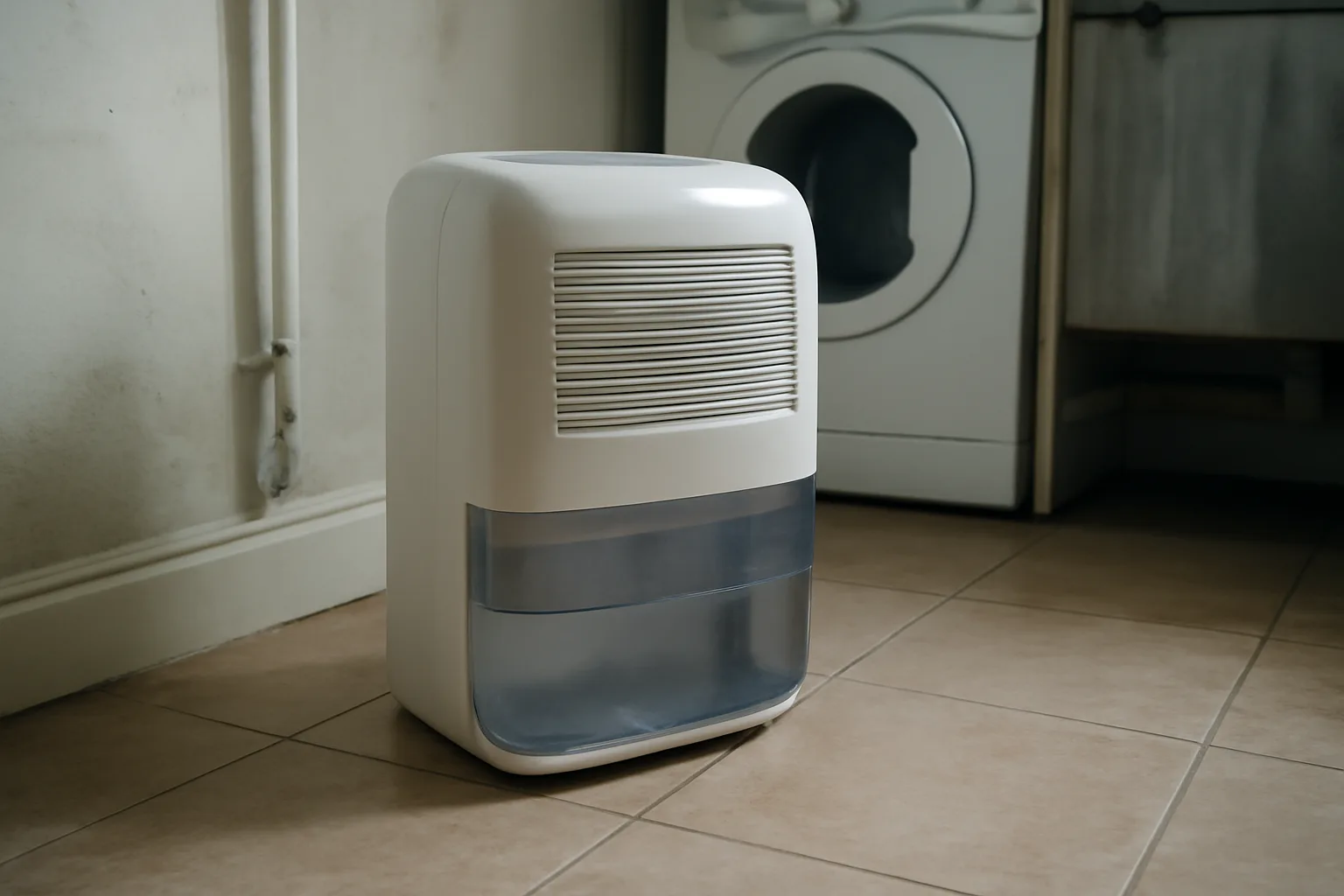
Dehumidifier Running Cost UK Examples
This table uses 26.11p/kWh and assumes the machine draws the listed wattage while running. It is a clean comparison, not a guarantee for every home.
| Dehumidifier type | Typical wattage | Cost per hour | 4 hours daily | 8 hours daily |
|---|---|---|---|---|
| Mini Peltier unit | 40W | 1.0p | £1.25/month | £2.51/month |
| 10L compressor | 180W | 4.7p | £5.64/month | £11.28/month |
| 12L compressor | 200W | 5.2p | £6.27/month | £12.53/month |
| 20L compressor | 300W | 7.8p | £9.40/month | £18.80/month |
| Desiccant model | 650W | 17.0p | £20.37/month | £40.73/month |
Mini Dehumidifiers Look Cheap Because They Do Very Little
A 40W mini dehumidifier costing about 1p per hour sounds brilliant until you realise it may extract only 250-500ml per day. That is fine for a wardrobe, small cupboard or caravan locker. It is not enough for a damp bedroom, bathroom or laundry room.
Small Peltier units from Amazon UK, Argos or B&Q often cost £35-£70. They are cheap to run because they are weak. Do not buy one to solve streaming windows in a normal room.
Compressor Models Are the Default UK Choice
Most UK households should start with a compressor dehumidifier. A 10-12L model usually costs £130-£190, while stronger 20L models sit around £180-£280. Popular examples include Meaco, Pro Breeze, Ebac, De’Longhi and ElectriQ models sold through Argos, Currys, Amazon UK, Appliances Direct and manufacturer sites.
A 12L compressor at 200W is the middle-ground example: about 5p per hour, plenty for bedrooms, bathrooms after showering and small flats. A 20L compressor costs more per hour but may clear moisture faster, so it does not always cost twice as much over a week.
Desiccant Models Cost More but Work in Cold Rooms
Desiccant dehumidifiers are the expensive-to-run option, but they have a reason to exist. They work better in cold rooms, garages, boats, conservatories and unheated utility spaces where compressor units lose efficiency.
An EcoAir DD1-style desiccant model costs around £200-£260 to buy and can draw about 580-700W depending on setting. Use one in a heated bedroom and you may be overpaying. Use one in a 10°C garage where a compressor barely extracts water, and the higher electricity cost can make sense.
Compressor vs Desiccant Running Costs
The type of dehumidifier matters more than the litre rating. A 12L compressor and a 7L desiccant do not behave like small and large versions of the same thing. They use different drying methods.
Compressor Dehumidifiers
A compressor dehumidifier cools a coil so moisture condenses from the air. It is most efficient in warmer rooms, usually above about 15°C. In a typical UK bedroom, bathroom, hallway or living room, it is usually the cheaper way to remove moisture.
The running-cost advantage is clear:
- Lower wattage: many domestic models sit around 180-300W.
- Humidistat cycling: the compressor can stop once the target humidity is reached.
- Good value for heated homes: ideal for normal rooms with condensation or laundry moisture.
The weak point is cold performance. A compressor unit in an unheated conservatory may run cheaply per hour but extract so little water that the saving is false.
Desiccant Dehumidifiers
A desiccant model uses a moisture-absorbing wheel and heater. It uses more electricity, but it keeps working in cold air and adds some warmth to the room. In a chilly utility room, that can be useful.
The cost issue is obvious: 650W at 26.11p/kWh is about 17p per hour. Eight hours a day is around £40.73 per month before any cycling or lower-power mode. If you run that through winter without checking humidity, the bill will show it.
Choose desiccant only when cold-room performance matters. For normal heated rooms, a compressor model is usually the better running-cost choice.
Laundry Mode Can Be Worth It
Laundry mode is not magic. It usually runs the fan harder and keeps the target humidity lower. That uses more electricity while the mode is active, but it can still be cheaper than a tumble dryer.
A vented or condenser tumble dryer can use around 2-5kWh per load depending on age and type. At 26.11p/kWh, that is roughly 52p-£1.31 per load. A 300W dehumidifier running for six hours costs about 47p, and it also prevents that moisture from sitting on walls and windows. For more appliance-specific choices, see our best dehumidifier for drying clothes guide.

Real-World Scenarios
The clean table is useful, but homes are messy. Costs change depending on the room, the target humidity and the reason you are running the machine.
Bathroom After Showers
If you run a 200W compressor dehumidifier for two hours after evening showers, the cost is about 10p per day, or £3.13 per month. That is a reasonable trade if it stops condensation returning to the mirror, ceiling and grout.
For a bathroom-specific unit, expect compact compressor or desiccant models around £90-£180. Our bathroom dehumidifier guide covers the size and noise trade-offs. Do not put a standard plug-in appliance where it can be splashed; bathroom placement needs common sense and safe socket distance.
Damp Bedroom in Winter
A damp bedroom may need longer initial runs. A 12L compressor running six hours a day costs about 31p per day, or £9.40 per month. Once the room stabilises, you may be able to cut that to two or three hours.
If the bedroom still sits above 65% relative humidity after regular use, the dehumidifier is probably treating the symptom rather than the cause. Check ventilation, heating, window insulation and leaks. Persistent damp and mould are health risks, and the government guidance explains why homes should be kept free from damp and mould: GOV.UK damp and mould health risks guidance.
Drying Clothes Indoors
A 20L compressor at 300W running for six hours costs about 47p. That is why dehumidifier-and-airer drying has become popular in flats and houses without outdoor drying space. It is not free, but it is often cheaper than an older tumble dryer and better for the room than drying clothes over radiators.
Factor in the purchase price. A strong laundry-friendly unit might cost £180-£280. If you dry three indoor loads a week through winter, the machine can be worth it. If you use it twice a month, a cheaper 12L model may be enough.
Caravan, Boat or Cold Utility Room
This is where costs get awkward. A cheap compressor may use less electricity but perform poorly in cold air. A desiccant model costing 17p per hour may actually remove more water and protect soft furnishings, cupboards and bedding.
For caravans and boats, dehumidifier purchase prices range from £70 for small units to £250 for stronger desiccant models. Our caravan and boat dehumidifier guide is a better product guide; this article is only the running-cost maths.
When the Cost Is Worth Paying
A dehumidifier is worth running when it is reducing a real moisture problem. It is not worth running as a vague “fresh air” device in a room that already sits at 45-55% relative humidity.
It Can Make Heating Feel More Effective
Damp air and damp fabrics make a room feel colder. Removing moisture will not replace heating, but a drier room often feels more comfortable at the same thermostat setting. That can make the 5p-8p hourly cost easier to justify in a bedroom or living room.
Do not push this too far. A dehumidifier is not a heater, even if a desiccant model releases warm air. If the room is cold because the heating is off or insulation is poor, fix that problem too.
It Helps Protect the Room
Condensation can damage paint, window frames, wardrobes, mattresses and stored clothes. Spending £5-£15 per month through the dampest months can be cheaper than replacing mouldy furniture or repainting a bathroom ceiling every winter.
The important phrase is “can be”. If the damp comes from a leak, failed gutter, rising damp or structural defect, a dehumidifier will collect water forever while the real problem continues. Our damp and mould guide explains how to separate condensation from more serious damp.
It Is Not Always the First Fix
Opening windows after showers, using extractor fans, keeping lids on pans, drying clothes outdoors when possible and maintaining background heat all reduce moisture before electricity gets involved. Sometimes the cheapest dehumidifier is the one you do not need to run.
That said, UK weather often makes ventilation awkward. Opening windows in cold rain can chill the room and bring in damp outdoor air. Our dehumidifier vs opening windows comparison covers when each method wins.
How to Cut Running Costs
The aim is not to run the dehumidifier less at all costs. The aim is to remove the same moisture with fewer wasted hours.
Use the Humidistat
Set the target humidity to 50-55% for normal use. Setting it to 40% makes the machine work harder and may make the air uncomfortably dry. For most UK homes, 50-60% is the healthy, practical range. If you do not know your room level, a basic hygrometer costs £6-£15 from Amazon UK, Screwfix, B&Q or Argos.
Shut the Door
Do not ask a small dehumidifier to dry the whole house. Shut the door on the damp room, bathroom or laundry space and let it work on a smaller air volume. It will reach the target faster and cycle down sooner.
Keep Filters Clean
A clogged filter reduces airflow, which makes the machine work harder and extract less water. Check the filter every couple of weeks in dusty rooms and after heavy laundry use. Replacement filters vary by brand, but simple pre-filters are often washable; carbon or HEPA add-ons can cost £10-£30.
Match the Machine to the Room
Undersizing is a false economy. A £70 mini unit that runs all day and barely moves the humidity costs money while doing little. A correctly sized £180 compressor that clears the room in a few hours can be cheaper over a season.
For buying choices by size and type, use our best dehumidifiers UK guide rather than choosing by wattage alone.
Use Timers Carefully
Timers are useful for bathrooms and laundry. Two to six hours after moisture is added is often enough. For ongoing damp, a humidistat is better than a fixed timer because the machine responds to the room instead of the clock.
If your dehumidifier has an app, do not overcomplicate it. The boring routine usually wins: run after showers, run with laundry, run when humidity is above target, empty the tank, clean the filter.
Frequently Asked Questions
How much does a dehumidifier cost to run per hour? A typical compressor dehumidifier costs about 5p-8p per hour in the UK at 26.11p/kWh. A desiccant model can cost about 15p-18p per hour.
Is it expensive to leave a dehumidifier on all day? It can be. A 200W compressor running for 24 hours costs about £1.25, while a 650W desiccant model costs about £4.07 if drawing full power all day.
Does a dehumidifier use less electricity once the room is dry? Yes, models with a humidistat usually cycle down or pause once the target humidity is reached, so the real average cost can be lower than the maximum wattage suggests.
Is a dehumidifier cheaper than a tumble dryer? Often, yes. A 300W dehumidifier running for six hours costs about 47p, while many tumble dryers use roughly 52p-£1.31 per load at current electricity prices.
What is the cheapest type of dehumidifier to run? Mini Peltier units are cheapest per hour, but they extract very little water. For normal rooms, a compressor dehumidifier is usually the best running-cost balance.
Should I run a dehumidifier overnight? Only if the room needs it and the model is quiet enough. Check the tank capacity, target humidity and noise rating first, especially in bedrooms.