The best radon detector UK households should buy first is usually the boring one: a proper three-month measurement pack, not a shiny gadget. My pick for most homes is the UKradon domestic pack at £52.80 because it gives you two passive detectors, lab analysis and a result based on the rooms you actually live and sleep in. If you want ongoing readings after that, add a digital monitor such as the Airthings Corentium Home 2 or Aranet Radon Plus.
In This Article
- Best Radon Detector UK: Quick Picks
- Why Radon Testing Is Different From Normal Air Monitoring
- The Best Radon Detectors and Test Kits to Buy in 2026
- How to Choose the Right Radon Detector
- Where to Put a Radon Detector and How Long to Test
- What to Do If Your Result Is High
- Frequently Asked Questions
Best Radon Detector UK: Quick Picks
If you only want one answer, start with the official-style lab test. Digital monitors are useful, but radon is not like smoke, carbon monoxide or PM2.5 where instant readings tell the whole story.
Best overall: UKradon domestic measurement pack
The UKradon domestic measurement pack is the best overall choice for most UK homes. It currently costs £52.80 including VAT and includes two detectors: one for a living area and one for a bedroom. You leave them in place for three months, post them back in the prepaid envelope, and receive a lab result.
That is not exciting. It is also the point. Radon varies from day to day with weather, ventilation and pressure changes, so a three-month test is more useful than panicking over one short spike. If I were checking a house before deciding whether to spend serious money on remedial work, this is where I would start.
Best digital monitor: Airthings Corentium Home 2
The Airthings Corentium Home 2 is the best digital option for most homeowners who want ongoing visibility. It is usually around £149 in UK price-comparison listings, with Amazon UK and specialist monitor retailers often sitting roughly in the £150-£180 range depending on stock.
I like the Corentium-style devices because they are simple: no subscription, no complicated air-quality dashboard, and no need to explain to everyone in the house what VOCs are. You get radon readings over time, plus temperature and humidity on the newer Home 2 model. For a basement office, converted cellar or high-radon postcode, that ongoing trend is useful.
Best smart air-quality monitor with radon: Airthings View Plus
If you want radon plus wider indoor-air data, the Airthings View Plus is the more rounded device. Current UK Amazon pricing is often around £175-£220, while Airthings sells similar View-series monitors direct at higher dollar prices. It tracks radon as well as PM2.5, CO2, VOCs, humidity, temperature and pressure.
This is the one I would buy only if you care about broader air quality too. If all you want is radon, the extra sensors are nice but not essential. Our air quality monitor guide covers PM2.5, VOC and CO2 devices in more detail; radon is a separate buying decision.
Best long-battery digital option: Aranet Radon Plus
The Aranet Radon Plus is a premium option, currently sold by Radonova UK at £195 including VAT. It has an E-Ink display, app support, short and long-term readings, and a claimed long battery life. It is not cheap, but the display is clear and it suits people who want a battery-powered monitor without a Wi-Fi screen glowing in the room.
For most homes, I would still start with the £52.80 lab pack and then decide whether a £149-£195 digital monitor is justified. The exception is a known radon area, a basement room used daily, or a house where you want to track readings after remedial work.
Why Radon Testing Is Different From Normal Air Monitoring
Radon is awkward because short-term readings can mislead you. Levels move with weather, season, room ventilation and how the building interacts with the ground. One high day does not automatically mean the house is unsafe; one low day does not prove everything is fine.
Radon is a long-term exposure problem
The UK Health Security Agency recommends action when the annual average radon level in a home is above 200 Bq/m3. UKradon explains the Action Level and Target Level clearly: the Action Level is based on an annual average, and typical domestic measurement uses two detectors over three months to smooth out short-term fluctuations.
That is why a passive test kit can beat a digital gadget for a first decision. It is cheap, quiet, lab-read and designed around the way radon risk is judged in UK homes.
Digital monitors still have a place
Digital radon monitors are useful when you want to see patterns:
- Basement use: a cellar office may behave differently from upstairs rooms.
- Ventilation changes: readings may change after fitting trickle vents, fans or a positive input ventilation unit.
- Post-remediation checks: a monitor helps you see whether a sump or ventilation fix is behaving as expected.
- Peace of mind: some people would rather see a trend than wait three months for a lab result.
The mistake is treating a digital monitor like a smoke alarm. It is not there to beep every time radon rises for a few hours. It is there to show whether your home has a persistent problem.
Radon detectors are not carbon monoxide alarms
Do not confuse radon detectors with carbon monoxide alarms. CO alarms detect a different gas and are an immediate safety device. A radon monitor will not protect you from a faulty boiler, stove or open fire.
If you are checking home safety, read our carbon monoxide detector placement guide separately. For indoor air quality more broadly, our guide to improving indoor air quality covers ventilation, damp, pollutants and filtration. Radon sits in its own lane because it comes from the ground and needs proper measurement.
The Best Radon Detectors and Test Kits to Buy in 2026
The right choice depends on whether you need a one-off official-style result, ongoing monitoring, or a broader air-quality device that includes radon.
1. UKradon domestic measurement pack – best first test
Price: £52.80 including VAT.
Best for: most UK homeowners, buyers checking a property, and anyone who wants a result aligned with UK testing practice.
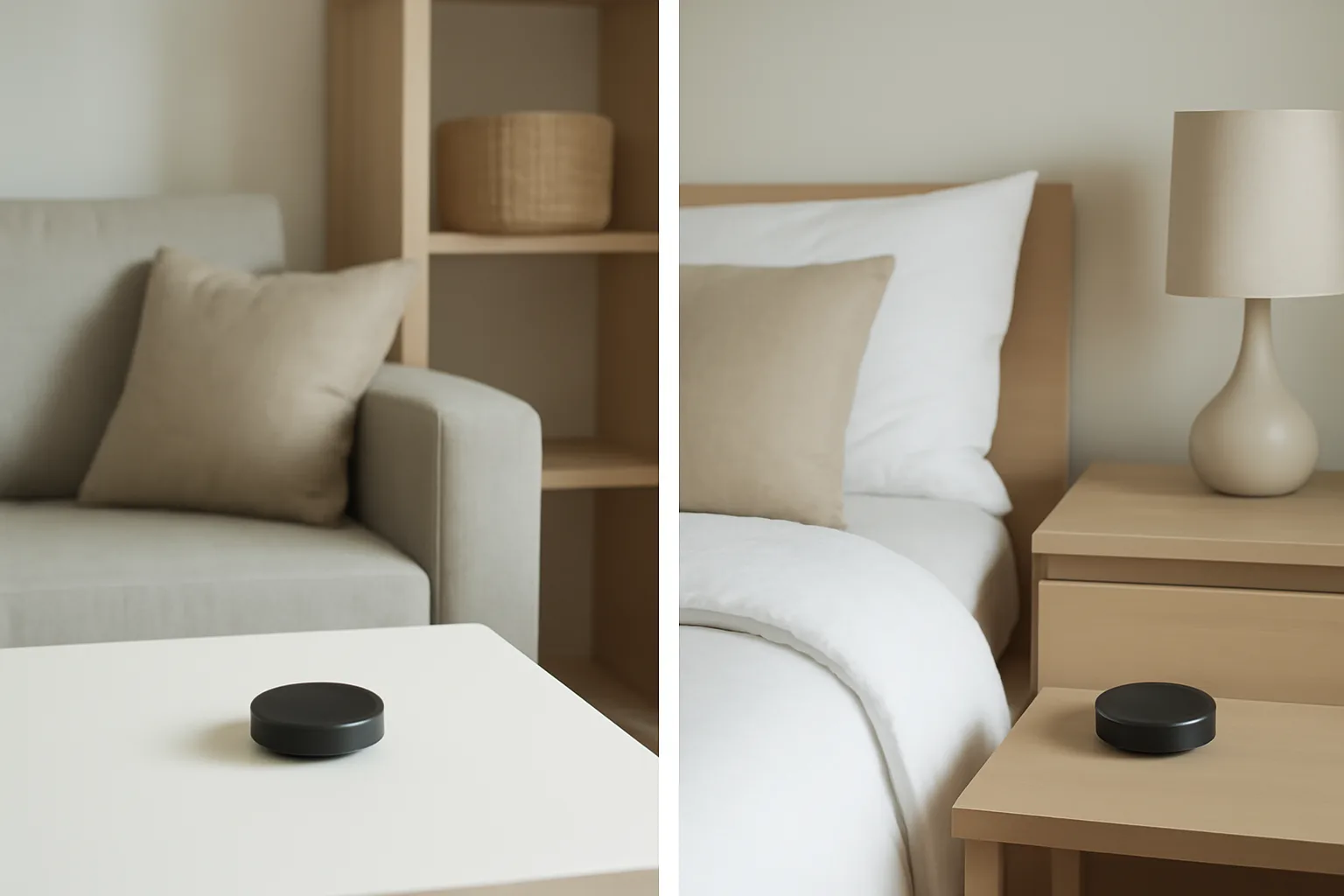
The UKradon domestic pack is the one I would use before buying any digital monitor. You get two passive detectors, instructions and a prepaid return envelope. One detector goes in a living area and one in a bedroom for three months.
Pros:
- Good value: £52.80 is cheaper than every decent digital monitor.
- Two-room setup: bedroom and living area gives a better picture than one device in a hallway.
- Lab result: you are not interpreting a random screen after one weekend.
- Simple: no batteries, app, Wi-Fi or calibration worry.
Cons:
- Slow: you need to wait around three months.
- No live trend: it will not show daily spikes or changes after ventilation.
- Single measurement period: you buy another test if you want to repeat it later.
Verdict: best overall first step. Not glamorous, but the best radon detector UK households should use before deciding whether a digital monitor is worth the extra spend.
2. Airthings Corentium Home 2 – best simple digital monitor
Price: roughly £149-£180 in the UK.
Best for: homeowners who want continuous radon readings without a full air-quality dashboard.
The Airthings Corentium Home 2 is the natural digital upgrade after a passive test. It gives ongoing radon readings and adds basic temperature and humidity context. The older Corentium Home became popular because it was simple and portable; the Home 2 keeps that same focused use case but adds Bluetooth and extra sensors.
Pros:
- Clear purpose: mainly a radon monitor, not a confusing everything sensor.
- No lab wait: readings build over time in the home.
- Portable: easy to move between rooms after a settling period.
- Useful after remedial work: helps you track whether levels stay lower.
Cons:
- Costs about three times the UKradon test pack.
- Short-term readings can worry people unnecessarily.
- Not a substitute for a proper long-term measurement if you need a formal result.
Verdict: the digital monitor I would buy for a known radon-risk home, especially if a basement, home office or bedroom is involved.
3. Airthings View Plus – best for radon plus wider air quality
Price: usually about £175-£220 in the UK, depending on retailer.
Best for: people who want radon, PM2.5, CO2, VOC, humidity and temperature in one device.
The Airthings View Plus makes sense if radon is only one part of your indoor-air concern. It is overkill for a simple radon check, but useful if you also care about stale bedrooms, cooking particles, high CO2 in a home office, or humidity linked to mould.
Pros:
- Multiple sensors: radon plus the everyday air-quality readings people actually notice.
- Display and app: easier to understand than a hidden data logger.
- Good for experimentation: you can see what ventilation, cooking or purifier use changes.
Cons:
- More expensive than a basic radon monitor.
- Extra data can distract from the radon question.
- Needs a sensible place to sit, not constant moving between rooms.
Verdict: buy it if you want a whole-home air-quality monitor that includes radon. Skip it if your only question is “is my house above the radon Action Level?”
4. Aranet Radon Plus – best premium battery monitor
Price: £195 from Radonova UK.
Best for: people who want a clear E-Ink screen, long battery life and a portable digital radon monitor.
The Aranet Radon Plus is expensive but tidy. The E-Ink display is easy to read, and the battery-powered setup suits people who do not want another mains-powered screen. Radonova lists it as a home digital radon monitor with app support and fast readings.
Pros:
- Readable display: less phone-dependent than app-only devices.
- Battery powered: easier to place away from sockets.
- Long-term trend data: useful for seasonal monitoring.
Cons:
- £195 is a serious spend.
- Not necessary for a one-off first test.
- Still needs time to build a meaningful trend.
Verdict: a good premium monitor for people who want portable ongoing readings, but not the value pick for first-time testing.
5. Radonova long-term test kits – best alternative lab route
Price: Radonova UK pricing varies by kit and quantity; expect many home kits to sit roughly in the £35-£70 range depending on detector count and service.
Best for: homeowners who want a lab test from a specialist radon measurement company rather than a digital monitor.
Radonova UK sells UKHSA-validated radon test kits and also supplies the Aranet digital monitor. A lab kit makes sense if you want an alternative to UKradon, or if you need several detectors for a larger house, rental property or workplace-style setup.
Pros:
- Lab-based: better suited to long-term decisions than one weekend of readings.
- Scalable: useful if you need several rooms tested.
- Specialist supplier: not a random marketplace gadget.
Cons:
- Check exactly what is included: detector count, lab analysis and postage matter.
- Still not instant: long-term testing takes patience.
- May cost more than UKradon for a simple two-room home check.
Verdict: a sensible lab-test alternative, especially if you need more than the basic domestic pack.
How to Choose the Right Radon Detector
The best choice is less about brand loyalty and more about why you are testing.
Start with the decision you need to make
Ask yourself what the result is for:
- Checking whether a home needs action: choose a three-month lab test first.
- Monitoring a known radon-prone room: choose a digital monitor.
- Tracking after remedial work: use a digital monitor, but confirm with a proper test if needed.
- Buying a house: start with a radon risk report and discuss testing with your surveyor or solicitor.
- Managing a rented or workplace property: get specialist advice, because duties can differ from a normal homeowner check.
If you just want reassurance, the £52.80 UKradon pack is hard to beat. If you have already had a high result, the argument for a £149-£195 digital monitor becomes stronger.
Avoid the cheapest anonymous gadgets
There are marketplace radon detectors around £70-£120, often with vague brand names and bold claims. I would be careful. A radon detector is not the place to buy the cheapest white-label box with a copied product photo.
Look for:
- Bq/m3 readings: this is the UK-friendly unit.
- Short and long-term averages: not just one instant number.
- Clear sensor information: vague “gas detector” descriptions are not enough.
- UK support or reputable supplier: useful if readings seem odd.
- No forced subscription: radon monitoring should not need a monthly plan for basic use.
For comparison, our home air-quality testing guide covers cheaper PM2.5 and VOC monitors. Those are easier to sanity-check because you can create obvious changes by cooking, opening windows or running a purifier. Radon needs more patience.
Do not overbuy for a low-risk situation
If your address search shows low estimated radon probability, you have no basement and you just want a sensible check, a passive pack is enough. A £200 monitor sitting on a shelf for years may be more gadget than safety measure.
If you are in Cornwall, Devon, parts of Wales, Derbyshire, Northamptonshire, the Peak District or another radon-affected area, the calculation changes. A digital monitor is easier to justify because you may want ongoing seasonal readings, especially in lower-ground-floor rooms.
Where to Put a Radon Detector and How Long to Test
Placement matters because radon enters from the ground and indoor levels vary by room. Do not put the detector wherever it looks neat.
Use lived-in rooms
For a passive two-detector pack, place one detector in a living area and one in a bedroom, following the kit instructions. Avoid kitchens, bathrooms, draughty windowsills, direct sunlight and places where children or pets will move the detector.
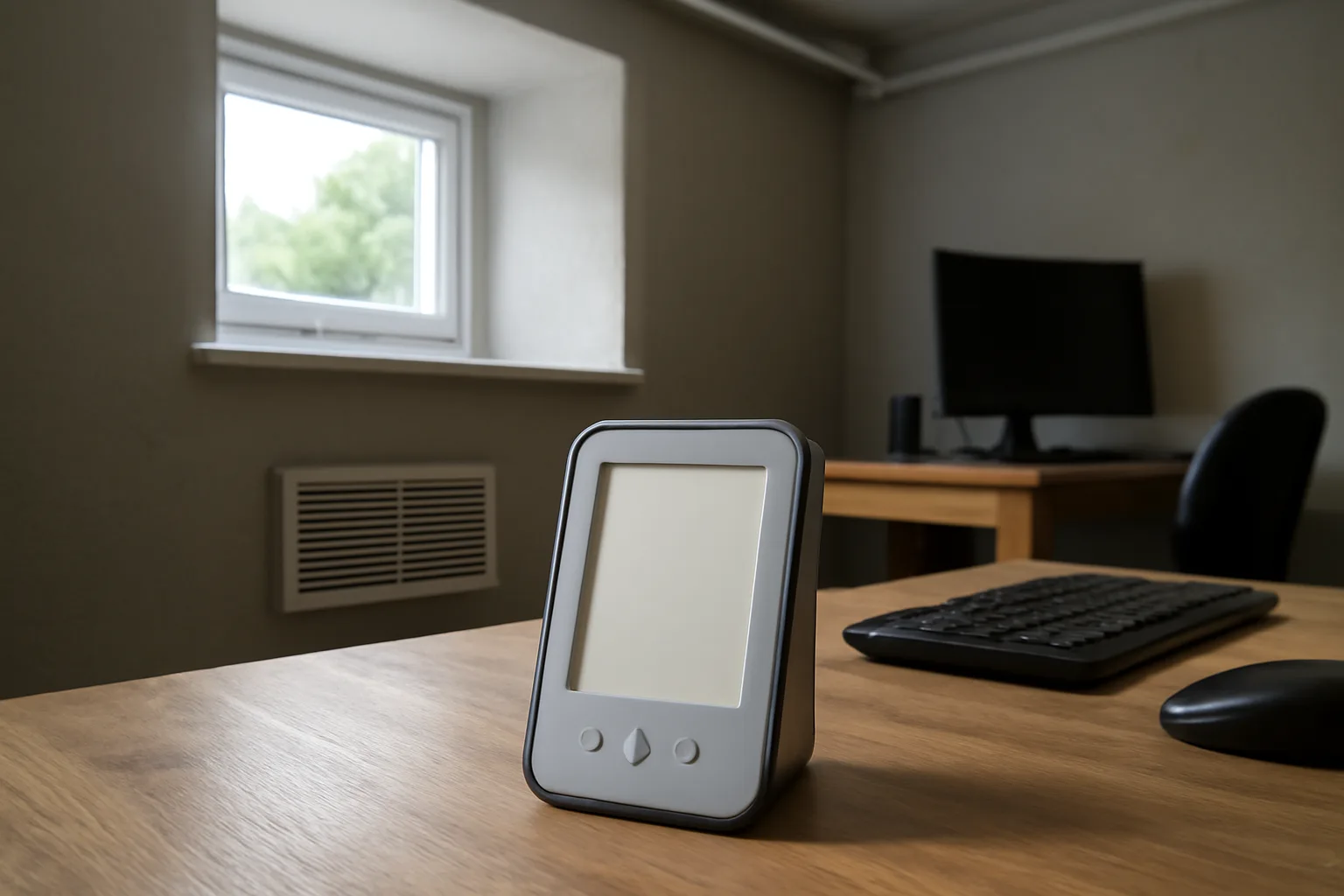
For a digital monitor, start in the room you care about most. In many UK homes, that means:
- Basement office or cellar room: highest priority if used daily.
- Ground-floor living room: useful for normal daytime exposure.
- Bedroom: important because of long overnight occupancy.
- Converted garage or extension: worth checking if floor construction differs from the rest of the house.
Do not keep moving a digital monitor every day. Give it time. If you want to compare rooms, leave it in one place long enough to see a trend, then move it deliberately and record the dates.
Three months beats three days
Short tests can be useful for a quick screen, but three months gives a more reliable domestic picture. UKradon says radon levels vary substantially day to day and typical measurements use two detectors over a reasonable period, usually three months.
That does not mean digital monitors are useless in the first week. They can show whether readings are obviously low, obviously worrying, or bouncing around. Just do not make expensive remediation decisions from a weekend’s data unless a professional tells you to act urgently.
Think about ventilation before blaming the detector
Radon readings can change when windows are closed, weather pressure changes, extractor fans run, or ventilation improves. That is one reason a digital monitor can be useful after you change habits.
If your home also has condensation or mould problems, start with our guides to reducing damp and mould and stopping condensation on windows. Ventilation decisions affect several indoor-air problems at once, but radon still needs its own measurement.
What to Do If Your Result Is High
A high radon result is not a reason to panic, but it is a reason to act. The sensible response is to confirm, understand the room pattern, and then look at mitigation.
If a passive test comes back high
Read the report carefully. Check which room was higher, what average was reported, and whether the result is above the Action Level. If it is above 200 Bq/m3, look at remedial options rather than buying three more gadgets.
Common radon reduction measures include:
- Improved underfloor ventilation: often used where suspended timber floors are involved.
- Positive input ventilation: can help some homes by changing pressure and airflow.
- Radon sump systems: commonly used for higher readings or solid floors.
- Sealing obvious gaps: useful as part of a plan, but rarely the whole answer on its own.
Costs vary widely. Basic ventilation changes may be a few hundred pounds. A professional radon sump system is often more like £800-£2,500+, depending on access, floor construction, electrics and discharge route. Get specialist quotes if the result is high.
If a digital monitor shows spikes
Look at the longer average first. A spike after a storm, a closed-up winter week or a few still days may settle. If the long-term average is persistently high, follow up with a passive test or specialist advice.
This is where I like having both tools: a lab test for the formal picture, then a digital monitor to understand behaviour over time. A monitor can also show whether remedial work is making a difference before the next long-term lab result arrives.
Keep the safety hierarchy clear
Radon matters, but it is not the only invisible risk at home. Keep working smoke alarms and carbon monoxide alarms in place. Maintain boilers and stoves. Ventilate when cooking. Use dehumidifiers or purifiers for the problems they actually solve, not as magic boxes.
For radon specifically, the buying hierarchy is simple: test properly first, monitor continuously if the risk justifies it, then spend money on fixes only when the data supports it.
Frequently Asked Questions
What is the best radon detector for most UK homes? For a first test, the UKradon domestic measurement pack is the best choice for most homes because it costs £52.80, uses two detectors and gives a lab result after a three-month test. For ongoing digital monitoring, the Airthings Corentium Home 2 is the best simple option.
Are digital radon detectors accurate enough? Good digital monitors are useful for trends, but short-term readings can fluctuate. Use them for ongoing monitoring, room comparisons and post-remediation checks. For an initial formal-style home result, a three-month passive test is usually the better starting point.
How much should I spend on a radon detector? Budget £52.80 for the UKradon domestic pack, about £149-£180 for an Airthings Corentium Home 2, around £175-£220 for an Airthings View Plus, or £195 for an Aranet Radon Plus from Radonova UK.
Where should I put a radon detector? Follow the kit instructions, but typical home testing uses a detector in a living area and one in a bedroom. Avoid kitchens, bathrooms, direct sunlight, draughty windowsills and places where the detector will be moved.
How long do I need to test for radon? Three months is the normal domestic long-term test period because radon levels change with weather and ventilation. Digital monitors can show early trends, but longer averages are more useful than one or two days of readings.
Do air purifiers remove radon? No. Standard HEPA and carbon air purifiers do not solve radon because radon is a gas entering from the ground. Radon reduction usually means ventilation, pressure management, sealing as part of a plan, or a radon sump system.